NTAG213 vs FM11NT022: Understanding the Differences
NTAG213 vs FM11NT022: Understanding the Differences Before Buying NFC Tags
Near Field Communication (NFC) technology has become an essential part of modern businesses, enabling quick and secure wireless communication between smartphones, tablets, payment terminals, and smart labels. Whether you are creating digital business cards, inventory labels, product authentication systems, or marketing campaigns, choosing the right NFC chip is an important decision.
Among the most commonly used NFC chips today are NTAG213 and FM11NT022. At first glance, these chips appear almost identical because both comply with the NFC Forum Type 2 standard and are compatible with most Android and iPhone devices. However, there are several important differences that can influence your purchasing decision depending on your application.
This guide explains everything you need to know about NTAG213 vs FM11NT022, including their features, compatibility, security, performance, and the best use cases for each.
What Is an NFC Tag?
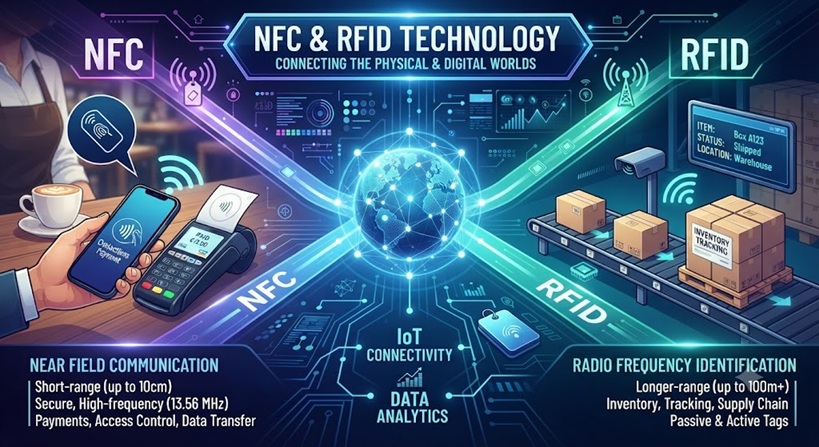
An NFC tag is a small electronic chip connected to an antenna that communicates wirelessly using 13.56 MHz radio frequency. When an NFC-enabled smartphone or reader is placed close to the tag, information stored inside the chip can be read instantly without requiring batteries or physical contact.
NFC tags are widely used for:
- Digital business cards
- Smart product labels
- Website links
- Contact information sharing
- Wi-Fi configuration
- Asset tracking
- Product authentication
- Inventory management
- Retail promotions
- Event ticketing
Because NFC technology follows international standards, most NFC-enabled smartphones can read compatible tags automatically.
Overview of NTAG213
NTAG213 is one of the world's most popular NFC chips. Developed by NXP Semiconductors, it has become an industry standard due to its excellent compatibility, reliability, and security.
Key Features
- NFC Forum Type 2 compliant
- ISO/IEC 14443 Type A
- 13.56 MHz operating frequency
- 144 bytes user memory
- 7-byte unique UID
- Password protection
- Originality signature (ECC)
- Fast read speed
- Low power operation
- Excellent smartphone compatibility
NTAG213 is widely used by manufacturers of premium NFC products because of its trusted reputation and broad software support.
Overview of FM11NT022
FM11NT022 is an NFC Forum Type 2 chip manufactured by Shanghai Fudan Microelectronics. It was designed as a fully compatible alternative for standard NFC applications while offering a more economical solution.
Key Features
- NFC Forum Type 2 compliant
- ISO/IEC 14443 Type A
- 13.56 MHz frequency
- 144 bytes user memory
- 7-byte UID
- Password protection
- NDEF compatible
- Excellent smartphone support
- Cost-effective pricing
The FM11NT022 performs very similarly to NTAG213 for most everyday NFC applications.
NTAG213 vs FM11NT022 Specifications
|
Feature |
NTAG213 |
FM11NT022 |
|
Frequency |
13.56 MHz |
13.56 MHz |
|
Standard |
ISO/IEC 14443 Type A |
ISO/IEC 14443 Type A |
|
NFC Forum |
Type 2 |
Type 2 |
|
User Memory |
144 Bytes |
144 Bytes |
|
UID |
7 Bytes |
7 Bytes |
|
NDEF Support |
Yes |
Yes |
|
Android Compatible |
Yes |
Yes |
|
iPhone Compatible |
Yes |
Yes |
|
Password Protection |
Yes |
Yes |
|
Originality Signature |
Yes |
No |
|
Typical Cost |
Higher |
Lower |
Compatibility with Smartphones
One of the most common questions is whether these chips work with Android and iPhone devices.
The answer is yes.
Both chips can be read by virtually all modern NFC-enabled smartphones.
Compatible with:
- Android phones
- Apple iPhone
- NFC readers
- NFC printers
- Industrial handheld terminals
- Point-of-sale systems
For everyday use, most users will never notice any difference between the two chips.
Memory Capacity
Both chips provide 144 bytes of user memory, which is sufficient for storing:
- Website URLs
- Contact information (vCard)
- Telephone numbers
- Email addresses
- Wi-Fi credentials
- Bluetooth pairing data
- Small text records
- Product identification numbers
For larger data, it is generally recommended to store only a URL pointing to cloud-hosted information rather than embedding extensive content directly on the tag.
Security Differences
This is where the biggest distinction exists.
NTAG213
NTAG213 includes an ECC Originality Signature.
This allows specialized software to verify that the NFC chip is an authentic NXP product.
Applications include:
- Brand protection
- Anti-counterfeit systems
- Secure product authentication
- High-value products
FM11NT022
FM11NT022 supports password protection but does not provide the same NXP originality signature verification.
For standard applications like marketing, inventory, and information sharing, this is generally not a limitation.
Reading Performance
Many people assume that one chip reads farther than another.
In reality, the reading distance depends primarily on the antenna design, not the chip itself.
Factors affecting reading distance include:
- Antenna size
- Antenna quality
- Metal surfaces
- Tag material
- Reader sensitivity
- Smartphone NFC antenna position
If two tags use the same antenna, users will typically experience very similar reading performance.
Typical Applications
NTAG213
Ideal for:
- Luxury products
- Brand authentication
- Secure NFC applications
- Digital business cards
- Smart product packaging
- Premium marketing campaigns
- Industrial automation
FM11NT022
Excellent for:
- NFC stickers
- NFC labels
- Inventory labels
- Asset management
- Smart posters
- Retail promotions
- Educational projects
- Event management
- Visitor identification
Cost Comparison
One major advantage of FM11NT022 is its affordability.
Businesses purchasing thousands of NFC labels often choose FM11NT022 because it offers similar functionality at a lower cost.
If originality verification is not required, FM11NT022 provides excellent value.
Which NFC Chip Should You Choose?
Choose NTAG213 if:
- You require original NXP chips.
- Security is important.
- Your application verifies chip authenticity.
- You manufacture premium products.
- Long-term compatibility is your priority.
Choose FM11NT022 if:
- You need to reduce costs.
- Your application uses standard NFC functions.
- You produce large quantities of NFC labels.
- Product authentication is unnecessary.
- You require reliable NFC performance at an economical price.
Frequently Asked Questions
Is FM11NT022 compatible with iPhone?
Yes. Modern iPhones with NFC support can read FM11NT022 tags normally.
Can Android phones read both chips?
Yes. Android devices support both NTAG213 and FM11NT022.
Which chip has better reading distance?
Neither has an inherent advantage. Reading distance depends mainly on the antenna design and the environment.
Can both chips store URLs?
Yes. Both chips can store website addresses, contact cards, Wi-Fi settings, and other standard NDEF records.
Is FM11NT022 a clone?
No. FM11NT022 is a compatible NFC Forum Type 2 chip manufactured by Shanghai Fudan Microelectronics. It is not an NXP chip and does not include NXP's originality signature.
Final Thoughts
Both NTAG213 and FM11NT022 are excellent NFC chips that support the NFC Forum Type 2 standard and deliver reliable performance across a wide range of applications. For most users, including those creating digital business cards, smart labels, inventory tags, and marketing materials, either chip will provide a smooth experience on Android and iPhone devices.
The key deciding factors are security requirements and budget. If your application depends on NXP originality verification or premium brand assurance, NTAG213 is the preferred choice. If you are focused on large-scale deployments and cost efficiency, FM11NT022 offers outstanding value while maintaining compatibility with standard NFC readers and smartphones.
By understanding these differences, you can confidently choose the NFC chip that best fits your project, whether you're deploying a few smart labels or thousands of NFC-enabled products.