What Is Top Coating on Labels? A Complete Guide to Label Protection and Print Quality
What Is Top Coating on Labels? A Complete Guide to Label Protection and Print Quality
When choosing self-adhesive labels, many people pay attention to the label size, adhesive, or material. However, one important layer that is often overlooked is the top coating.
Although it is nearly invisible, the top coating plays a major role in print quality, barcode readability, durability, and resistance to scratches, moisture, chemicals, and UV exposure. Whether you're printing shipping labels, product labels, asset tags, or industrial barcode labels, understanding top coating can help you choose the right labels for your application.
In this guide, we'll explain what top coating is, why it's important, how it works, and when you should choose coated or uncoated labels.
What Is Top Coating?
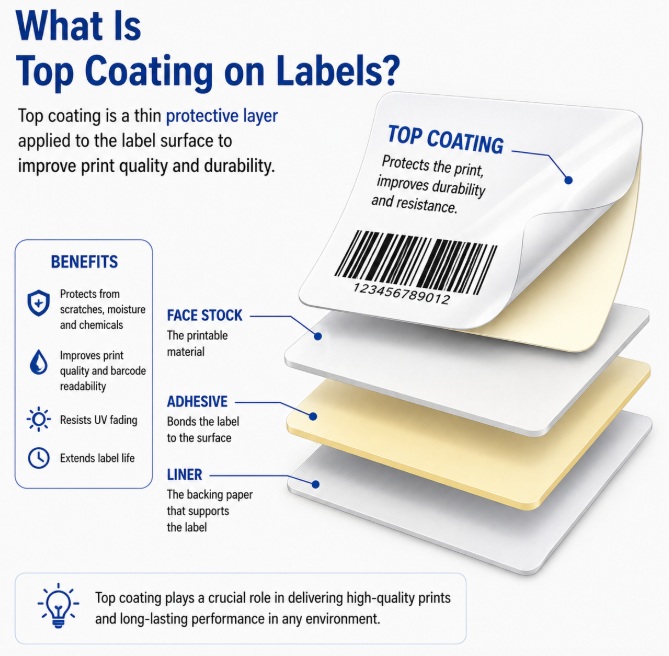
A top coating is a thin protective layer applied to the surface of the label's face material during manufacturing.
It sits above the printable surface, acting as a barrier that improves print performance and protects the label from environmental damage.
Although extremely thin, this coating significantly improves the label's durability without affecting its appearance.
Where Is the Top Coating Located?
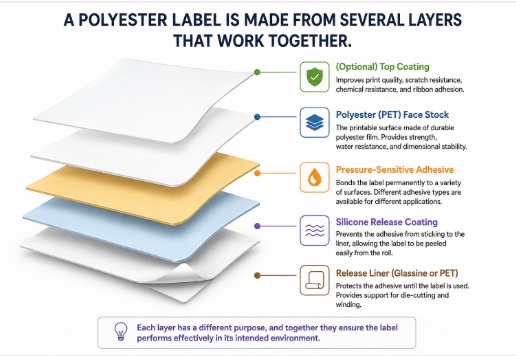
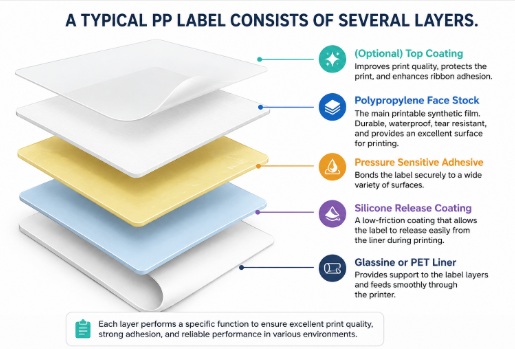
A typical self-adhesive label is made up of several layers:
- Top Coating
- Face Material (Paper, PP, PET, Vinyl, etc.)
- Adhesive
- Silicone Release Coating
- Release Liner
The top coating is the outermost layer and is the first surface that comes into contact with the printhead, ribbon, or surrounding environment.
What Does Top Coating Do?
The primary purpose of a top coating is to improve the label's performance during printing and after application.
Its benefits include:
- Produces sharper print quality
- Improves barcode readability
- Protects against scratches
- Increases moisture resistance
- Reduces smudging
- Improves chemical resistance
- Helps resist UV fading
- Extends label life
- Reduces printhead wear in some applications
How Does Top Coating Improve Print Quality?
Without a proper top coating, ink or thermal ribbon may not transfer evenly onto the label surface.
A quality top coating provides a smoother and more consistent surface, allowing:
- Crisp text
- Sharp graphics
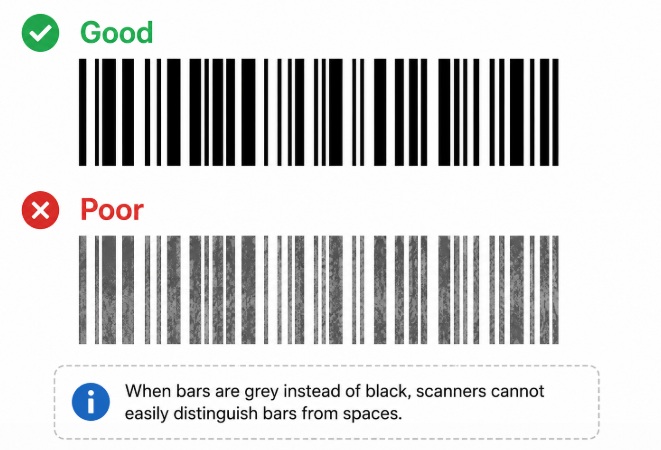
- High barcode contrast
- Better QR code readability
- More consistent print density
This is particularly important for high-resolution barcode printing where even minor imperfections can affect scanner performance.
Top Coating in Direct Thermal Labels
Direct thermal labels use heat-sensitive paper that darkens when exposed to the printer's printhead.
The top coating protects this heat-sensitive layer from:
- Fingerprints
- Moisture
- Dirt
- Oils
- Abrasion
- Minor chemicals
Without this protection, printed information can fade or become damaged more quickly.
Top Coating in Thermal Transfer Labels
Thermal transfer labels use an ink ribbon instead of heat-sensitive paper.
In this case, the top coating improves how the ribbon transfers ink onto the label surface.
Benefits include:
- Better ribbon adhesion
- Higher print quality
- Greater scratch resistance
- Improved chemical durability
- Longer-lasting printed images
Types of Top Coatings
Standard Protective Coating
Suitable for:
- Shipping labels
- Retail labels
- Warehouse labels
- General barcode labels
Provides basic protection against handling and light abrasion.
Chemical Resistant Coating
Designed for environments where labels may come into contact with:
- Cleaning agents
- Solvents
- Oils
- Industrial chemicals
Often used with polyester (PET) labels and resin ribbons.
UV Resistant Coating
Protects labels exposed to sunlight.
Ideal for:
- Outdoor equipment
- Asset labels
- Utility labels
- Industrial signage
Helps reduce fading and discoloration over time.
Abrasion Resistant Coating
Designed for labels that experience frequent handling or rubbing.
Common applications include:
- Asset management
- Laboratory labels
- Manufacturing
- Logistics
Does Every Label Have a Top Coating?
No.
Some low-cost paper labels are manufactured without a top coating to reduce production costs.
While these labels are less expensive, they are generally:
- Easier to scratch
- More susceptible to moisture
- More likely to smudge
- Less durable
- Less suitable for demanding environments
Advantages of Top-Coated Labels
- Excellent print quality
- Longer label life
- Improved barcode scanning
- Better resistance to moisture
- Greater durability
- Reduced fading
- Enhanced scratch resistance
- Better overall appearance
Disadvantages
Although top-coated labels offer many benefits, they also have some limitations:
- Slightly higher manufacturing cost
- May not be necessary for short-term applications
- Premium coatings can increase label price
For temporary labels used indoors for only a few days, a standard uncoated label may be sufficient.
Industries That Benefit from Top-Coated Labels
Top-coated labels are widely used in:
- Retail
- Warehousing
- Logistics
- Manufacturing
- Healthcare
- Pharmaceuticals
- Electronics
- Food production
- Laboratories
- Asset management
These industries require labels that remain readable throughout storage, transportation, and daily handling.
Choosing the Right Top Coating
When selecting labels, consider:
- Indoor or outdoor use
- Exposure to chemicals
- Expected lifespan
- Printing method (Direct Thermal or Thermal Transfer)
- Environmental conditions
- Handling frequency
Choosing the appropriate top coating ensures the label performs reliably throughout its intended life.
Frequently Asked Questions
What is the purpose of a top coating?
A top coating protects the label surface, improves print quality, and increases resistance to scratches, moisture, chemicals, and UV exposure.
Is top coating the same as laminate?
No. A top coating is a thin protective layer applied during manufacturing, while a laminate is a thicker film added over the printed label for additional protection.
Do thermal transfer labels need a top coating?
Many thermal transfer labels benefit from a top coating because it improves ribbon adhesion, print clarity, and durability, especially in industrial applications.
Are all direct thermal labels top-coated?
No. Direct thermal labels are available in both top-coated and uncoated versions. Top-coated labels generally offer better resistance to handling, moisture, and abrasion.
Can a top coating improve barcode scanning?
Yes. A smoother, more uniform print surface produces higher-contrast barcodes, making them easier for barcode scanners to read accurately.
Conclusion
Top coating is one of the most important yet least visible components of a self-adhesive label. It enhances print quality, protects printed information, and improves resistance to moisture, abrasion, chemicals, and UV exposure. Whether you're printing shipping labels, inventory labels, product labels, or industrial asset tags, choosing a label with the appropriate top coating can significantly improve reliability and extend the life of your printed labels.
When selecting labels, don't focus only on the face material or adhesive. The top coating is equally important because it directly influences print performance, barcode readability, and long-term durability. By understanding how this protective layer works, you can choose labels that meet the demands of your specific application and deliver consistent, high-quality results.