Why Standard Wax Ribbons Don't Perform Well on Coloured Labels
Understanding Print Quality, Contrast & Ribbon Selection
If you've ever printed labels using a standard wax ribbon on coloured paper, you may have noticed that the print looks lighter than expected, scratches easily, or produces barcodes that are difficult to scan.
Many users assume there is something wrong with the printer or the ribbon. In reality, the issue is usually caused by the combination of the ribbon type and the label material.
A standard wax ribbon is designed primarily for white, uncoated paper labels. When used on coloured labels, glossy papers, or synthetic materials, it often cannot produce the same deep black image or long-lasting durability.
Understanding why this happens will help you choose the correct ribbon, improve barcode quality, reduce printhead wear, and avoid unnecessary troubleshooting.
Why White Labels Are Easier to Print
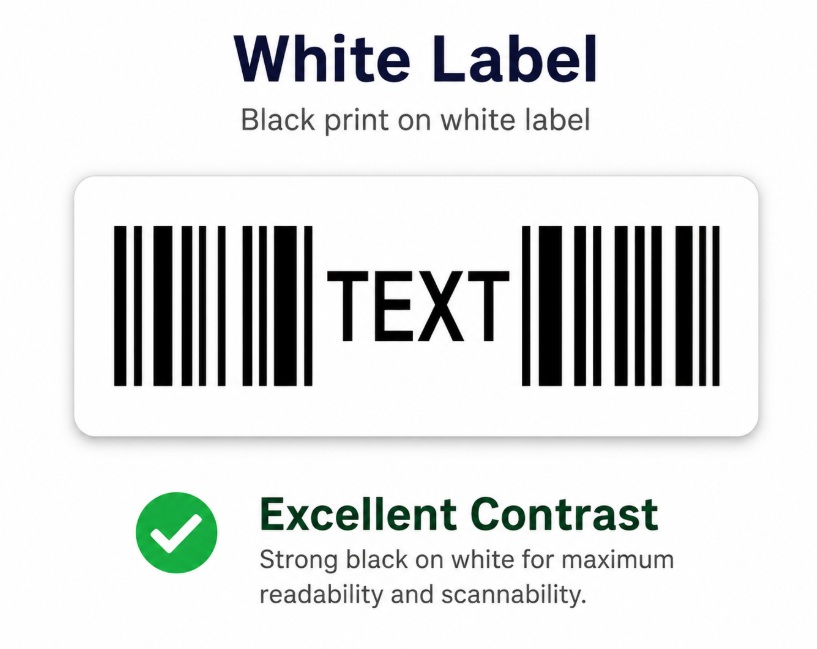
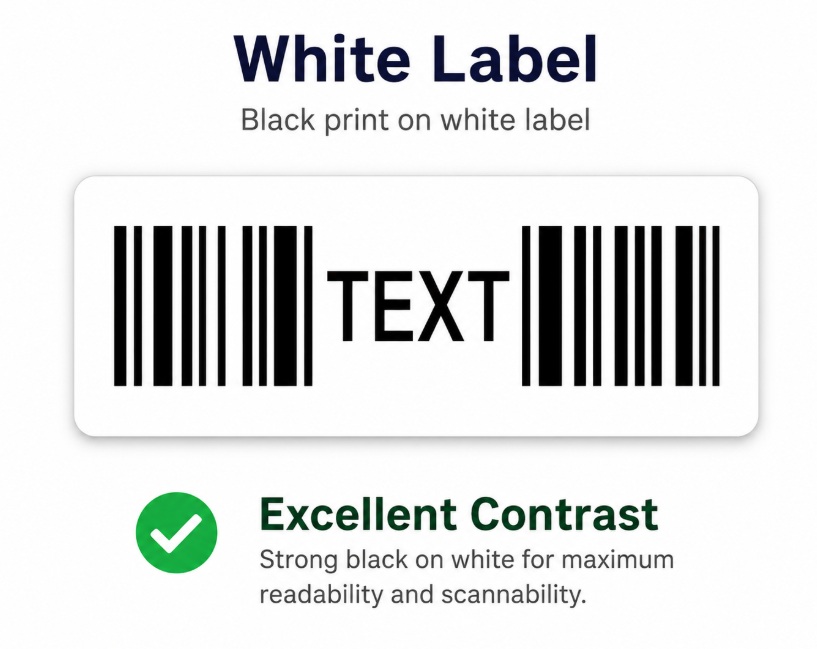
White paper labels are the easiest media for thermal transfer printing.
Their bright surface reflects a large amount of light, allowing black printed images to appear sharp and highly visible.
The result is:
- Excellent barcode contrast
- Dark, crisp text
- Easy barcode scanning
- Lower print darkness requirements
Even an economy-grade wax ribbon usually performs well on high-quality white paper labels.
Why?
Because the printer only needs to create a strong contrast between:
White background
and
Black printed image
The greater this contrast, the easier it is for both people and barcode scanners to read the printed information.
What Changes with Coloured Labels?
Printing on coloured labels is very different.
Instead of a bright white surface, the ribbon must print onto paper that already has its own colour.
Examples include:
- Yellow
- Orange
- Green
- Blue
- Pink
- Red
- Brown
- Grey
Each colour reflects light differently.
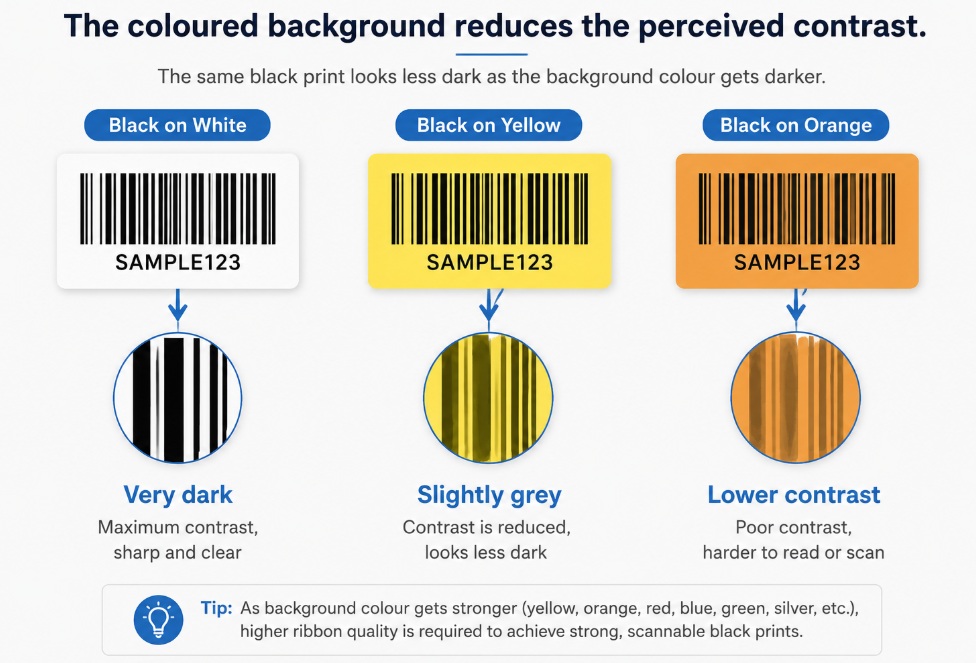
As the background becomes darker or more saturated, the black image produced by the ribbon appears less intense, even if the ribbon itself is functioning correctly.
For example:
- Black text on a white label appears extremely dark.
- The same ribbon printed on a yellow label may appear slightly grey.
- On orange or green labels, the contrast becomes even lower.
This is not a printer fault—it is a characteristic of how light and colour interact with the printed image.
Why Standard Wax Ribbon Struggles
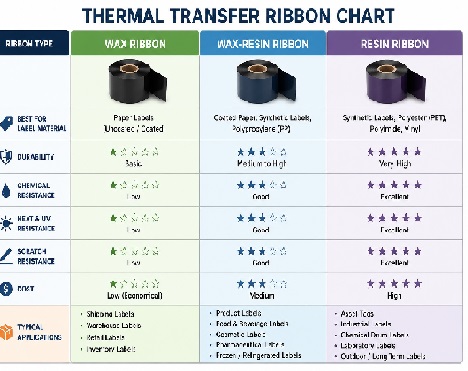
Standard wax ribbons are designed to provide an economical solution for everyday paper label printing.
They typically contain:
- A higher proportion of wax
- Less resin
- Moderate pigment density
- Lower melting temperature
These characteristics make them ideal for:
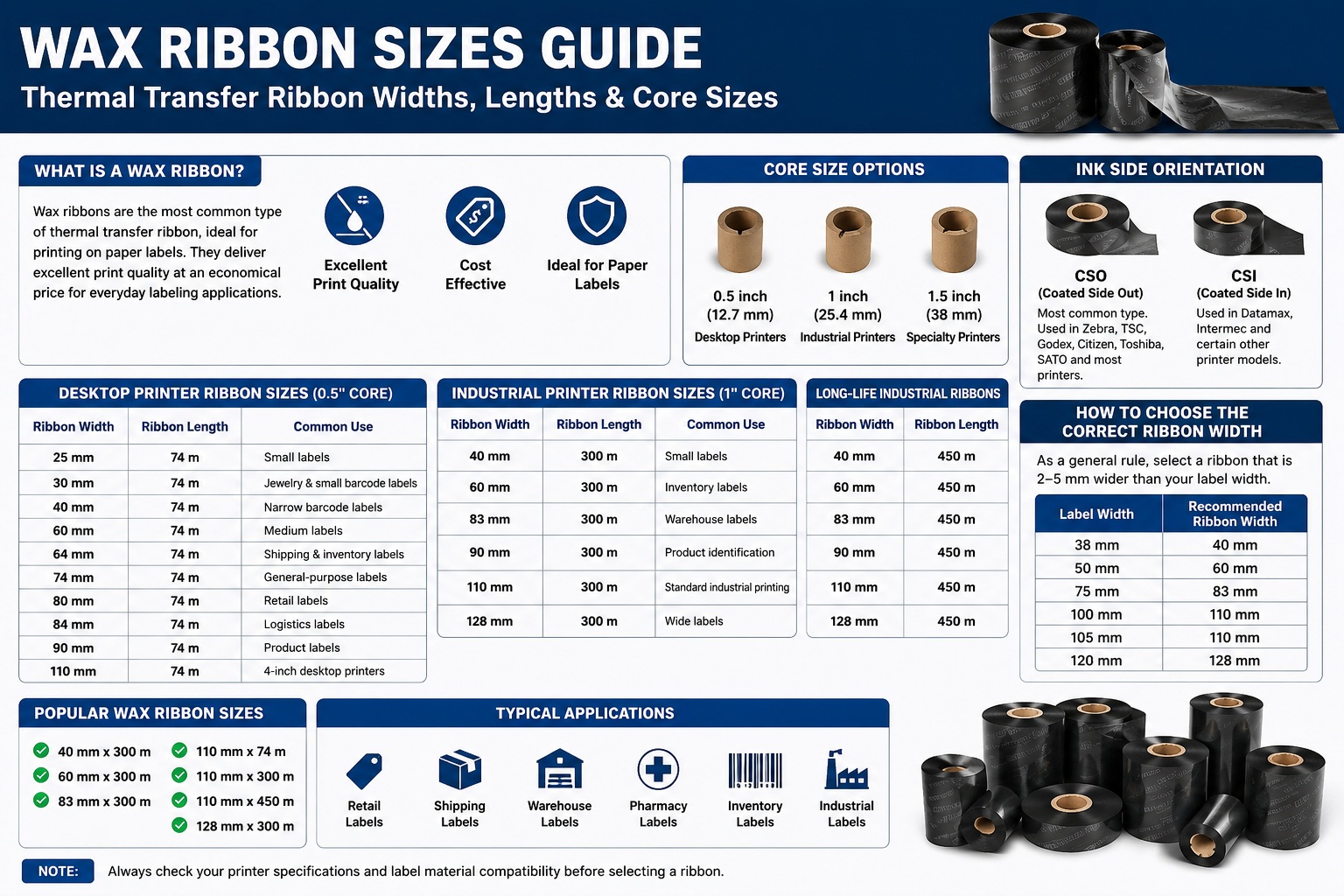
- Shipping labels
- Warehouse labels
- Retail shelf labels
- Inventory labels
However, these same characteristics become a limitation when printing on coloured media.
Because standard wax ribbons produce a relatively thin ink layer, the printed image may not appear deep black on coloured backgrounds.
The result can be:
- Lighter text
- Reduced barcode contrast
- Lower scratch resistance
- Less professional appearance
It's Not Just About Colour
Many people believe that the colour itself is the only reason for poor print quality.
In reality, several factors work together.
Print quality depends on:
- Label colour
- Surface coating
- Paper smoothness
- Ribbon formulation
- Print darkness
- Print speed
- Printhead condition
Two yellow labels from different manufacturers may produce completely different results because their coatings and surface finishes differ.
Choosing the correct ribbon is therefore just as important as choosing the correct label.
Why Does Black Print Look Grey on Coloured Labels?
One of the most common customer complaints is:
"The ribbon is black, so why doesn't it print a deep black image?"
The answer lies in optical density and contrast, not the colour of the ribbon itself.
A standard wax ribbon produces a black image, but the ink layer is relatively thin. On a bright white label, this is usually sufficient because the strong contrast makes the print appear very dark.
On a coloured label, however, the background already absorbs and reflects light differently. The thinner ink layer allows some of that background colour to influence how the print appears.
As a result:
- The print may look dark black on white labels.
- The same ribbon may appear dark grey on yellow labels.
- On orange, green, or blue labels, the print may appear even lighter.
This does not necessarily indicate a faulty ribbon—it is simply a limitation of standard wax ribbon technology.
Why Contrast Is So Important
Barcode scanners do not recognise colours in the same way humans do.
Instead, they measure the difference between:
- Light reflected from the background.
- Light absorbed by the printed barcode.
This difference is known as barcode contrast.
Higher contrast makes it easier for the scanner to distinguish between the bars and spaces.
For example:
Excellent Contrast
Black barcode
White label
✔ Excellent scanning performance
Good Contrast
Black barcode
Light yellow label
✔ Usually scans reliably
Moderate Contrast
Black barcode
Orange label
⚠ Scanner performance may vary depending on print quality.
Poor Contrast
Grey barcode
Dark green label
✘ Difficult for many scanners to decode.
Why Barcode Scanners May Struggle
A barcode scanner doesn't "see" a product label like the human eye.
Instead, it measures reflected light.
If the printed bars are not dark enough, the scanner may struggle to distinguish:
Bar
Space
Bar
Space
As the contrast decreases, the scanner becomes less reliable.
This may result in:
- Multiple scan attempts
- Slow checkout
- Failed warehouse scans
- Shipping delays
- Inventory errors
This is why print quality is especially important for logistics and retail labels.
Why Premium Wax Performs Better
Premium wax ribbons are specifically formulated to produce:
- Higher optical density
- Deeper black images
- Sharper edges
- Better adhesion
- Improved scratch resistance
Compared with standard wax ribbons, premium wax ribbons generally contain:
- Higher-quality pigments
- Improved wax formulations
- Better release coatings
- More consistent manufacturing
These improvements allow premium wax ribbons to produce darker, more consistent printing on coloured paper labels without requiring excessive print darkness.
Advantages of Premium Wax Ribbon
Compared with standard wax ribbon, premium wax typically offers:
✔ Darker black printing
✔ Better barcode contrast
✔ Cleaner edges on small text
✔ Improved resistance to smudging
✔ Better performance on coloured labels
✔ Lower printhead temperatures in many applications
Although premium wax ribbons cost slightly more, they often reduce overall operating costs by improving scan reliability and reducing reprints.
Why Wax-Resin Performs Even Better
For most coloured paper labels, Premium Wax provides excellent results. When additional durability, scratch resistance, or printing on coated papers and synthetic materials is required, Wax-Resin is generally the preferred choice.
Wax-Resin contains a higher proportion of resin than standard wax ribbons.
This provides:
- Better adhesion
- Higher scratch resistance
- Greater chemical resistance
- Darker printing
- Sharper barcode edges
Wax-Resin is commonly recommended for:
- Premium coloured paper labels
- Top-coated labels
- Matte polypropylene (PP)
- High-quality retail labels
- Laboratory labels
When Resin Ribbon Is Required
Some materials simply cannot be printed reliably with wax ribbons.
Examples include:
- Polyester (PET)
- Polyimide
- Vinyl
- Security labels
- Asset labels
- Chemical-resistant labels
- Outdoor labels
These materials normally require Resin ribbon.
Resin ribbons provide:
- Exceptional durability
- High chemical resistance
- Excellent scratch resistance
- Outstanding image permanence
- Superior barcode quality
Although resin ribbons are more expensive, they are essential for demanding industrial applications.
Which Label Colours Are Most Difficult?
Not all coloured labels present the same challenge.
Generally, lighter colours are easier to print than darker ones.
|
Label Colour |
Standard Wax |
Premium Wax |
Wax-Resin |
|
White |
⭐⭐⭐⭐⭐ |
⭐⭐⭐⭐⭐ |
⭐⭐⭐⭐⭐ |
|
Light Yellow |
⭐⭐⭐⭐ |
⭐⭐⭐⭐⭐ |
⭐⭐⭐⭐⭐ |
|
Pink |
⭐⭐⭐ |
⭐⭐⭐⭐⭐ |
⭐⭐⭐⭐⭐ |
|
Light Blue |
⭐⭐⭐ |
⭐⭐⭐⭐ |
⭐⭐⭐⭐⭐ |
|
Green |
⭐⭐ |
⭐⭐⭐⭐ |
⭐⭐⭐⭐⭐ |
|
Orange |
⭐⭐ |
⭐⭐⭐⭐ |
⭐⭐⭐⭐⭐ |
|
Brown |
⭐ |
⭐⭐⭐ |
⭐⭐⭐⭐⭐ |
|
Silver Paper |
⭐ |
⭐⭐⭐ |
⭐⭐⭐⭐⭐ |
Note: Ratings are general recommendations. Actual performance depends on the label material, surface coating, printer settings, and ribbon quality.
Colour is only one part of the equation.
The surface finish also affects ribbon performance.
Examples include:
Uncoated Paper
Usually performs well with standard wax ribbon.
Top-Coated Paper
Often produces sharper images and better durability when used with premium wax or wax-resin ribbons.
Matte Polypropylene (PP)
Usually requires Wax-Resin for reliable adhesion.
Gloss Polypropylene
Often requires Wax-Resin or Resin depending on the application.
Polyester (PET)
Normally requires Resin ribbon to achieve maximum durability and adhesion.
Choosing the correct ribbon for the label surface is just as important as selecting the correct ribbon for the label colour.
Can Increasing Print Darkness Solve the Problem?
Many users immediately increase the printer's darkness setting when printing looks light.
While increasing darkness may improve the appearance slightly, it is not always the correct solution.
A standard wax ribbon has physical limitations. Once it has transferred as much pigment as its formulation allows, adding more heat provides little additional benefit.
Instead, excessive darkness can create new problems, including:
- Ribbon wrinkles
- Ribbon sticking to the label
- Blurred text
- Thick barcode bars
- Increased printhead wear
- Reduced ribbon efficiency
In many cases, switching to a premium wax or wax-resin ribbon produces a darker image than simply increasing the print darkness.
Print Speed Also Matters
The speed at which the printer operates directly affects print quality.
At higher print speeds:
- The ribbon has less time to transfer ink.
- Heating elements remain active for a shorter period.
- The printed image may appear lighter.
Reducing the print speed often allows the ribbon to transfer more pigment, producing:
- Darker text
- Sharper barcodes
- Better edge definition
- Improved barcode readability
When using coloured labels, slightly reducing the print speed can often improve results without significantly affecting productivity.
Common Mistakes When Printing on Coloured Labels
Many printing problems are caused by incorrect media selection rather than faulty hardware.
Using the Cheapest Ribbon Available
An economy wax ribbon may work perfectly on white shipping labels but struggle on coloured or coated labels.
Saving a small amount on ribbon can lead to:
- Reprints
- Barcode scanning failures
- Customer complaints
- Higher overall operating costs
Using Standard Wax on Synthetic Labels
Materials such as polypropylene (PP) and polyester (PET) require stronger ink adhesion than standard wax can provide.
Using the wrong ribbon often results in:
- Scratching
- Smudging
- Ink rubbing off easily
Increasing Darkness to Maximum
Maximum darkness is not always the best setting.
Too much heat can:
- Distort barcodes
- Cause ribbon wrinkles
- Increase printhead wear
- Shorten ribbon life
Always use the lowest darkness setting that produces a clear, scannable image.
Ignoring Label Surface Coatings
Two labels with the same colour may perform very differently.
For example:
- Uncoated yellow paper
- Top-coated yellow paper
Although both appear similar, the coated label often provides:
- Better ribbon adhesion
- Darker printing
- Improved durability
The surface finish is just as important as the label colour.
Using Worn Printheads
Even the best ribbon cannot compensate for a worn printhead.
Symptoms include:
- White vertical lines
- Uneven print density
- Missing barcode bars
- Faded printing
Always inspect and clean the printhead before changing ribbon types.
Practical Ribbon Selection Guide
The following recommendations provide a good starting point for most applications.
|
Label Material |
Recommended Ribbon |
|
White uncoated paper |
Standard Wax |
|
White top-coated paper |
Premium Wax |
|
Coloured paper labels |
Premium Wax |
|
Premium coloured paper |
Wax-Resin |
|
Matte PP |
Wax-Resin |
|
Gloss PP |
Wax-Resin or Resin |
|
PET (Polyester) |
Resin |
|
Silver PET |
Resin |
|
Asset labels |
Resin |
|
Chemical labels |
Resin |
|
Outdoor labels |
Resin |
Choosing the correct ribbon for the label material is often more effective than changing printer settings.
Tips for Achieving the Best Print Quality
To obtain consistently dark, durable, and easy-to-scan prints:
- Use high-quality labels from a reputable manufacturer.
- Match the ribbon to the label material rather than choosing by price alone.
- Keep the printhead clean using approved cleaning materials.
- Replace worn platen rollers when necessary.
- Avoid excessive print darkness.
- Adjust print speed if required.
- Store labels and ribbons in a clean, dry environment away from direct sunlight.
- Test new label and ribbon combinations before large production runs.
- Verify important barcodes using an actual barcode scanner.
These simple practices help reduce printhead wear, minimise waste, and improve barcode reliability.
Wax-resin ribbon works very well on coloured labels,
| Label Material | Wax-Resin Performance |
|---|---|
| White paper | ⭐⭐⭐⭐⭐ Excellent |
| Yellow paper | ⭐⭐⭐⭐⭐ Excellent |
| Orange paper | ⭐⭐⭐⭐⭐ Excellent |
| Green paper | ⭐⭐⭐⭐⭐ Excellent |
| Blue paper | ⭐⭐⭐⭐⭐ Excellent |
| Pink paper | ⭐⭐⭐⭐⭐ Excellent |
| Brown paper | ⭐⭐⭐⭐ Very Good |
| Top-coated coloured paper | ⭐⭐⭐⭐⭐ Excellent |
Why does Wax-Resin perform better?
Wax-resin contains more resin and higher-quality pigments than a standard wax ribbon. This provides:
- Higher optical density (deeper black print)
- Better adhesion to coloured label surfaces
- Better scratch resistance
- Sharper barcode edges
- Improved barcode scanning reliability
- Better performance on coated papers and many synthetic materials
This is why many companies use wax-resin as their "general-purpose premium ribbon."
Recommendation
- ✅ White paper labels → Standard Wax
- ✅ Coloured paper labels → Premium Wax or Wax-Resin
- ✅ Top-coated paper labels → Premium Wax or Wax-Resin
- ✅ PP labels → Wax-Resin
- ✅ PET labels → Resin or Premium Resin
- ✅ Silver PET & chemical-resistant labels → Resin or Premium Resin
Frequently Asked Questions (FAQ)
Why does my ribbon print perfectly on white labels but not on coloured labels?
White labels provide much higher contrast and are generally easier for standard wax ribbons to print. Coloured labels often require higher pigment density and better ink adhesion, making premium wax or wax-resin ribbons a better choice.
Can I use standard wax ribbon on coloured labels?
Yes, but the results may vary. Light-coloured paper labels may produce acceptable results, while darker colours or coated labels often require premium wax or wax-resin ribbons for optimal print quality.
Will increasing print darkness make my print darker?
Only to a certain extent. Excessive darkness can cause ribbon wrinkles, blurred barcodes, and faster printhead wear. If print quality is still poor, changing to a higher-grade ribbon is usually the better solution.
Which ribbon is best for yellow labels?
For most yellow paper labels, a premium wax ribbon provides darker, sharper printing than a standard wax ribbon. If the label is top-coated or requires greater durability, a wax-resin ribbon may be more suitable.
Why do my barcodes scan inconsistently on coloured labels?
Poor contrast between the printed barcode and the coloured background can reduce scanner performance. Using a ribbon with higher optical density and ensuring proper printer settings can significantly improve barcode readability.
Can premium wax replace wax-resin?
Not always. Premium wax offers improved print quality on many paper labels, but wax-resin provides better durability and adhesion on coated papers and synthetic materials. The correct choice depends on the label material and application.
Conclusion
Standard wax ribbons remain an excellent and cost-effective choice for printing on white, uncoated paper labels, where they deliver reliable performance and good print quality for everyday applications.
However, as label materials become more demanding—whether through coloured papers, coated surfaces, or synthetic films—the limitations of standard wax ribbons become more apparent. Reduced contrast, lighter print, lower scratch resistance, and inconsistent barcode readability are often the result of using a ribbon that is not suited to the media, rather than a problem with the printer itself.
By understanding how label colour, surface coating, ribbon formulation, print darkness, and print speed work together, you can select the most appropriate ribbon for each application. In many cases, upgrading to a premium wax, wax-resin, or resin ribbon provides a greater improvement in print quality than simply increasing the printer's heat settings.
Choosing the right ribbon not only produces darker, sharper, and more durable prints but also improves barcode scanning performance, reduces reprints, extends printhead life, and lowers the total cost of ownership over time.
Whether you're printing shipping labels, retail price tags, warehouse labels, laboratory samples, asset tags, or product identification labels, selecting the correct ribbon for your label material is one of the simplest ways to ensure professional, reliable results.