How to Choose the Right Ribbon for Your Labels
In thermal transfer printing, selecting the right ribbon is just as important as choosing the right printer or label material. Even the most advanced printer cannot produce durable, high-quality labels if the ribbon isn't compatible with the label surface.
Using the wrong ribbon can lead to:
- Faded or inconsistent printing
- Smudged images
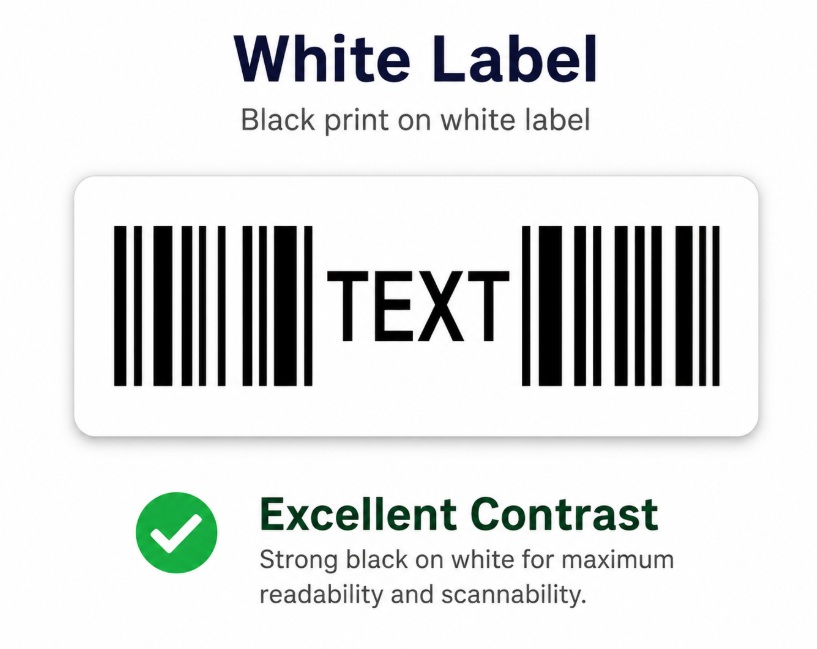
- Poor barcode readability
- Ribbon wrinkles and breakage
- Increased printhead wear
- Higher maintenance costs
By contrast, the correct ribbon delivers crisp text, sharp barcodes, long-lasting durability, faster production, and improved printer reliability.
This complete guide explains everything you need to know about thermal transfer ribbons-from understanding ribbon types to selecting the right ribbon for different label materials and applications, along with professional tips for achieving the best print quality.
What Is a Thermal Transfer Ribbon?
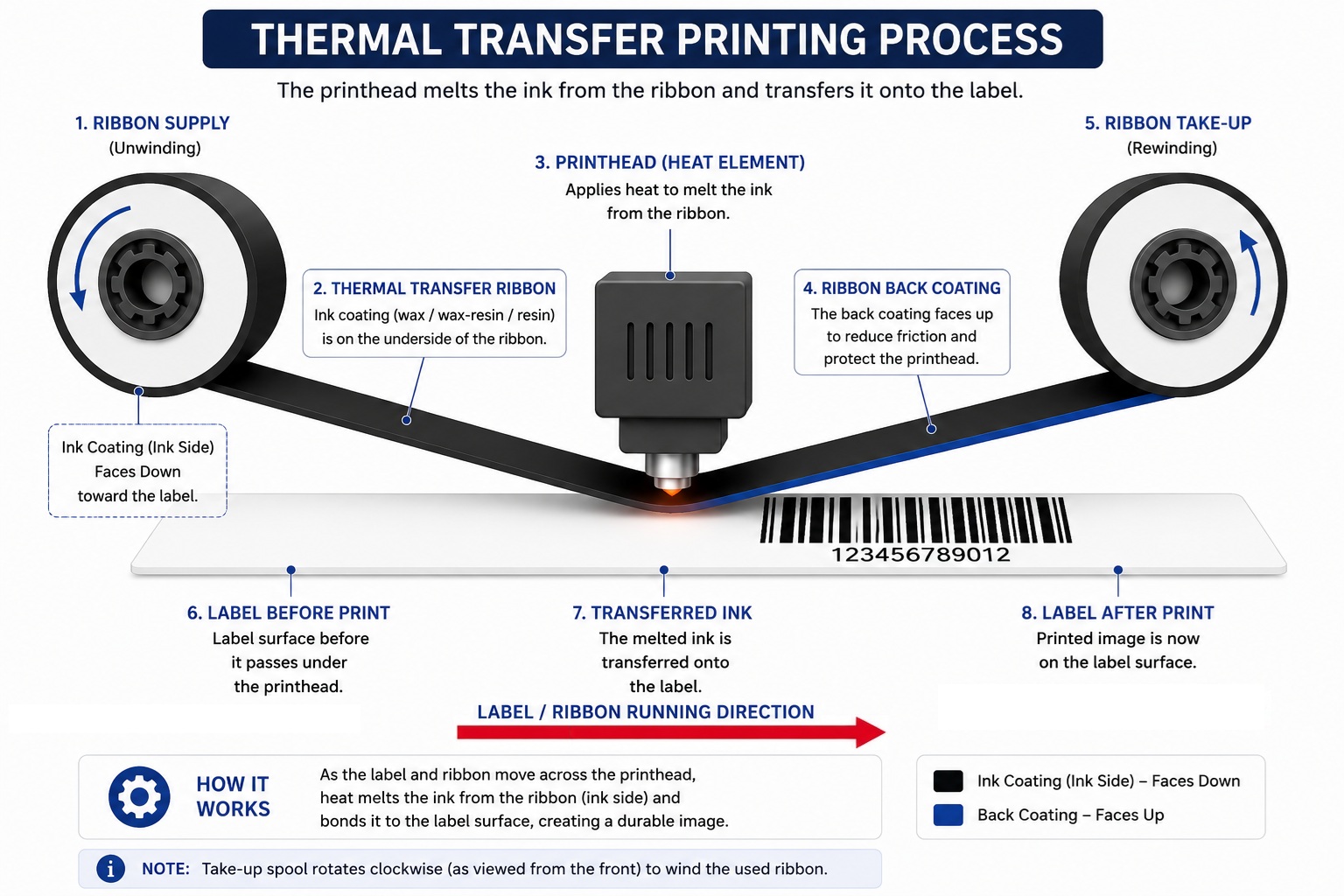
A thermal transfer ribbon is a thin polyester film coated with a specially formulated ink. During printing, the printer's heated printhead melts the ink and transfers it onto the label surface.
Unlike direct thermal printing, thermal transfer printing uses both a ribbon and a label to create a durable, long-lasting image that resists fading, abrasion, moisture, and chemicals.
Why Ribbon Selection Matters
Choosing the right ribbon affects nearly every aspect of print performance, including:
- Print quality
- Barcode readability
- Scratch resistance
- Chemical resistance
- UV resistance
- Water resistance
- Outdoor durability
- Printer reliability
- Printhead lifespan
- Total operating cost
Many problems that appear to be printer faults are actually caused by using an incompatible ribbon.
Understanding the Ribbon Types
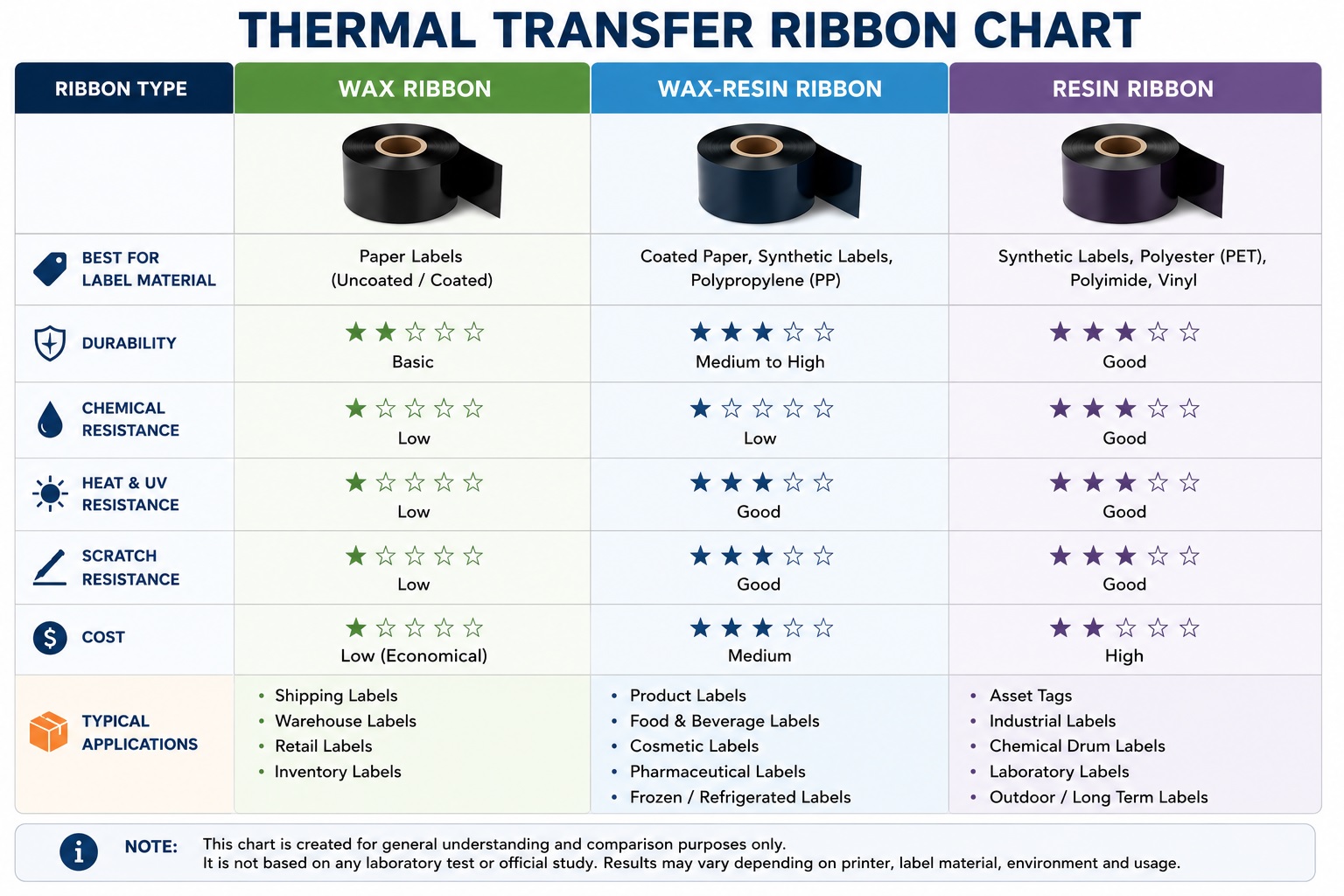
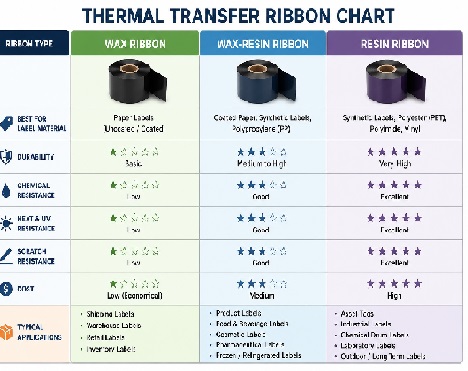
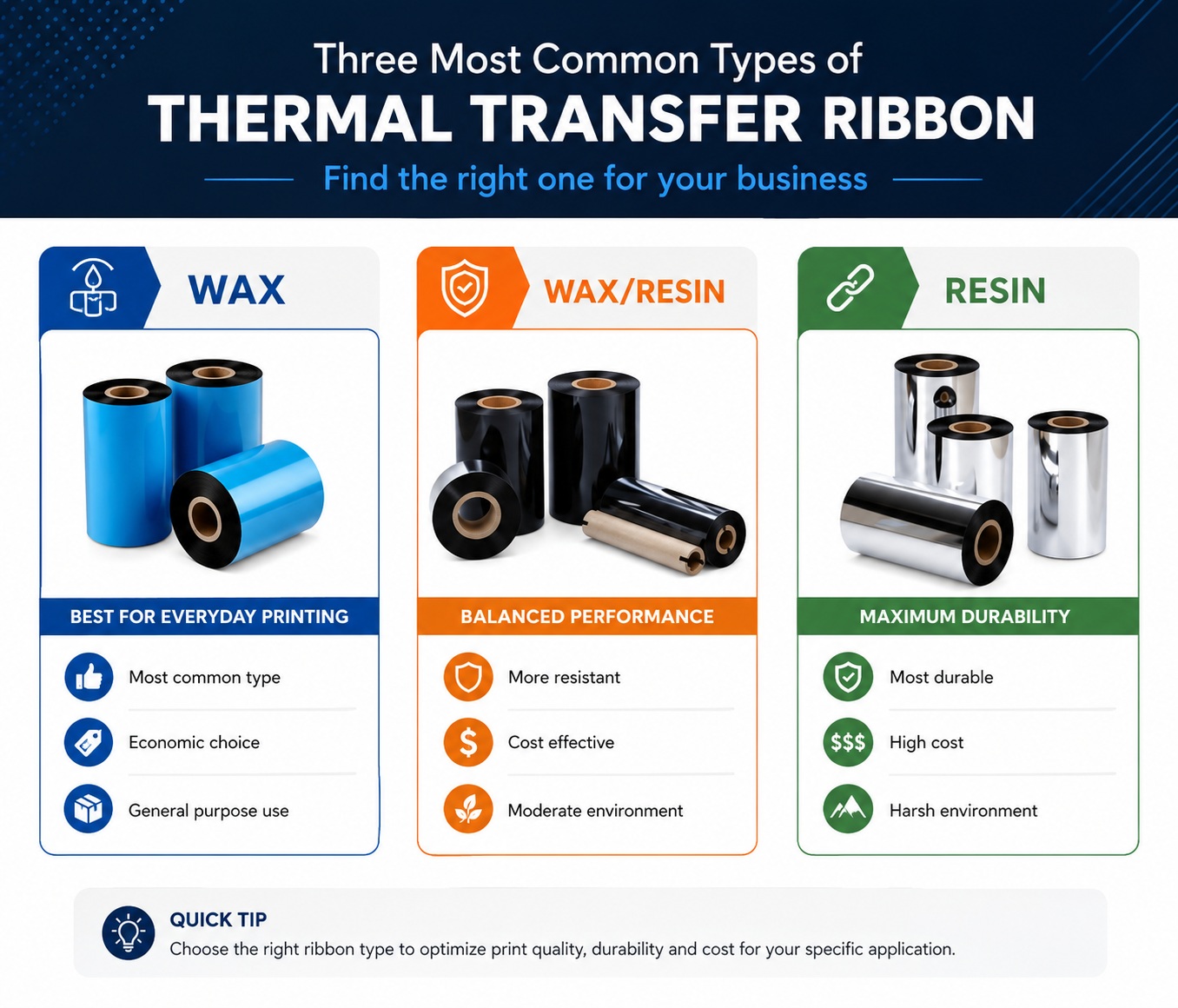
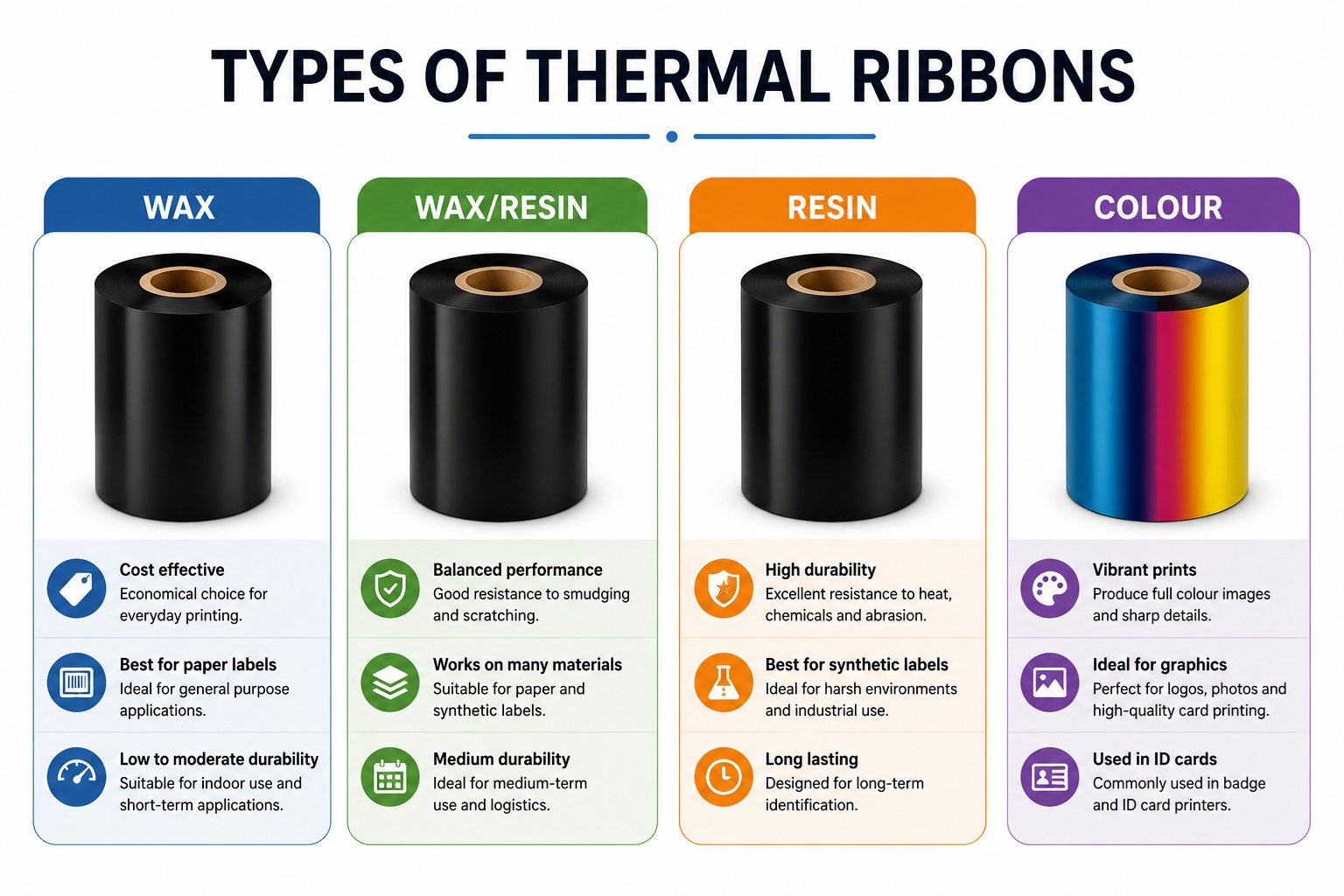
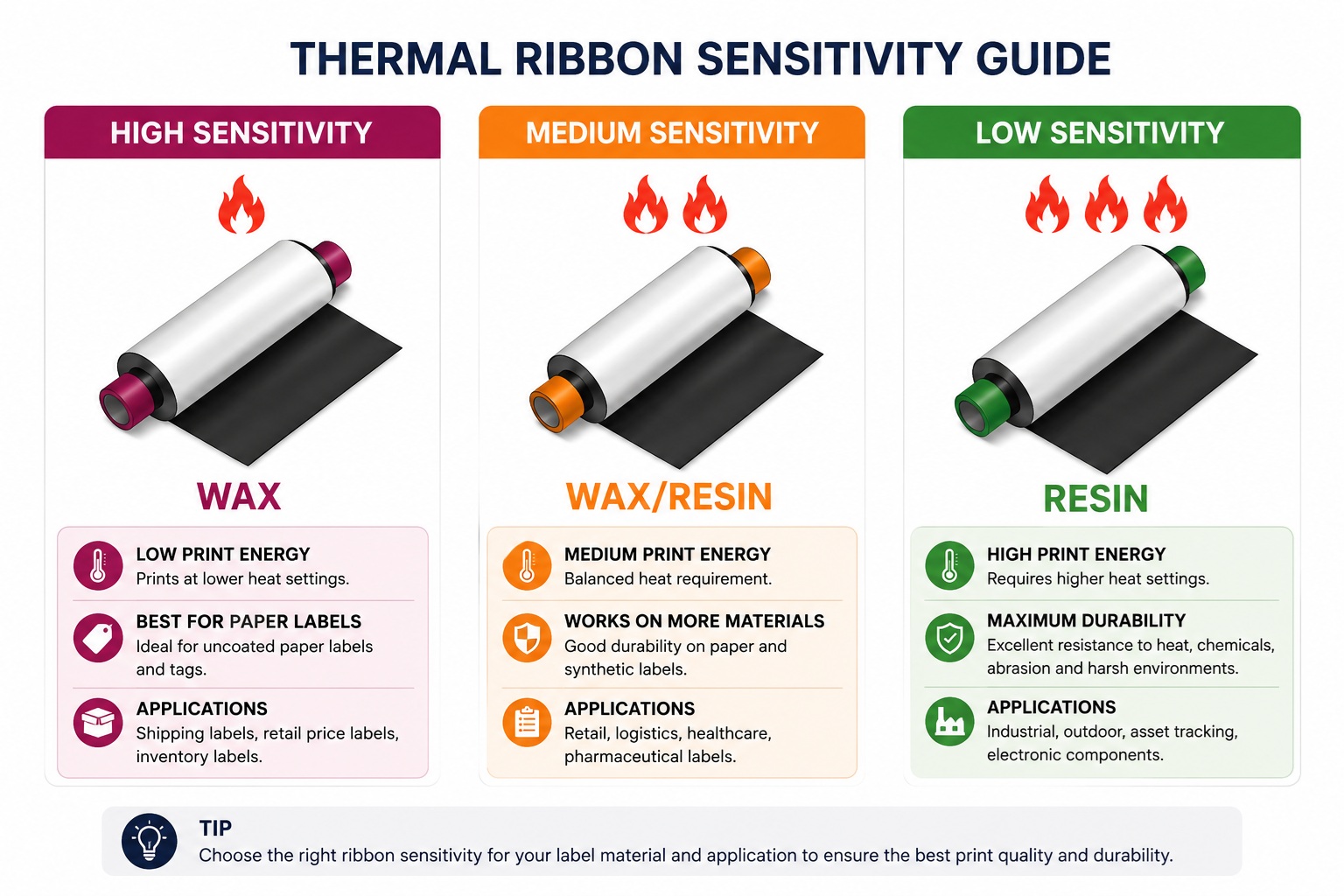
Wax Ribbon
Wax ribbons are the most economical option and are designed primarily for paper labels.
Advantages
- Lowest cost
- Excellent print darkness
- High-speed printing
- Low printhead wear
- Ideal for high-volume printing
Limitations
- Limited scratch resistance
- Poor chemical resistance
- Not recommended for harsh environments
- Unsuitable for most synthetic labels
Best Applications
- Shipping labels
- Retail labels
- Warehouse labels
- Carton identification
- Inventory labels
Wax-Resin Ribbon
Wax-resin ribbons combine the affordability of wax with the durability of resin, making them the most versatile choice for many applications.
Advantages
- Better abrasion resistance
- Good moisture resistance
- Improved chemical resistance
- Excellent barcode quality
- Suitable for coated paper and many synthetic labels
Best Applications
- Product labels
- Food packaging
- Cosmetics
- Pharmaceutical labels
- Warehouse labels
- Shelf labels
- Moderate outdoor use
Resin Ribbon
Resin ribbons provide the highest level of durability and are designed for demanding industrial environments.
Advantages
- Outstanding scratch resistance
- Excellent chemical resistance
- Waterproof printing
- UV resistant
- High-temperature resistance
- Long outdoor life
Best Applications
- Polyester (PET) labels
- Polypropylene (PP)
- Polyethylene (PE)
- Vinyl labels
- Asset tags
- Laboratory labels
- Chemical drum labels
- Electronics
- Automotive components
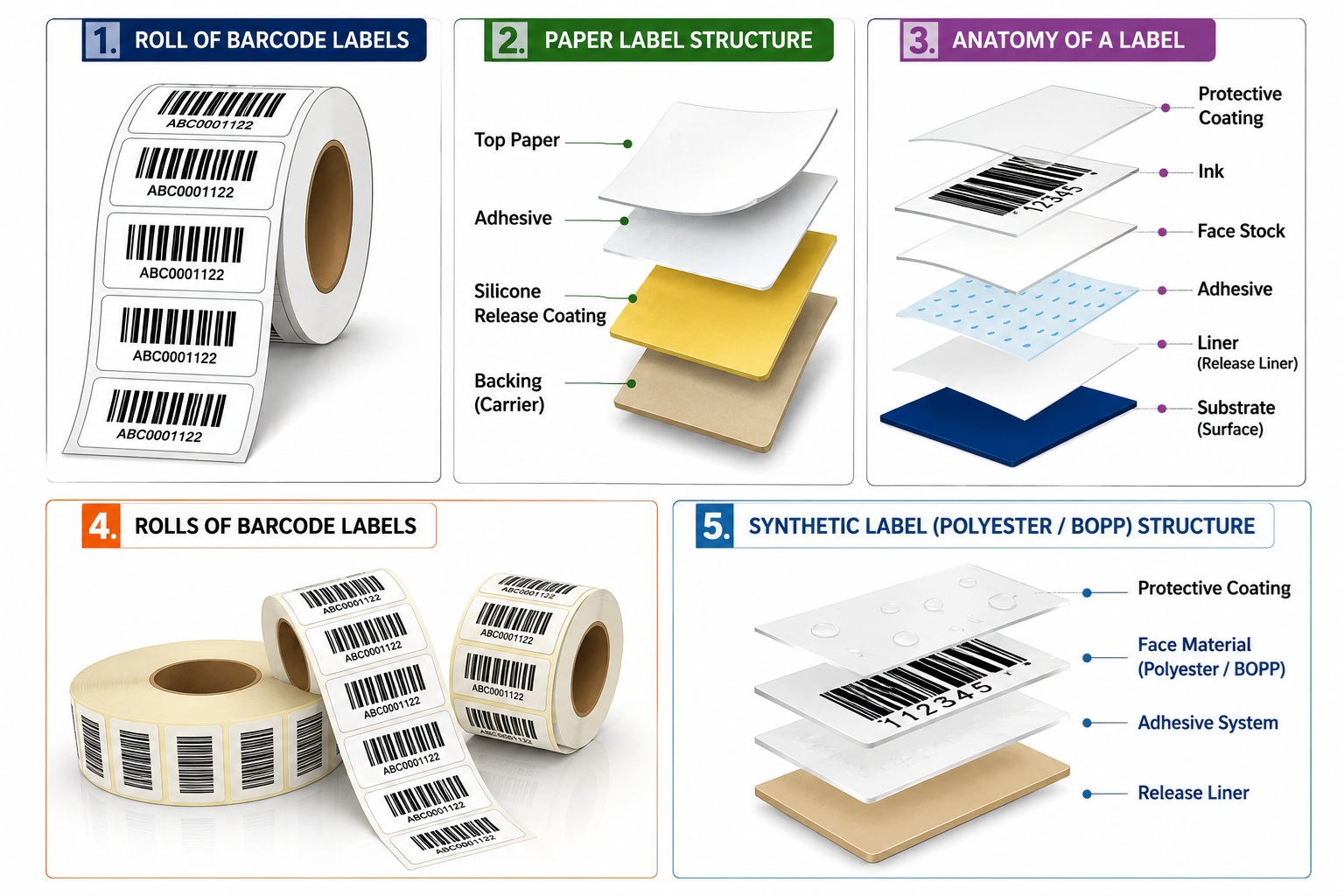
Step 1: Identify Your Label Material
The label material is the most important factor when selecting a ribbon.
|
Label Material |
Recommended Ribbon |
Durability |
|
Uncoated Paper |
Wax |
★★☆☆☆ |
|
Coated Paper |
Wax-Resin |
★★★☆☆ |
|
Polypropylene (PP) |
Wax-Resin |
★★★★☆ |
|
Polyester (PET) |
Resin |
★★★★★ |
|
Polyethylene (PE) |
Resin |
★★★★★ |
|
Vinyl |
Resin |
★★★★★ |
|
Polyimide |
High-Performance Resin |
★★★★★ |
|
Textile |
Textile Resin |
★★★★★ |
Step 2: Consider the Printing Environment
Different environments require different levels of ribbon performance.
|
Environment |
Recommended Ribbon |
|
Office |
Wax |
|
Warehouse |
Premium Wax or Wax-Resin |
|
Refrigerated Storage |
Wax-Resin |
|
Freezer |
Wax-Resin |
|
Outdoor |
Resin |
|
Chemical Exposure |
Resin |
|
High Temperature |
Resin |
Step 3: Determine the Required Durability
Ask yourself:
- Will the label be handled frequently?
- Will it be exposed to sunlight?
- Will it come into contact with chemicals?
- Does it need to last for several years?
- Will it be cleaned regularly?
The more demanding the environment, the more likely you'll need a resin ribbon.
Ribbon Compatibility Chart
|
Label Material |
Wax |
Wax-Resin |
Resin |
|
Uncoated Paper |
✅ Excellent |
✅ Excellent |
⚠ Possible |
|
Coated Paper |
✅ Good |
✅ Excellent |
⚠ Possible |
|
PP |
❌ |
✅ Excellent |
✅ Excellent |
|
PET |
❌ |
⚠ Limited |
✅ Excellent |
|
Polyimide |
❌ |
❌ |
✅ Excellent |
|
Vinyl |
❌ |
⚠ Limited |
✅ Excellent |
Choosing the Correct Ribbon Width
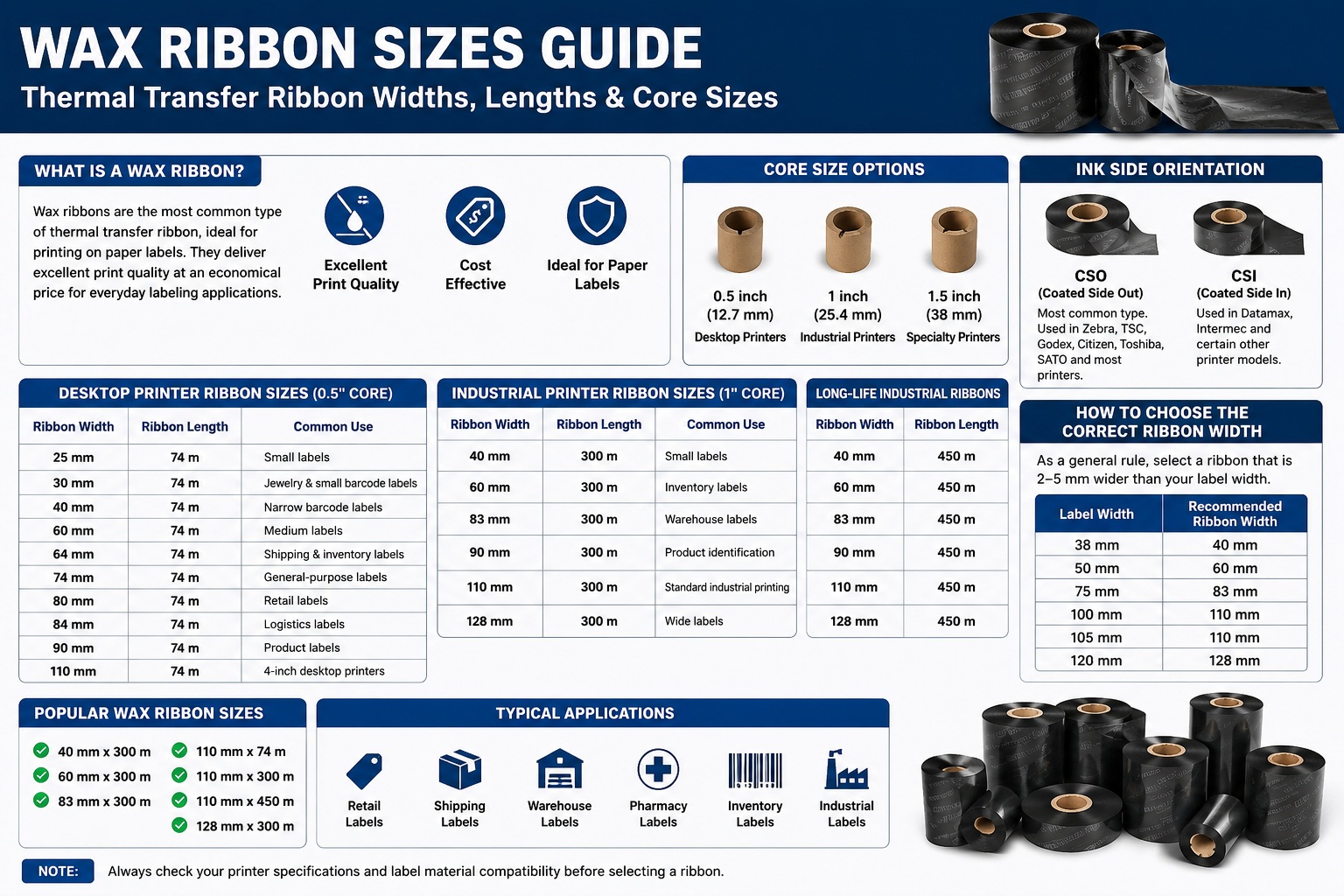
The ribbon should always be slightly wider than the label.
Examples:
|
Label Width |
Recommended Ribbon |
|
40 mm |
60 mm |
|
50 mm |
60 mm |
|
75 mm |
83 mm |
|
100 mm |
110 mm |
Using a ribbon that is too narrow can expose the printhead to direct contact with the label and shorten its lifespan.
Choosing Ribbon Length
Desktop Printers
- 74 m
- 91 m
- 110 m
- 300 m
Industrial Printers
- 300 m
- 450 m
- 600 m
Always verify your printer's ribbon capacity before purchasing.
CSI vs. CSO: Understanding Ribbon Ink Orientation
Thermal transfer ribbons are manufactured with two ink orientations:
CSI (Coated Side In)
Common in many desktop printers, including several Zebra, Citizen, Godex, and Honeywell models.
CSO (Coated Side Out)
Common in many industrial printers, including SATO, Toshiba TEC, and some TSC models.
Always confirm your printer's required ribbon orientation before ordering.
How to Achieve the Best Print Quality
Selecting the right ribbon is only part of the equation.
Match Ribbon Width to Label Width
Use a ribbon slightly wider than the label to protect the printhead while avoiding unnecessary waste.
Adjust Print Darkness Correctly
Too little heat causes:
- Light printing
- Missing dots
- Poor barcode quality
Too much heat causes:
- Smudging
- Ribbon wrinkles
- Ribbon breakage
- Reduced Printhead Life
Optimize Print Speed
- Fine text: Lower speed
- Dense barcodes: Medium speed
- Large shipping labels: Higher speed is acceptable
Clean the Printhead Regularly
Clean the printhead whenever you replace the ribbon or label roll using approved IPA cleaning wipes or cleaning pens.
Store Ribbons Properly
Store ribbons:
- Between 15–30°C (59–86°F)
- Away from direct sunlight
- In a clean, dry environment
- In their original packaging until use
Use High-Quality Labels
Premium labels provide:
- Better ink adhesion
- Consistent coating
- Improved barcode quality
- Less printer contamination
Calibrate the Printer
Whenever changing label materials:
- Run media calibration
- Verify ribbon sensor settings
- Check print alignment
- Print a test label
Common Ribbon Selection Mistakes
❌ Using wax ribbon on PET labels
Result:
The print scratches off easily.
❌ Using resin ribbon on standard paper labels
Result:
Higher costs with little added benefit and increased printhead wear.
❌ Choosing ribbons based only on price
Cheap ribbons often cause:
- Poor print quality
- Ribbon wrinkles
- Ribbon dust
- Increased downtime
- Faster printhead wear
How to Test Ribbon Compatibility
Before purchasing in large quantities:
- Print a sample label.
- Perform a fingernail scratch test.
- Apply adhesive tape and peel it away.
- Wipe the label with alcohol (if applicable).
- Scan the barcode using different scanners.
- Test under actual operating conditions.
Choosing Premium Thermal Transfer Ribbons
High-quality ribbons typically offer:
- Consistent coating thickness
- Better ink transfer
- Lower printhead wear
- Reduced ribbon breakage
- More consistent print quality
- Faster production speeds
- Longer shelf life
When combined with quality label materials, premium ribbons maximize printer performance and reduce the total cost of ownership.
Frequently Asked Questions
Can I use a wax ribbon on synthetic labels?
Wax ribbons are intended primarily for paper labels. While they may print on some synthetics, durability is limited. Wax-resin or resin ribbons are usually the better choice.
Which ribbon provides the highest durability?
Resin ribbons offer the best resistance to abrasion, chemicals, moisture, UV exposure, and heat.
Why are my labels smudging?
Common causes include using the wrong ribbon, excessive print darkness, or an incompatible label material.
Does ribbon quality affect barcode scanning?
Yes. Premium ribbons produce sharper, darker barcodes with better definition edge, improving scanner performance and reducing read errors.
Does ribbon quality affect printhead life?
Yes. High-quality ribbons typically have smoother back coatings and more consistent ink layers, reducing friction and helping extend printhead life.
Final Thoughts
Choosing the right thermal transfer ribbon is about more than selecting Wax, Wax-Resin, or Resin. The best results come from matching the ribbon to your label material, application, operating environment, and durability requirements.
As a rule:
- Wax ribbons are ideal for everyday paper labels and high-volume shipping applications.
- Wax-resin ribbons provide a balanced solution for coated paper and many synthetic labels that require greater durability.
- Resin ribbons are the preferred choice for harsh environments where labels must withstand chemicals, heat, moisture, abrasion, and outdoor exposure.
By pairing premium ribbons with high-quality label materials, maintaining your printer, and optimizing print settings such as darkness, speed, and pressure, you can achieve sharper print quality, longer-lasting labels, extended printhead life, and a lower total cost of ownership.