A Complete Guide to PVC, RFID, and More
Understanding ID & Smart Card Technology: A Complete Guide to PVC, RFID, and More
Choosing the right card technology for your business in Kuwait-whether for access control, time-attendance, or member identification-can be confusing. Terms like LF, HF, UHF, and MiFare are often used interchangeably, but they represent vastly different technologies.
In this guide, we break down the fundamental differences to help you make an informed decision for your infrastructure.
1. The Foundation: PVC Cards
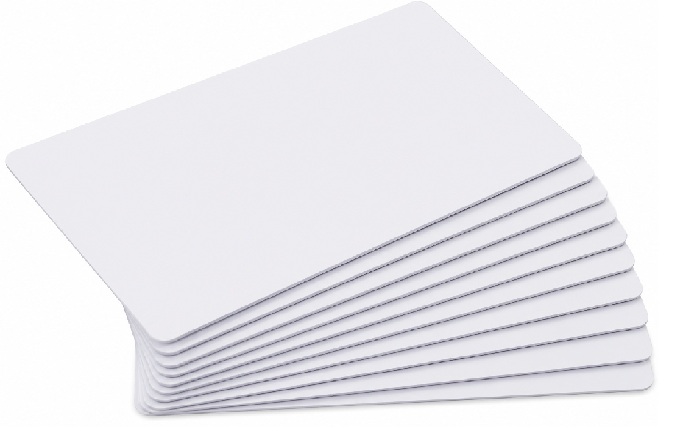
A PVC (Polyvinyl Chloride) card is the basic "canvas." It is a simple plastic card with no internal electronics.
-
Best For: Simple photo ID badges, membership cards, or loyalty cards where you only need to print a name, photo, or barcode.
-
The Difference: If it has no chip or antenna inside, it is just a PVC card.
2. RFID Cards (Radio Frequency Identification)
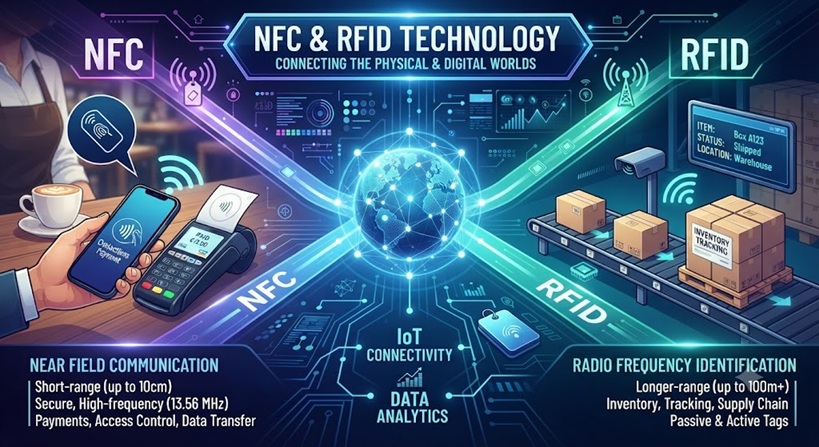
RFID is an umbrella term for any card that communicates wirelessly with a reader. Inside these cards, there is an antenna and a small microchip. They are categorized primarily by the frequency at which they operate:
Low Frequency (LF - 125 kHz)
-
-
-
-
Range: Very short (approx. 5-10 cm).
-
Usage: Mostly used for basic access control and animal tagging.
-
Pros/Cons: Reliable in harsh environments but offers low security and stores very little data.
-
-
-
High Frequency (HF - 13.56 MHz)
-
-
-
-
Range: Short (approx. 10 cm).
-
Usage: Payment systems, secure access control, and library management.
-
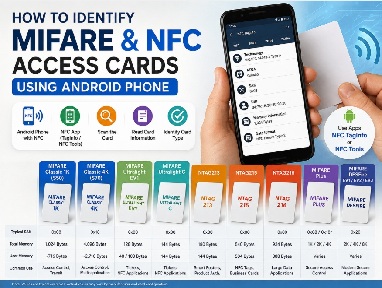
Note: MiFare cards are the most popular type of HF cards. They are highly secure because they use encryption, making them the industry standard for smart buildings and offices.
-
-
-
Ultra-High Frequency (UHF - 860-960 MHz)
-
-
-
-
Range: Long (up to 5-10 meters).
-
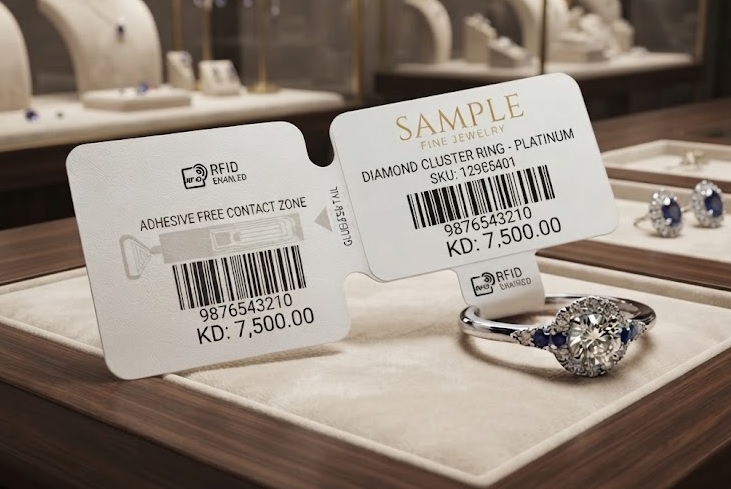
Usage: Vehicle parking systems, asset tracking, and logistics.
-
Pros: You don’t need to "tap" the card; the reader can identify it from a distance, allowing for hands-free entry.
-
-
-
Quick Comparison Table
|
Technology |
Frequency |
Primary Use |
Security Level |
|
PVC |
N/A |
Visual ID / Loyalty |
None |
|
Proximity (LF) |
125 kHz |
Basic Access Control |
Low |
|
MiFare (HF) |
13.56 MHz |
Payments / Secure Access |
High |
|
UHF |
860-960 MHz |
Logistics / Parking |
Medium |
What about NTAG (NFC) cards?
You may have heard of NTAG or NFC (Near Field Communication). Think of these as a specialized subset of High-Frequency cards.
Usage: They are designed to talk to smartphones. If you tap an NTAG card against an Android or iPhone, it can trigger a website link, a digital business card, or a specific app action.
How to choose the right technology for your business?
To decide, ask yourself these three questions:
|
|
1
|
|
What is the goal? If you need people to tap in for security, go with MiFare (HF). If you need a car to pass through a gate without stopping, choose UHF.
|
|
|
2
|
|
What is the budget? Simple PVC cards are the cheapest, while encrypted MiFare cards offer the best balance of cost and security.
|
|
|
3
|
|
Does it need to be custom-printed? At Smart Solutions Computer Co., we can print custom branding on all these card types, turning a blank electronic card into a professional, branded identity tool.
|
Need professional guidance?
Not sure which card frequency your current system uses? Or are you looking to upgrade your office security in Hawally? Contact Smart Solutions Computer Co. today. We offer everything from raw card stock to custom printing and system integration.
-
Visit our shop in Hawally
-
Call us: +965 9929 5426
-
Browse our range