Direct Thermal Labels: Understanding Quality, Coatings, Lifespan, and Printhead Impact
Direct Thermal Labels: Understanding Quality, Coatings, Lifespan, and Printhead Impact
Direct Thermal (DT) labels are among the most widely used labeling solutions across retail, logistics, healthcare, warehousing, food packaging, courier services, and many other industries. Their popularity comes from their simplicity, low operating cost, and ability to produce high-quality prints without requiring ink, toner, or ribbons.
However, not all direct thermal labels are manufactured to the same quality standards. Many buyers focus solely on price, often overlooking critical factors such as coating quality, lifespan, printhead wear, adhesive performance, and material consistency. Understanding the differences between standard, top-coated, and premium-grade direct thermal labels can significantly improve print quality, reduce maintenance costs, and extend printer life.
What Are Direct Thermal Labels?
Direct thermal labels are specially coated labels that react to heat generated by a thermal printhead. When heat is applied, the coating turns black, creating text, barcodes, graphics, and other printed information.
Unlike thermal transfer labels, direct thermal labels do not require a ribbon. This makes them a cost-effective and convenient choice for applications where labels are used for a relatively short period.
Common applications include:
- Shipping labels
- Courier labels
- Retail price labels
- Food packaging labels
- Inventory labels
- Pharmacy labels
- Event tickets
- Visitor badges
How Direct Thermal Technology Works
A thermal printer contains a printhead with hundreds of tiny heating elements. These elements selectively heat areas of the label's thermal coating.
When heated, the thermal layer undergoes a chemical reaction and turns black. Since the image is formed directly on the label surface, no ribbon or ink cartridge is required.
The quality of the thermal coating plays a major role in:
- Print darkness
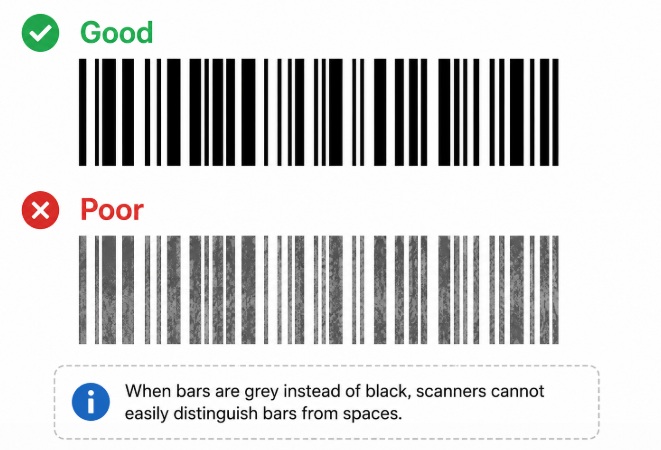
- Barcode readability
- Resistance to fading
- Printhead cleanliness
- Printer lifespan
Regular Direct Thermal Labels
Regular direct thermal labels are the most economical option available in the market.
These labels are suitable for:
- Short-term shipping labels
- Internal warehouse labels
- Temporary identification labels
- Products with quick turnover
Advantages
- Low purchase cost
- Good print quality for short-term use
- No ribbon required
- Fast printing speeds
- Ideal for high-volume applications
Disadvantages
- Sensitive to sunlight
- More prone to fading
- Vulnerable to heat exposure
- Easily affected by moisture
- Less resistant to scratches and abrasion
- May leave more residue on the printhead
Regular labels are generally recommended for applications where the label only needs to remain readable for a few days or weeks.
Top-Coated Direct Thermal Labels
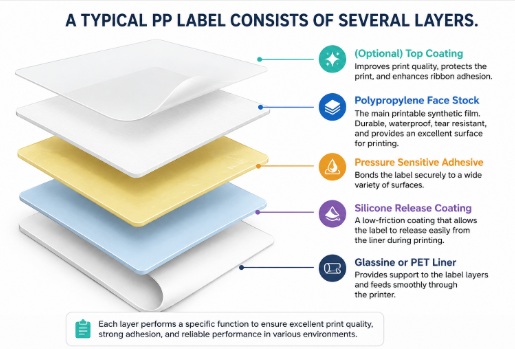
Top-coated direct thermal labels include an additional protective layer over the thermal coating.
This protective layer improves resistance against environmental factors and mechanical damage.
Benefits of Top-Coated Labels
The top coating provides protection against:
- Moisture
- Oils and grease
- Dirt and dust
- Light chemicals
- Scratches
- Smudging
As a result, top-coated labels maintain print quality for significantly longer periods.
Common Applications
Top-coated labels are ideal for:
- Cold storage environments
- Food packaging
- Healthcare applications
- Pharmaceutical labeling
- Logistics and export shipments
- Outdoor short-term applications
Advantages
- Better image durability
- Improved resistance to environmental conditions
- Reduced fading
- Cleaner printer operation
- Better barcode scanning performance over time
Disadvantages
- Higher cost than regular labels
- May not be necessary for very short-term applications
For businesses that require dependable barcode readability and professional appearance, top-coated labels are usually worth the additional investment.
Premium Grade Direct Thermal Labels
Premium-grade labels are manufactured by established and recognized manufacturers using high-quality paper, thermal coatings, adhesives, and production processes.
Examples include labels produced using materials from globally recognized manufacturers such as:
- Avery Dennison
- UPM Raflatac
- Fasson
- Herma
- Ricoh
- Mitsubishi Paper Mills
- Koehler Paper
Premium labels often incorporate advanced thermal chemistry and superior manufacturing controls.
Characteristics of Premium Labels
- Consistent coating thickness
- Superior image quality
- Better adhesive performance
- Reduced dust generation
- Cleaner die-cutting
- Better release liners
- Extended image life
- Excellent barcode readability
Benefits
Businesses often notice:
- Fewer printer jams
- Less printhead cleaning
- Better scanner performance
- Lower printer maintenance costs
- Improved customer satisfaction
While the initial label cost may be slightly higher, premium labels frequently reduce the total cost of ownership.
Label Lifespan Comparison
The lifespan of a direct thermal label depends on:
- Storage conditions
- Exposure to sunlight
- Temperature
- Humidity
- Label quality
- Presence of top coating
Typical Lifespan
Regular DT Labels:
- 6 months to 1 year in storage
- Printed image may fade within months under harsh conditions
Top-Coated DT Labels:
- 1 to 3 years under normal indoor conditions
- Better resistance to environmental factors
Premium Top-Coated Labels:
- Often maintain readability significantly longer when stored correctly
It is important to remember that direct thermal technology is generally intended for short-to-medium-term applications. For labels requiring several years of durability, thermal transfer printing is usually recommended.
Impact on Thermal Printheads
One of the most overlooked factors when selecting labels is their impact on the printer's thermal printhead.
The printhead is the most expensive consumable component of a thermal printer.
Poor Quality Labels Can Cause
- Excessive paper dust
- Adhesive contamination
- Uneven heat transfer
- Increased printhead wear
- Frequent cleaning requirements
- Reduced print quality
Low-grade labels often contain inconsistent coatings and rough paper surfaces that create additional friction against the printhead.
Over time, this can shorten printhead life considerably.
Premium Labels Help Protect Printheads
Premium labels are engineered with:
- Smooth surfaces
- Consistent coatings
- Better release liners
- Reduced dust generation
This allows the printhead to operate more efficiently and often extends its service life.
For businesses printing thousands of labels per day, the savings in maintenance and replacement costs can be substantial.
Adhesive Quality Matters
The label face stock is only one component of label quality.
The adhesive also plays a crucial role.
High-quality adhesives provide:
- Consistent adhesion
- Better temperature resistance
- Reduced edge lifting
- Stronger bonding to difficult surfaces
Inferior adhesives may result in:
- Labels falling off products
- Curling edges
- Adhesive leakage
- Printer contamination
Premium manufacturers invest heavily in adhesive technology to ensure reliable performance across various environments.
Which Direct Thermal Label Should You Choose?
Choose Regular Labels If:
- Cost is the primary concern
- Labels are used for short periods
- Indoor conditions are controlled
- Labels are replaced frequently
Choose Top-Coated Labels If:
- Labels may encounter moisture
- Barcode readability is critical
- Products move through logistics networks
- Labels need to remain readable longer
Choose Premium Grade Labels If:
- High print volumes are involved
- Printer reliability is important
- Downtime is costly
- Professional appearance is required
- Long-term operating costs matter
Conclusion
Direct thermal labels may appear similar at first glance, but significant differences exist between standard, top-coated, and premium-grade products. While low-cost labels may reduce immediate expenses, they can result in faded prints, increased printer maintenance, and shorter printhead life.
Top-coated labels offer improved durability and environmental resistance, making them suitable for more demanding applications. Premium-grade labels from established manufacturers deliver the highest level of consistency, print quality, barcode performance, and printer protection.
When evaluating direct thermal labels, businesses should consider not only the purchase price but also the total cost of ownership, including printer maintenance, printhead replacement, label durability, and operational efficiency. Investing in quality labels often delivers better long-term value, improved reliability, and a more professional appearance for your products and shipments.
Looking for Direct thermal labels?