The Ultimate Guide to Jewelry Labeling
The Ultimate Guide to Jewelry Labeling: From Traditional Tags to Smart RFID Technology
In the world of high-end retail, where every milligram of gold and every facet of a diamond carries significant value, the humble jewelry label acts as the silent guardian of your inventory. Often overlooked by the casual shopper, these labels are marvels of engineering designed to withstand harsh environments, prevent theft, and provide crucial data at a glance. Whether you are a boutique owner or managing a large-scale inventory, understanding the evolution of jewelry labeling is essential for operational excellence.
What’s in a Name? The Many Faces of Jewelry Labels
Jewelry labels go by many names depending on their design, application, and form factor. While industry professionals often use these terms interchangeably, each refers to a specific design utility:
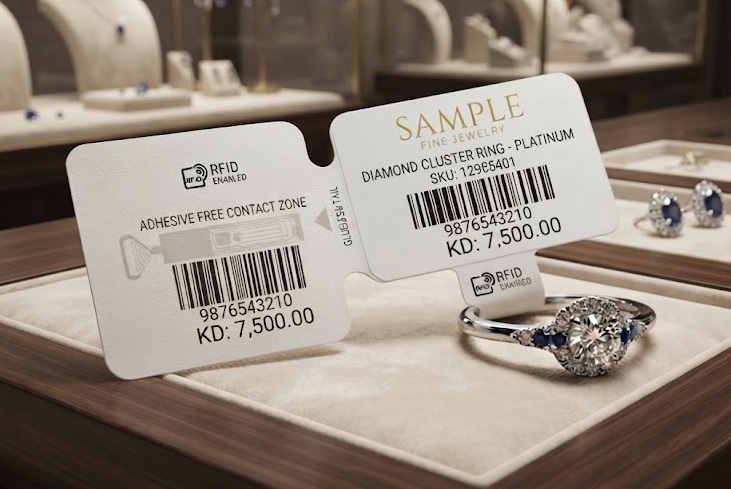
· Dumbbell Labels: These are the most iconic form, featuring two wider ends for printing information-like price, SKU, or barcodes-connected by a thin, adhesive-free center. They are "wrapped around" items so the two ends stick together, leaving no sticky residue on the jewelry.
· Butterfly Labels: Similar to dumbbell labels, these often have a broader central section to accommodate more information or branding.
· Rat-Tail (or Loop) Labels: These feature a long, thin "tail" that is designed to loop through small spaces, such as watch straps or chains, before being folded back and secured to the main body of the label.
· Ring Tags: Specialized, compact labels designed to conform to the curvature of rings without obstructing the setting or the metal.
· Hang Tags: Larger, often premium labels that attach via string or plastic loop; these are frequently used for higher-end pieces where adhesive contact with the jewelry is undesirable.
Materialism: Built to Survive
Jewelry is not stored in an office; it is subjected to ultrasonic cleaning, harsh cabinet lighting, skin oils, and occasionally chemical polishing agents. Standard paper labels would disintegrate in days. Therefore, modern jewelry labels are constructed from tear-resistant synthetic materials.
Key Material Characteristics:
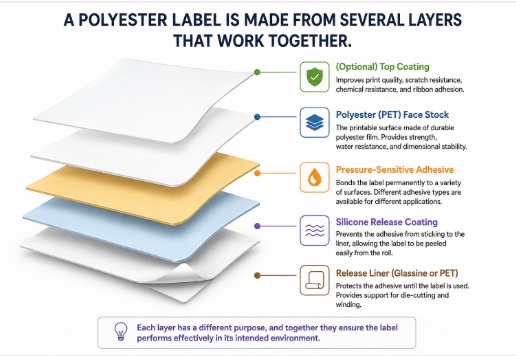
· Polyester (PET): The gold standard for durability. It is highly resistant to heat, water, chemicals, and physical tearing. PET labels ensure that even after months in a display case, the barcode remains scannable and the text legible.
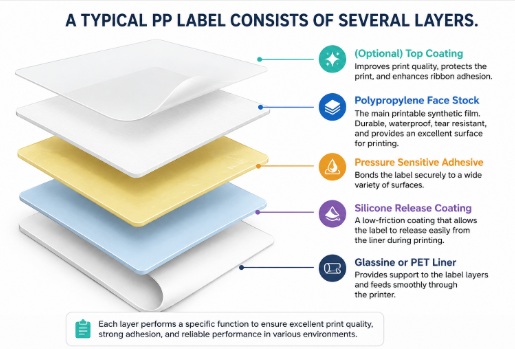
· Polypropylene (PP): A cost-effective synthetic alternative that offers excellent flexibility, making it ideal for labels that need to wrap tightly around irregular jewelry shapes.
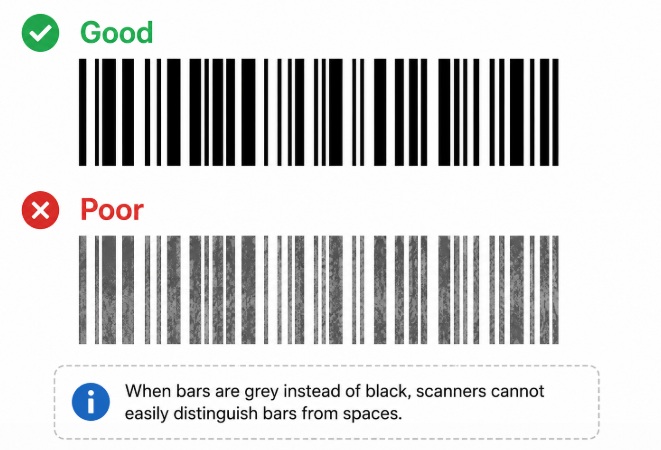
· Thermal Transfer Compatibility: Most durable labels are designed for thermal transfer printing. Using a specialized resin ribbon, the ink is "baked" into the synthetic surface, making it virtually smudge-proof and resistant to the intense light of retail displays.
The Innovation of the "Glueless Tail"
One of the most persistent problems in jewelry retail is adhesive residue. If a label’s glue touches the metal or stone, removing it often requires chemical cleaners that can damage delicate surfaces.
Enter the "Glueless Tail" (or adhesive-free zone) technology.
What is a Glueless Tail?
In a standard dumbbell label, the adhesive usually covers the entire surface. In a glueless tail design, the center section-the part that actually touches the jewelry-is specifically engineered to be adhesive-free. Only the "head" and "tail" ends contain the pressure-sensitive adhesive.
Benefits of the Glueless Tail:
1. Zero Residue: Since no adhesive touches the jewelry, you never have to worry about cleaning off sticky patches after a sale.
2. Safety for Delicate Items: It prevents chemical interactions between adhesives and porous stones like pearls, opals, or soft metals.
3. Customer Experience: Nothing ruins the luxury experience of buying a ring like having to scrub glue off the band. A glueless tail ensures the customer receives their item in pristine condition.
The Smart Revolution: RFID-Enabled Labels
As retail moves toward full digitization, the integration of Radio Frequency Identification (RFID) into jewelry labels has transformed inventory management from a tedious chore into an automated, lightning-fast process.
What is an RFID Jewelry Label?
These labels look like standard synthetic tags but house a microscopic RFID inlay (an antenna and a chip) between the layers of the label material.
Why RFID is a Game-Changer:
· Bulk Scanning: Unlike barcodes, which require a "line-of-sight" (the scanner must see the code), RFID readers can scan hundreds of items in a display case simultaneously. A task that once took hours of manual counting can now be done in seconds.
· Security and Loss Prevention: RFID tags can be configured to trigger alarms if an item leaves the store without being properly deactivated. Additionally, "tamper-evident" RFID labels are available; if someone tries to tear the label off, the antenna is destroyed, rendering the tag inactive and alerting the system to the theft.
· Smart Store Features: Imagine a customer picking up a watch from a display case. An RFID-enabled "smart tray" can detect that the item has been lifted and immediately display its specifications, price, and history on a nearby screen, enhancing the customer experience.
· Real-Time Inventory Visibility: You will know exactly which items are on the sales floor versus the safe, and you can track movement patterns to understand which pieces attract the most attention from browsers.
Conclusion: Choosing the Right Label
Selecting the right label is about balancing your brand’s prestige with operational efficiency. While a basic tear-resistant dumbbell label is sufficient for high-volume, lower-cost items, the shift toward glueless tails is rapidly becoming the industry standard for customer satisfaction. For high-value inventory, the investment in RFID-enabled labeling is no longer just a luxury-it is a critical tool for security, precision, and modernizing the retail experience.
By choosing the right material and the right technology, you do more than just label a product; you protect your investment and ensure that your customers see only the beauty of the jewelry, not the mechanics of the retail process.