Understanding Direct Thermal Labels
Understanding Direct Thermal Labels: The Complete Guide to Definition, Mechanics, and Retail Applications
In the fast-paced world of retail and logistics, efficiency is the currency of success. Whether you are managing inventory at Smart Solutions Computer Co. or organizing a retail showroom in Hawally, the ability to generate clear, durable, and instant labels is paramount. Among the various technologies available, Direct Thermal Printing stands out as the most streamlined method for short-term labeling.
This guide explores exactly what a direct thermal label is, the science behind its operation, and why it is a staple in modern business environments.
What Is a Direct Thermal Label? The Definition
At its core, a Direct Thermal Label is a specialized type of paper or synthetic material coated with a heat-sensitive chemical layer. Unlike traditional printing methods that require ribbons, ink cartridges, or toner, these labels undergo a chemical reaction when exposed to the targeted heat of a thermal printhead.
This technology is synonymous with high-speed, on-demand printing. Because the label itself contains the "ink" in the form of a reactive coating, the printer's only job is to provide heat to specific points on the surface, turning those spots black to create text, barcodes, or graphics.
How Does It Work? The Science of Heat-Activated Ink
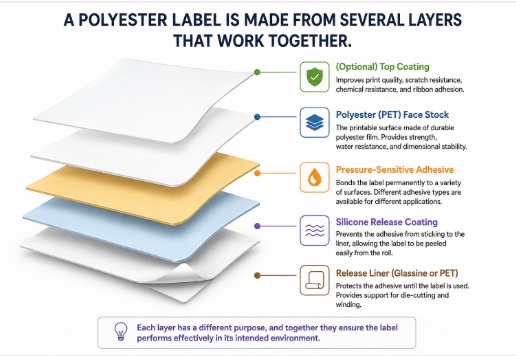
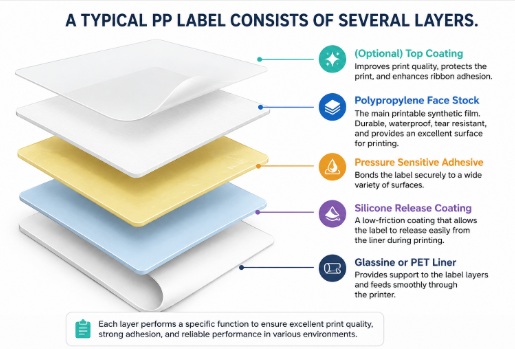
To understand how a direct thermal label works, you must look at the three layers that typically make up the label:
1. The Face Material: This is the base paper or synthetic sheet.
2. The Thermal Coating: This is the "magic" layer containing a solid-state mixture of a colorless dye and a developer, often separated by a wax-like material.
3. The Adhesive and Liner: The backing that allows the label to stick to your product.
The Printing Process
When a thermal printer receives a signal, the printhead-a row of tiny, high-precision heating elements-warms up in milliseconds. As the label passes underneath, the heat melts the wax-like substance in the thermal coating. This allows the dye and the developer to mix and react, resulting in a dark mark wherever the printhead applied heat.
Because the process is purely chemical and thermal, there is no physical ink involved, making the printer mechanisms significantly simpler and easier to maintain than inkjet or laser alternatives.
Where Are Direct Thermal Labels Used?
Direct thermal labels are favored in industries where labels are used for short durations and then discarded or moved quickly through the supply chain. Because the labels are sensitive to heat and light, they are not intended for long-term outdoor storage, but they excel in the following areas:
· Retail Point-of-Sale (POS): In environments like your showroom, these are perfect for price tags, shelf labels, and receipts.
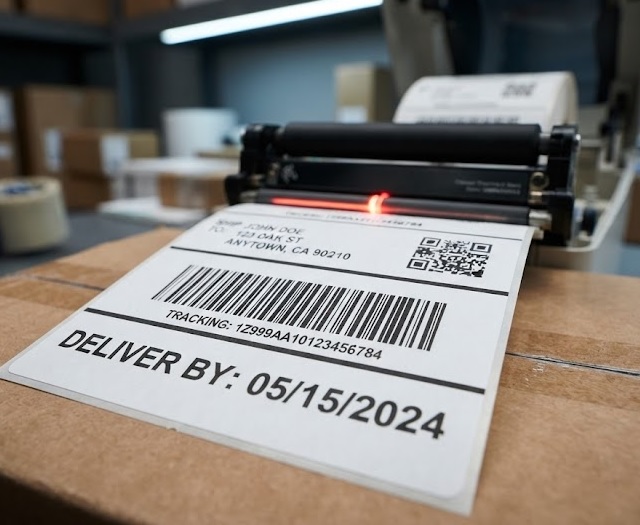
· Shipping and Logistics: From Amazon warehouse stickers to local courier shipping labels, the speed of thermal printing is unmatched.
· Healthcare: Patient identification wristbands and laboratory sample labels require the high-contrast, scannable clarity that direct thermal printing provides.
· Food and Beverage: "Best before" labels in grocery stores are almost exclusively direct thermal, as the labels are consumed or discarded within a short timeframe.
Direct Thermal vs. Thermal Transfer: Choosing the Right Tool
It is a common mistake to confuse "Direct Thermal" with "Thermal Transfer." While both use thermal printheads, they operate differently:
· Direct Thermal: Uses no ribbon. The heat reacts directly with the label. It is cheaper and easier to manage but less durable against UV light and extreme heat.
· Thermal Transfer: Uses a wax, resin, or wax-resin ribbon. The printhead melts the ink from the ribbon onto the label. This creates a much more durable, permanent print that can withstand years of shelf life, heat, and chemical exposure.
For your high-durability jewelry labels, which you often require for long-term inventory in Kuwait’s climate, Thermal Transfer is usually the preferred choice. However, for internal inventory tracking and quick-turnaround labeling, Direct Thermal is often more cost-effective.
The Benefits of Using Direct Thermal Labels
For businesses looking to optimize their workflow, direct thermal labels offer several distinct advantages:
1. Cost Efficiency
Since you never need to purchase ribbons, ink, or toner, your ongoing operational costs are significantly lower. You only pay for the label stock itself.
2. Simplified Maintenance
Without the complex mechanics of ribbon spindles or ink delivery systems, direct thermal printers have fewer moving parts. This results in less downtime and a lower total cost of ownership for your hardware.
3. High-Speed Output
These printers are built for speed. If you need to print hundreds of shipping labels or price tags in a single shift, a direct thermal printer will handle the workload without breaking a sweat.
4. Eco-Friendly Potential
Many direct thermal labels are available as "BPA-free" options, making them safer for environments where food or consumer health is a concern. Additionally, the lack of hazardous ink cartridges makes them easier to recycle in many facilities.
A Professional Guide to Selecting Your Labels
When purchasing labels for your business, consider these factors to ensure compatibility with your printers:
· Core Size: Ensure the inner core of your label roll (usually 1-inch or 3-inch) matches your printer’s spindle.
· Label Width and Height: Always verify your printer’s maximum print width. A label that is too wide will cause errors or edge-clipping.
· Adhesive Type: Use removable adhesives for items where you do not want to leave a sticky residue, and permanent adhesives for shipping boxes or long-term inventory boxes.
· Printer Compatibility: Always check if your printer is a "desktop" model or an "industrial" model. Desktop models typically take smaller rolls, while industrial models take larger, higher-capacity rolls.
Conclusion: Making the Right Choice
Direct thermal labeling is the backbone of efficient retail and logistics operations. By understanding that this technology relies on heat-activated chemistry rather than physical ink, you can better appreciate its speed, affordability, and simplicity.