Direct Thermal vs Thermal Transfer Labels – What's the Difference?
Direct Thermal vs Thermal Transfer Labels – What's the Difference?
Meta Title:
Meta Description:
What Are Direct Thermal and Thermal Transfer Labels?
When purchasing barcode labels, one of the first decisions is choosing between Direct Thermal (DT) and Thermal Transfer (TT) labels.
Although they may look similar, they use completely different printing technologies and are designed for different applications.
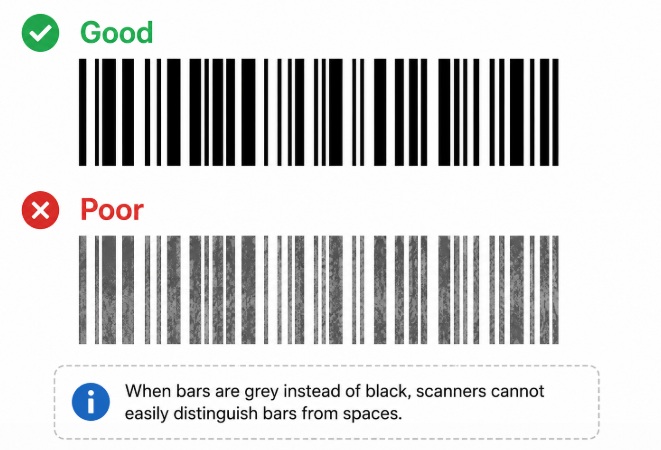
Choosing the wrong label type can lead to faded prints, scanning problems, or unnecessary printing costs.
In this guide, we'll explain the differences between Direct Thermal vs Thermal Transfer labels, including how they work, their advantages and disadvantages, and when each type should be used.
How Direct Thermal Labels Work
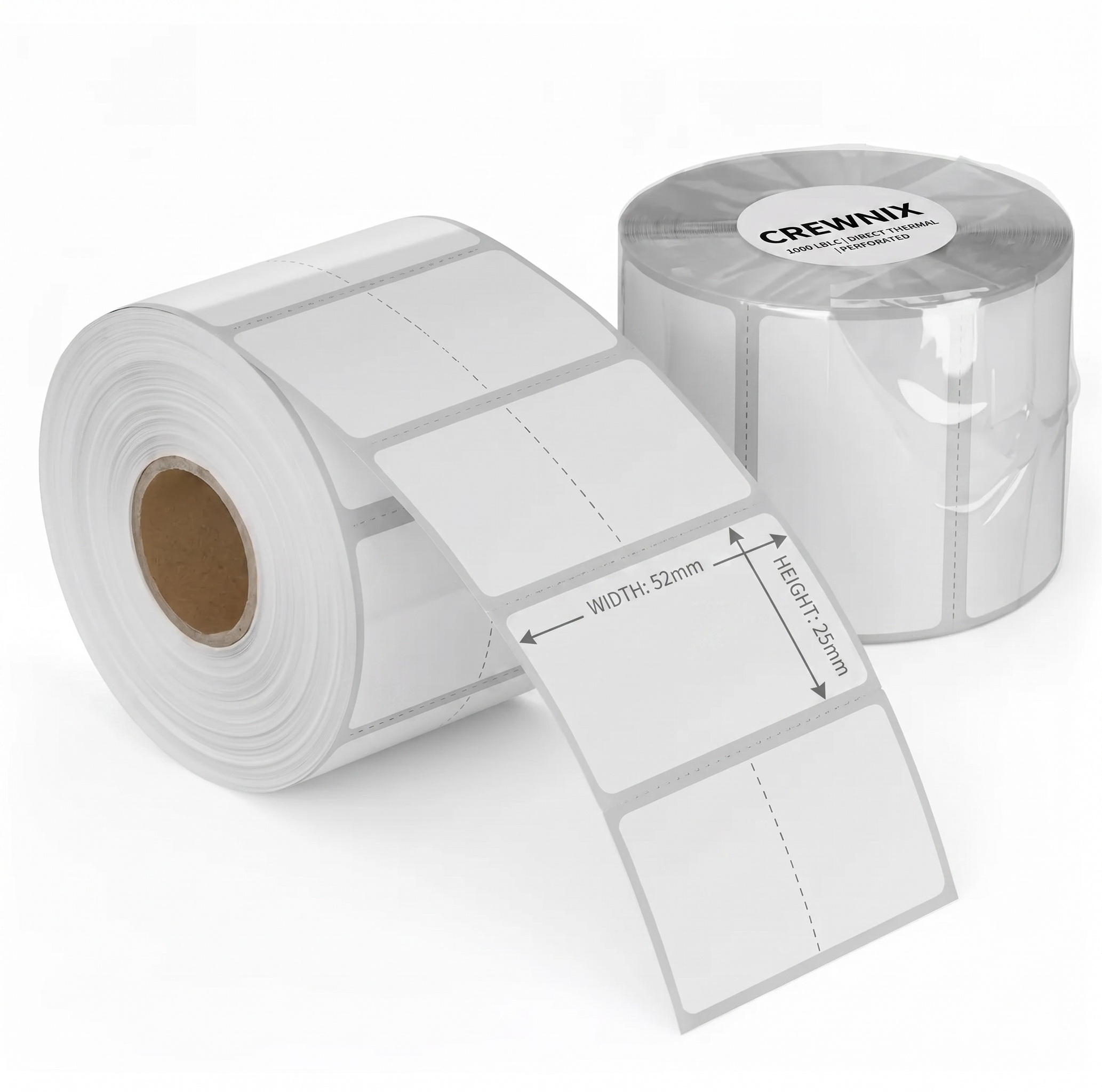
Direct Thermal labels are coated with a heat-sensitive chemical layer.
When the thermal printhead applies heat, the coating turns black, forming the text, barcode, or image.
No ribbon, ink, or toner is required.
Advantages
- No ribbon required
- Lower operating costs
- Simple printer operation
- Faster media loading
- Less maintenance
- Ideal for short-term labels
Disadvantages
- Sensitive to heat
- Sensitive to sunlight
- Can fade over time
- Not suitable for long-term storage
- Less resistant to chemicals and abrasion
Common Applications
- Shipping labels
- Courier labels
- Receipt labels
- Food packaging
- Visitor badges
- Retail price labels
- Temporary inventory labels
How Thermal Transfer Labels Work
Thermal Transfer labels require a thermal ribbon.
The printhead heats the ribbon, transferring ink onto the label surface.
Unlike Direct Thermal labels, the label itself does not react to heat.
Advantages
- Long-lasting print
- Excellent barcode quality
- Resistant to sunlight
- Resistant to moisture
- Better chemical resistance
- Suitable for outdoor use
- Available in paper and synthetic materials
Disadvantages
- Ribbon required
- Slightly higher running cost
- Ribbon replacement required
Common Applications
- Asset labels
- Product identification
- Warehouse labels
- Shelf labels
- Industrial labels
- Laboratory labels
- Electronics labels
- Manufacturing labels
- Long-term inventory labels
Direct Thermal vs Thermal Transfer Comparison
|
Feature |
Direct Thermal |
Thermal Transfer |
|
Ribbon Required |
❌ No |
✅ Yes |
|
Print Method |
Heat-sensitive label |
Ribbon transfers ink |
|
Print Durability |
Short-term |
Long-term |
|
Heat Resistance |
Low |
High |
|
Sunlight Resistance |
Poor |
Excellent |
|
Chemical Resistance |
Poor |
Excellent (with suitable ribbon/material) |
|
Scratch Resistance |
Low |
High |
|
Outdoor Use |
Not recommended |
Recommended |
|
Operating Cost |
Lower |
Slightly higher |
|
Maintenance |
Lower |
Ribbon replacement required |
Which One Lasts Longer?
If durability is important, Thermal Transfer is the better choice.
Typical lifespan:
Direct Thermal
- A few months to about one year, depending on storage and environmental conditions.
Thermal Transfer
- Several years with the correct ribbon and label material.
- Synthetic labels paired with resin ribbons can last even longer in demanding environments.
Cost Comparison
Direct Thermal
Lower initial and running costs because no ribbon is required.
Thermal Transfer
Slightly higher operating cost due to ribbon consumption but often provides better long-term value for durable labeling.
Which Industries Use Direct Thermal?
Direct Thermal is commonly used in:
- Courier services
- Shipping
- Retail
- Supermarkets
- Food packaging
- Healthcare
- Logistics
Which Industries Use Thermal Transfer?
Thermal Transfer is preferred for:
- Manufacturing
- Warehousing
- Asset tracking
- Automotive
- Electronics
- Chemical industry
- Healthcare laboratories
- Government
- Industrial production
Choosing the Right Label
Choose Direct Thermal if you need:
- Low-cost labels
- Temporary labels
- Shipping labels
- Fast printing
- No ribbon maintenance
Choose Thermal Transfer if you need:
- Long-lasting labels
- Outdoor labels
- Chemical-resistant labels
- Asset labels
- Product labels
- High-quality barcodes
- Industrial applications
Frequently Asked Questions
Can a Thermal Transfer printer print Direct Thermal labels?
Yes. Most Thermal Transfer printers can print Direct Thermal labels when the ribbon is removed and the correct media settings are selected.
Can Direct Thermal printers print Thermal Transfer labels?
No. Direct Thermal printers do not have a ribbon mechanism and therefore cannot print Thermal Transfer labels.
Which produces better barcode quality?
Both technologies can produce excellent barcode quality when configured correctly. Thermal Transfer generally offers better long-term durability and maintains barcode readability over time.
Which is cheaper?
Direct Thermal has lower consumable costs because it does not require a ribbon.
Conclusion
Both Direct Thermal and Thermal Transfer labels have important roles in barcode labeling. Direct Thermal labels are ideal for short-term applications where simplicity and low operating costs are priorities. Thermal Transfer labels are the preferred choice when long-lasting, durable, and resistant labels are required.
Selecting the correct technology depends on the label's intended lifespan, environmental conditions, and application. Understanding these differences helps ensure reliable barcode scanning, reduced maintenance, and lower overall operating costs.