Polyester (PET) Labels: Advantages, Disadvantages
Polyester (PET) Labels: Advantages, Disadvantages, and Why Premium Materials Matter
Understanding Polyester (PET) Labels
Polyester labels, commonly referred to as PET Labels (Polyethylene Terephthalate Labels), are among the most durable labeling materials available in the market today. They are specifically designed for applications where standard paper labels and even polypropylene (PP) labels may not provide sufficient durability.
PET labels are widely used in industries such as electronics, manufacturing, automotive, healthcare, telecommunications, electrical installations, laboratory environments, and asset management. Their exceptional resistance to heat, chemicals, abrasion, and environmental conditions makes them the preferred choice for long-term identification applications.
While PET labels generally cost more than paper and PP labels, they offer unmatched performance and longevity in demanding environments.
What Are PET Labels?
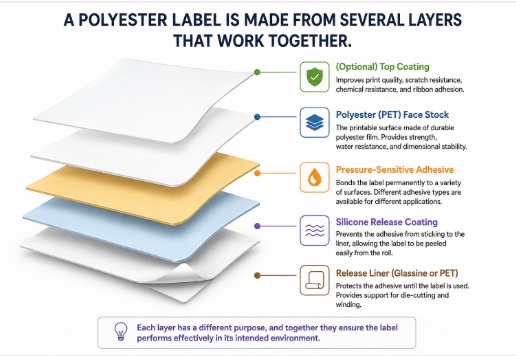
PET labels are manufactured using polyester film, a high-strength synthetic material known for its excellent dimensional stability and durability.
They are commonly available in:
- White Polyester Labels
- Silver Polyester Labels
- Matte Silver PET Labels
- Gloss Silver PET Labels
- Transparent Polyester Labels
- Tamper-Evident Polyester Labels
- High-Temperature Polyester Labels
- Asset Tracking Labels
PET labels are typically printed using thermal transfer printers and require wax-resin or resin ribbons to achieve maximum durability.
Advantages of PET Labels
1. Exceptional Durability
The primary advantage of PET labels is their outstanding durability.
Compared to paper and PP labels, polyester labels provide:
- Superior mechanical strength
- Excellent wear resistance
- Long-term stability
- Extended service life
Many PET labels remain readable and intact for years, even in harsh environments.
2. Excellent Heat Resistance
PET labels can withstand significantly higher temperatures than standard paper and PP labels.
This makes them ideal for:
- Electrical panels
- Industrial equipment
- Manufacturing environments
- Cable and wire identification
- Electronics production
Certain industrial-grade PET labels can tolerate temperatures exceeding 150°C when combined with the appropriate adhesive.
3. Outstanding Chemical Resistance
PET labels offer superior resistance against:
- Industrial cleaners
- Oils
- Fuels
- Solvents
- Lubricants
- Chemical splashes
This makes them suitable for factories, laboratories, and industrial facilities.
4. Superior Scratch Resistance
One major advantage of polyester labels is their resistance to scratching and abrasion.
When printed with resin ribbons, PET labels provide:
- Long-lasting print quality
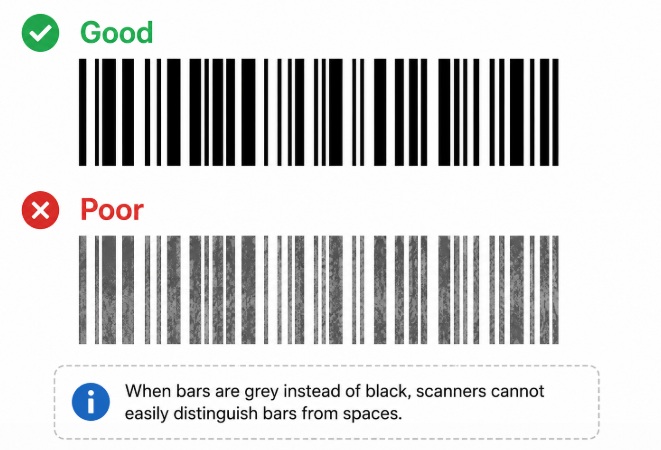
- High barcode readability
- Excellent resistance to handling damage
This is particularly important for asset tracking and inventory management applications.
5. Excellent Outdoor Performance
PET labels perform exceptionally well outdoors.
Benefits include:
- UV resistance
- Weather resistance
- Moisture resistance
- Temperature resistance
Many equipment manufacturers use polyester labels for outdoor identification plates and compliance markings.
6. Long-Term Asset Identification
PET labels are commonly used for:
- Asset tags
- Equipment identification
- Serial number labels
- Rating plates
- Compliance labels
Their durability makes them ideal for applications requiring many years of service life.
Disadvantages of PET Labels
Although PET labels offer numerous advantages, they also have some limitations.
1. Higher Cost
PET labels are typically more expensive than:
- Paper labels
- Direct thermal labels
- PP labels
The higher cost reflects the superior material quality and performance characteristics.
2. Requires Premium Ribbons
To achieve maximum durability, PET labels should be printed using:
- Resin ribbons
- High-performance wax-resin ribbons
Using low-quality ribbons may reduce scratch resistance and chemical resistance.
3. Less Flexible Than PP Labels
Polyester material is generally more rigid than polypropylene.
For applications requiring high flexibility or curved surfaces, PP labels may sometimes perform better.
4. Over-Specified for Simple Applications
For short-term applications such as:
- Retail pricing
- Temporary shipping labels
- Promotional labels
PET labels may be unnecessary and increase costs without providing additional value.
Difference Between Regular PET Material and Premium Branded PET Material
Many polyester labels appear similar visually, but their performance can vary dramatically.
Regular Generic PET Labels
Low-cost polyester materials often use:
- Lower-grade films
- Basic adhesives
- Minimal quality control
Potential issues include:
- Inconsistent thickness
- Reduced chemical resistance
- Poor print quality
- Adhesive failure
- Reduced outdoor durability
While these materials may offer initial cost savings, they often lead to premature label failure.
Premium Branded PET Labels
Leading manufacturers invest heavily in:
- Advanced coating technology
- Consistent manufacturing standards
- Superior adhesives
- High-performance polyester films
Advantages include:
- Consistent print quality
- Better barcode scanning
- Improved chemical resistance
- Enhanced UV resistance
- Longer service life
For mission-critical labeling applications, premium materials often deliver significantly better performance.
Why Adhesive Quality Is Critical
Many label failures occur because of poor adhesive performance rather than face material failure.
Premium PET labels typically use advanced adhesive systems designed for:
- Powder-coated surfaces
- Metal equipment
- Plastics
- Textured surfaces
- Outdoor environments
Special adhesive options include:
- Permanent adhesive
- High-strength adhesive
- Removable adhesive
- High-temperature adhesive
- Industrial-grade adhesive
Choosing the correct adhesive is essential for long-term reliability.
Impact on Thermal Printheads
The quality of PET labels directly affects printer performance.
Low-quality materials may generate:
- Excess dust
- Coating residue
- Uneven surfaces
These issues can lead to:
- Printhead contamination
- Poor print quality
- Increased maintenance
- Reduced printhead lifespan
Premium polyester labels generally provide cleaner printing and more consistent results.
PET Labels vs PP Labels
Many buyers wonder whether to choose PET or PP labels.
PP Labels
Advantages:
- Lower cost
- Good moisture resistance
- Flexible material
- Suitable for product labeling
Applications:
- Retail products
- Food packaging
- Warehouse labels
- Logistics labels
PET Labels
Advantages:
- Superior durability
- Better chemical resistance
- Better heat resistance
- Longer lifespan
Applications:
- Asset tags
- Equipment labels
- Electrical panels
- Industrial identification
In simple terms, PP labels are ideal for general-purpose labeling, while PET labels are designed for long-term industrial applications.
Common Applications of PET Labels
Asset Management
- Asset tracking labels
- Equipment identification tags
- Property labels
Electrical Industry
- Panel labels
- Switch labels
- Cable identification
Manufacturing
- Serial number labels
- Compliance labels
- Production tracking labels
Telecommunications
- Network equipment labels
- Fiber identification labels
- Rack labeling
Healthcare
- Laboratory equipment labels
- Medical device identification
Automotive Industry
- Component identification
- Engine compartment labels
- Safety labels
Silver PET Labels
Silver polyester labels are among the most popular PET label types.
Benefits include:
- Premium metallic appearance
- Excellent durability
- Professional finish
- High barcode readability
Silver PET labels are widely used for:
- Asset tags
- Nameplates
- Equipment identification
- Industrial compliance labels
Conclusion
Polyester (PET) labels represent the highest level of durability available in pressure-sensitive labeling materials. Their resistance to heat, chemicals, moisture, abrasion, and outdoor exposure makes them the preferred solution for industrial, electrical, automotive, telecommunications, and asset management applications.
While PET labels cost more than paper and polypropylene labels, their superior performance often results in lower long-term costs through reduced replacements, better reliability, and improved barcode readability.
For businesses requiring permanent identification, asset tracking, equipment labeling, or industrial-grade durability, investing in high-quality branded PET labels is often the most reliable and cost-effective choice.
Looking for Polyester (PET) labels?