Thermal Transfer Labels | TT Labels, Ribbons & Durable Barcode Labels
Thermal Transfer Labels: Quality, Durability, Ribbon Benefits, and Choosing the Right Grade
Introduction
Thermal Transfer (TT) labels are widely recognized as the preferred labeling solution when durability, longevity, and professional print quality are required. Unlike Direct Thermal labels, which rely on a heat-sensitive coating, Thermal Transfer labels use a ribbon that transfers ink onto the label surface through heat and pressure.
TT labels are used extensively in manufacturing, logistics, healthcare, electronics, laboratories, automotive industries, asset tracking, and outdoor applications where labels must remain readable for months or even years.
However, not all Thermal Transfer labels are created equal. The quality of the label material, adhesive, ribbon, and manufacturing process significantly affects print performance, barcode readability, durability, and even the lifespan of the printer's printhead.
This guide explains the differences between standard and premium Thermal Transfer labels, the benefits of ribbons, expected lifespan, printhead impact, and the pros and cons of various label grades.
What Are Thermal Transfer Labels?
Thermal Transfer labels require two components:
- Label material
- Thermal Transfer ribbon
During printing, the printhead applies heat to the ribbon, causing the ink to transfer onto the label surface.
Unlike Direct Thermal technology, the label itself contains no heat-sensitive coating. Instead, the image is created by the ribbon's ink layer.
This process creates highly durable prints that resist fading, scratching, moisture, chemicals, and environmental exposure.
Common Applications of TT Labels
Thermal Transfer labels are commonly used for:
- Product identification
- Asset tags
- Inventory labels
- Warehouse labels
- Industrial labels
- Laboratory labels
- Pharmaceutical labels
- Cable and wire markers
- Electronics labeling
- Compliance labels
- Outdoor equipment labels
Because of their durability, TT labels are often chosen whenever long-term readability is important.
Types of Thermal Transfer Label Materials
Thermal Transfer technology can print on a wide variety of materials.
Paper Labels
The most economical option.
Suitable for:
- Product labels
- Inventory labels
- Retail applications
- Warehouse identification
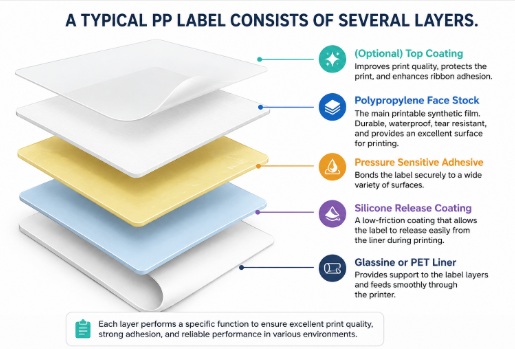
Polypropylene (PP) Labels
Offer improved durability and moisture resistance.
Suitable for:
- Food packaging
- Cosmetics
- Healthcare products
- Retail products
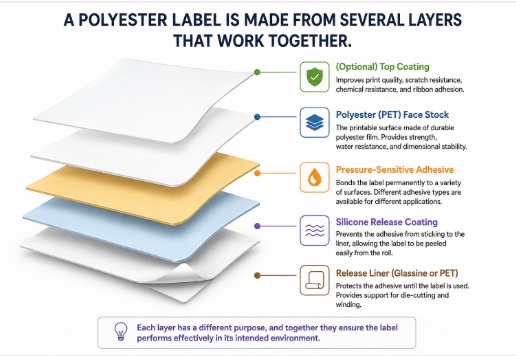
Polyester (PET) Labels
Highly durable and resistant to:
- Heat
- Chemicals
- Abrasion
- UV exposure
Often used for:
- Asset tracking
- Industrial equipment
- Electronics
- Compliance labeling
Why Use Thermal Transfer Ribbons?
One of the biggest advantages of TT printing is the use of ribbons.
The ribbon acts as a protective medium between the printhead and label surface.
Benefits of Using Ribbons
Better Print Durability
The transferred ink creates a long-lasting image that resists:
- Scratching
- Smudging
- Moisture
- Chemicals
- Sunlight
Longer Label Life
TT labels can remain readable for years depending on the material and ribbon combination.
Wider Material Compatibility
Thermal Transfer printers can print on:
- Paper
- Polypropylene
- Polyester
- Vinyl
- Polyimide
- Specialty synthetic materials
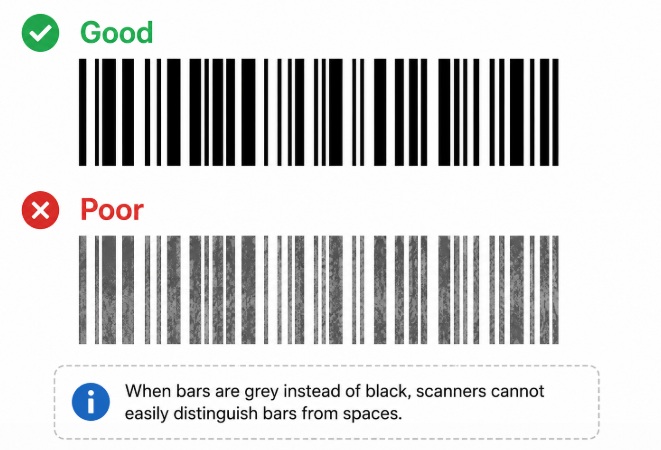
Better Barcode Performance
The sharp print quality ensures:
- Higher scan accuracy
- Better barcode verification grades
- Reduced scanning errors
Ribbon Types and Their Applications
Wax Ribbon
Most economical option.
Best for:
- Paper labels
- Shipping labels
- Retail applications
Advantages:
- Low cost
- Excellent print darkness
Limitations:
- Lower resistance to scratches and chemicals
Wax-Resin Ribbon
A balance between cost and durability.
Best for:
- Coated paper
- Polypropylene labels
Advantages:
- Improved abrasion resistance
- Better environmental performance
Resin Ribbon
Highest durability option.
Best for:
- Polyester labels
- Asset tags
- Chemical labels
- Outdoor labels
Advantages:
- Outstanding chemical resistance
- High temperature resistance
- Exceptional durability
Regular Thermal Transfer Labels
Regular-grade TT labels are manufactured to meet basic labeling requirements.
These labels are suitable for:
- General warehouse use
- Retail products
- Internal identification
- Shipping applications
Advantages
- Affordable pricing
- Good print quality
- Suitable for most standard applications
Disadvantages
- Less consistent coating quality
- Lower adhesive performance
- Greater variation between production batches
- May generate more dust
For many short- to medium-term applications, standard TT labels offer acceptable performance.
Premium Grade Thermal Transfer Labels
Premium labels are manufactured using high-quality face stocks, adhesives, liners, and production standards.
Leading material manufacturers include:
- Avery Dennison
- UPM Raflatac
- HERMA
- Mitsubishi Paper Mills
- Ricoh
Premium labels typically provide:
- Superior print consistency
- Stronger adhesives
- Cleaner die-cutting
- Better release liners
- Improved durability
- Reduced printer maintenance
Label Lifespan
One of the main reasons companies choose Thermal Transfer technology is longevity.
Expected Lifespan
Paper TT Labels:
- 1 to 5 years indoors
Polypropylene TT Labels:
- 2 to 5 years or more
Polyester TT Labels:
- 5 to 10+ years depending on environment
Polyester labels printed with high-quality resin ribbons can remain readable for many years even in demanding industrial environments.
Impact on Printhead Life
The thermal printhead is one of the most expensive components of a barcode printer.
Many users are surprised to learn that label quality can directly affect printhead lifespan.
How Low-Quality Labels Affect Printheads
Inferior labels may produce:
- Excessive paper dust
- Adhesive contamination
- Rough surfaces
- Uneven coatings
These issues can cause:
- Poor print quality
- Increased cleaning requirements
- Hot spots on the printhead
- Premature printhead failure
How Ribbons Help Protect Printheads
Unlike Direct Thermal printing, TT printing places a ribbon between the printhead and label.
The ribbon acts as a protective barrier, reducing direct friction between the printhead and label surface.
Benefits include:
- Reduced wear
- Lower operating temperatures
- Less contamination
- Longer printhead life
This is one reason why many high-volume users prefer Thermal Transfer technology.
Adhesive Quality Matters
A high-quality label is not just about the face material.
The adhesive determines how well the label performs over time.
Premium adhesives provide:
- Strong bonding
- Better temperature resistance
- Reduced edge lifting
- Improved durability
Poor-quality adhesives may result in:
- Labels peeling off
- Adhesive bleeding
- Printer contamination
- Product identification failures
Pros and Cons of Thermal Transfer Labels
Pros
- Long-lasting print quality
- Excellent barcode readability
- Resistant to fading
- Suitable for indoor and outdoor use
- Compatible with paper and synthetic materials
- Better protection for printheads
- Wide ribbon options available
- Ideal for industrial applications
Cons
- Requires ribbons
- Higher operating cost than Direct Thermal
- Additional inventory management for ribbons
- Slightly more complex setup
When Should You Choose Thermal Transfer Labels?
Choose TT labels when:
- Labels must last longer than six months
- Products are exposed to sunlight
- Moisture resistance is required
- Chemical resistance is needed
- Asset tracking is involved
- Compliance labeling is required
- Industrial durability is important
Conclusion
Thermal Transfer labels remain the gold standard for durable and professional labeling applications. While they require ribbons and have a slightly higher operating cost than Direct Thermal labels, the benefits far outweigh the additional expense for many businesses.
Premium-grade Thermal Transfer labels combined with quality ribbons can deliver exceptional print quality, extended label life, improved barcode performance, and longer printer printhead life. Whether used for inventory control, asset management, product identification, or industrial labeling, investing in high-quality TT labels and ribbons often results in lower long-term costs and greater operational reliability.
For businesses seeking dependable, long-lasting labels, Thermal Transfer technology continues to be one of the most effective and versatile labeling solutions available.
Looking for Thermal Thermal Labels?