Understanding GSM, Quality Grades, Benefits, and Disadvantages of Labels
Direct Thermal vs Thermal Transfer Barcode Labels: Understanding GSM, Quality Grades, Benefits, and Disadvantages
Barcode labels play a critical role in modern business operations, from retail and warehousing to logistics, healthcare, manufacturing, and e-commerce. Choosing the right barcode label is essential for ensuring accurate scanning, durability, and cost-effectiveness.
Two of the most common barcode label technologies are Direct Thermal Labels and Thermal Transfer Labels. In addition to print technology, the quality of the label material itself is often determined by its GSM (Grams per Square Meter), which affects durability, thickness, and overall performance.
This guide explains the differences between direct thermal and thermal transfer labels, compares cheap-quality GSM and premium-grade GSM labels, and highlights their benefits and disadvantages to help businesses make informed purchasing decisions.
What Are Barcode Labels?
Barcode labels are adhesive labels printed with machine-readable codes that store product, inventory, shipping, or tracking information. They are widely used in:
- Retail stores
- Warehouses
- Shipping and logistics
- Healthcare facilities
- Manufacturing plants
- Food and beverage industries
- Asset tracking systems
The quality of barcode labels directly impacts scanning accuracy, operational efficiency, and product traceability.
Understanding GSM in Barcode Labels
GSM (Grams per Square Meter) measures the weight and thickness of the label material.
Higher GSM labels generally provide:
- Better durability
- Increased tear resistance
- Improved print quality
- Stronger adhesion
- Longer lifespan
Lower GSM labels are typically more economical but may not perform as well in demanding environments.
Common GSM ranges include:
- 60-80 GSM: Economy-grade labels
- 80-100 GSM: Standard-quality labels
- 100-140 GSM: Premium-grade labels
- 140 GSM+: Heavy-duty industrial labels
What Are Direct Thermal Labels?
Direct thermal labels use heat-sensitive paper that changes color when exposed to the printhead's heat. No ink, toner, or ribbon is required.
The printer creates images and barcodes directly on the label surface.
Common Applications
- Shipping labels
- Courier labels
- Retail receipts
- Temporary inventory labels
- Food packaging labels
- Event tickets
Benefits of Direct Thermal Labels
1. Lower Operating Costs
Since direct thermal printing does not require ribbons, businesses save on consumables and maintenance expenses.
2. Simpler Printing Process
Fewer components make the printing process easier and more efficient.
3. Faster Printing Speeds
Direct thermal printers can produce large volumes of labels quickly.
4. Ideal for Short-Term Use
Perfect for applications where labels are only needed for days, weeks, or a few months.
5. Environmentally Friendly
No ribbon waste is generated during printing.
Disadvantages of Direct Thermal Labels
1. Limited Durability
Direct thermal labels are sensitive to:
- Heat
- Sunlight
- Moisture
- Abrasion
Over time, labels may fade or darken.
2. Short Lifespan
Not suitable for products requiring long-term identification.
3. Lower Resistance to Harsh Conditions
Extreme temperatures can affect readability and barcode scanning performance.
4. Not Suitable for Outdoor Use
Continuous exposure to sunlight may cause image degradation.
What Are Thermal Transfer Labels?
Thermal transfer labels use a ribbon that melts ink onto the label surface when heated by the printer.
The printed image becomes permanently bonded to the label material.
Common Applications
- Product identification
- Warehouse management
- Asset tracking
- Laboratory labeling
- Industrial applications
- Chemical labeling
- Long-term inventory storage
Benefits of Thermal Transfer Labels
1. Exceptional Durability
Thermal transfer printing creates long-lasting images resistant to:
- Moisture
- Chemicals
- UV exposure
- Scratching
- Abrasion
2. Superior Barcode Quality
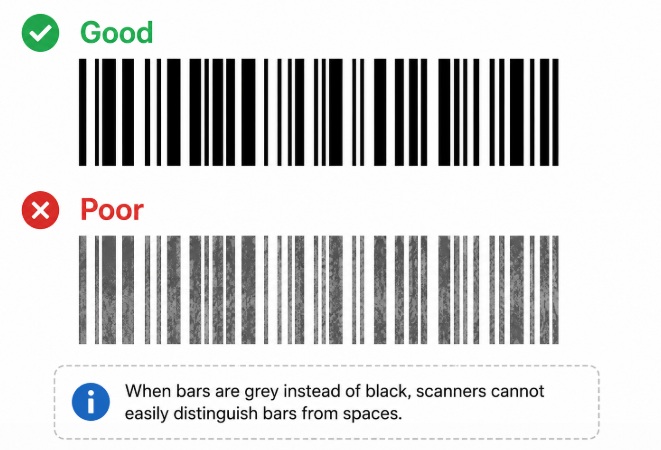
Sharp, clear barcodes improve scanning accuracy and reduce operational errors.
3. Long-Term Performance
Labels remain readable for years when properly stored.
4. Wide Material Compatibility
Thermal transfer printing works on:
- Paper labels
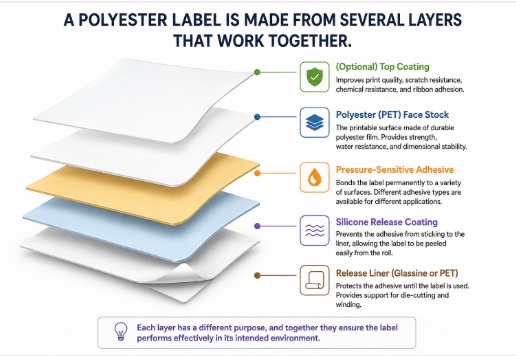
- Polyester labels
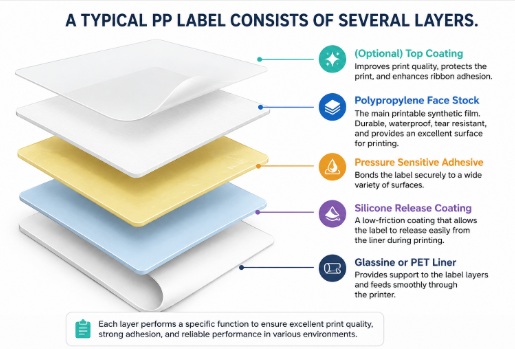
- Polypropylene labels
- Synthetic labels
- Industrial tags
5. Professional Appearance
Produces darker and more consistent print quality.
Disadvantages of Thermal Transfer Labels
1. Higher Initial Cost
Ribbon purchases increase overall operating expenses.
2. More Maintenance
Printers require ribbon loading and monitoring.
3. Additional Consumables
Businesses must manage inventory for both labels and ribbons.
4. Slower Setup
Changing ribbon types may require additional setup time.
Cheap Quality GSM Barcode Labels
Low GSM barcode labels are designed for cost-sensitive applications where long-term durability is not a priority.
Typical GSM Range
- 60 GSM
- 70 GSM
- 80 GSM
Benefits of Cheap GSM Labels
Lower Purchase Cost
Ideal for businesses printing large volumes of labels on tight budgets.
Lightweight
Reduces shipping and storage costs.
Suitable for Temporary Applications
Useful for short-term shipping labels and inventory tags.
High-Volume Printing
Allows economical large-scale barcode printing operations.
Disadvantages of Cheap GSM Labels
Reduced Tear Resistance
Thin materials can tear during handling.
Lower Print Quality
May produce less consistent barcode images.
Poor Environmental Resistance
More susceptible to moisture and physical damage.
Shorter Service Life
Not suitable for long-term asset tracking or industrial applications.
Premium Grade GSM Barcode Labels
Premium-grade barcode labels use thicker materials and higher-quality adhesives designed for demanding environments.
Typical GSM Range
- 100 GSM
- 120 GSM
- 140 GSM
- 160 GSM+
Benefits of Premium GSM Labels
Enhanced Durability
Better resistance to tearing, curling, and wear.
Improved Barcode Scanning
A smoother, more stable surface supports higher print quality.
Stronger Adhesion
Premium labels remain attached even in challenging conditions.
Professional Appearance
Higher-quality materials improve brand presentation and customer perception.
Longer Lifespan
Ideal for long-term identification and compliance requirements.
Disadvantages of Premium GSM Labels
Higher Cost
Premium materials require a larger initial investment.
Increased Weight
May slightly increase shipping costs for large-volume orders.
Over-Specification
For short-term applications, premium labels may provide unnecessary durability.
Direct Thermal vs Thermal Transfer Labels: Quick Comparison
|
Feature |
Direct Thermal Labels |
Thermal Transfer Labels |
|
Ribbon Required |
No |
Yes |
|
Initial Cost |
Lower |
Higher |
|
Print Durability |
Moderate |
Excellent |
|
Heat Resistance |
Low |
High |
|
Moisture Resistance |
Limited |
Excellent |
|
UV Resistance |
Limited |
High |
|
Long-Term Storage |
Not Recommended |
Highly Recommended |
|
Industrial Use |
Limited |
Excellent |
|
Shipping Labels |
Excellent |
Excellent |
|
Asset Tracking |
Limited |
Ideal |
Choosing the Right Barcode Label for Your Business
Choose Direct Thermal Labels if:
- You need low-cost printing
- Labels are used temporarily
- Shipping and logistics are your primary applications
- Fast printing speed is important
Choose Thermal Transfer Labels if:
- Long-term durability is required
- Labels face harsh environments
- Asset tracking is critical
- Product identification must remain readable for years
Choose Premium GSM Labels if:
- You need maximum durability
- Labels face frequent handling
- Barcode scanning accuracy is critical
- Brand image matters
Choose Economy GSM Labels if:
- Budget is the primary concern
- Labels have a short lifespan
- Applications are temporary
Conclusion
Selecting the right barcode label involves more than choosing a printer. Businesses must consider both printing technology and label material quality. Direct thermal labels provide an affordable solution for short-term applications, while thermal transfer labels offer superior durability and long-term performance.
Similarly, cheap GSM labels help reduce costs for temporary use, while premium-grade GSM labels deliver better durability, stronger adhesion, and improved barcode readability. By understanding these differences, businesses can optimize operational efficiency, reduce replacement costs, and ensure reliable barcode scanning throughout the product lifecycle.