What Is a Wax Resin Ribbon? Applications & Complete Buying Guide
What Is a Wax Resin Ribbon?
Choosing the right thermal transfer ribbon is one of the most important decisions when printing barcode labels, product labels, asset tags, and industrial identification labels. While wax ribbons are the most economical and resin ribbons provide the highest durability, wax resin ribbons offer the perfect balance between performance, durability, and cost.
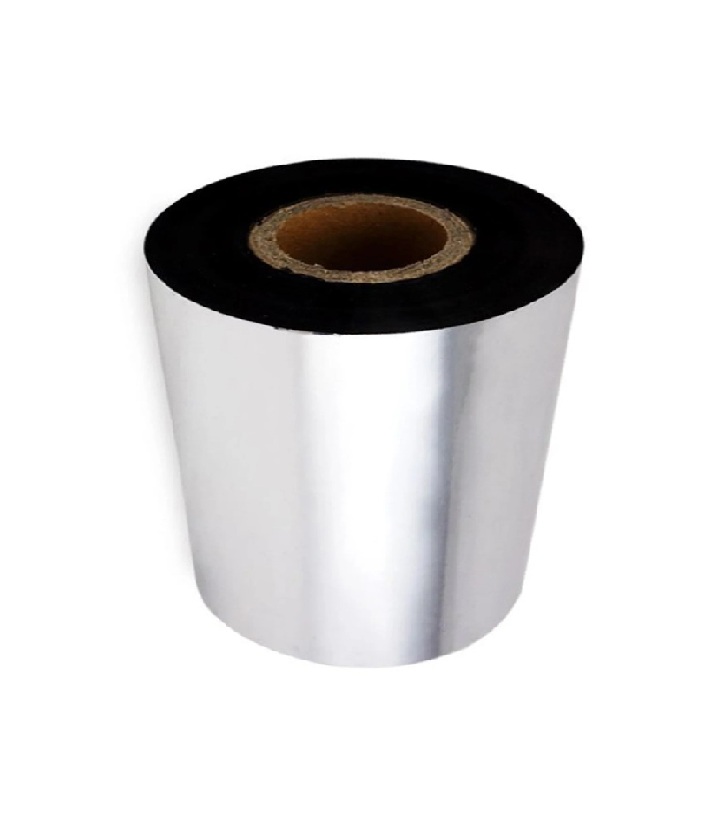
A wax resin ribbon is a thermal transfer printing ribbon made from a carefully engineered blend of wax and resin compounds. This combination delivers significantly better durability than a standard wax ribbon while remaining more affordable than a full resin ribbon.
Because of their excellent resistance to scratching, smudging, moisture, and moderate chemicals, wax resin ribbons have become the preferred choice for many industries, including manufacturing, logistics, healthcare, retail, food production, pharmaceuticals, warehousing, and electronics.
In this guide, you'll learn everything you need to know about wax resin thermal transfer ribbons, including how they work, their advantages and disadvantages, compatible label materials, and how to choose the right ribbon for your application.
What Is a Thermal Transfer Ribbon?
A thermal transfer ribbon is a thin polyester film coated with a heat-sensitive ink formulation. During printing, the thermal printhead selectively heats the ribbon, melting the coating and transferring the image onto the label.
A complete thermal transfer printing system consists of:
- Thermal transfer printer
- Thermal transfer ribbon
- Compatible labels
Unlike direct thermal labels, thermal transfer printing produces longer-lasting images that resist fading and are suitable for more demanding environments.
What Is a Wax Resin Ribbon Made Of?
A wax resin ribbon combines two important components:
- Wax, which melts easily for smooth image transfer.
- Resin, which adds durability, adhesion, and resistance to abrasion and chemicals.
The exact ratio varies between manufacturers, with some formulations leaning toward higher durability while others prioritize print speed and cost.
This combination creates a ribbon that offers:
- Sharp barcode printing
- Excellent edge definition
- Strong adhesion to label surfaces
- Better scratch resistance than wax ribbons
- Improved environmental durability
How Does a Wax Resin Ribbon Work?
The printing process is similar to other thermal transfer ribbons:
- The printer feeds the label beneath the printhead.
- The ribbon passes between the printhead and the label.
- Heat melts the wax-resin coating.
- The ink bonds firmly to the label surface.
- The spent ribbon advances while the printed label exits the printer.
Because resin requires more heat than wax, wax resin ribbons typically operate at medium printhead temperatures.
Why Choose Wax Resin Instead of Wax?
Standard wax ribbons are excellent for general-purpose paper labels but may not perform well in demanding environments.
Wax resin ribbons provide improvements such as:
- Better durability
- Improved barcode quality
- Stronger adhesion
- Better scratch resistance
- Better moisture resistance
- Improved handling performance
For many businesses, wax resin represents the ideal middle ground between cost and durability.
Compatible Label Materials
Wax resin ribbons perform exceptionally well on many label materials.
Paper Labels
Suitable for:
- Matte coated paper
- Semi-gloss paper
- High-quality coated paper
Synthetic Labels
Wax resin is especially popular for:
- Polypropylene (PP)
- Polyethylene (PE)
- Polyester (PET)
- Synthetic paper
- Polyolefin labels
- Vinyl labels (selected grades)
This versatility makes wax resin one of the most flexible ribbon types available.
Common Applications
Wax resin ribbons are widely used in industries where labels must withstand regular handling without requiring the extreme durability of resin ribbons.
Typical applications include:
- Product labels
- Warehouse labels
- Inventory labels
- Barcode labels
- Asset tracking
- Pharmaceutical labels
- Food packaging
- Laboratory labels
- Healthcare identification
- Electronics labels
- Manufacturing labels
- Logistics labels
- Shipping labels
- Shelf labels
- Retail packaging
Advantages of Wax Resin Ribbon
1. Excellent Print Quality
Wax resin ribbons produce darker, sharper images than standard wax ribbons.
Benefits include:
- Crisp text
- High-density barcodes
- Excellent QR code printing
- Better scanner readability
- Smooth image consistency
2. Better Scratch Resistance
One of the biggest advantages of wax resin ribbons is improved resistance to abrasion.
Labels remain readable even after:
- Frequent handling
- Warehouse movement
- Packaging operations
- Transportation
3. Better Smudge Resistance
Compared with standard wax ribbons, wax resin images are far less likely to smear when rubbed.
This is especially important for:
- Barcode labels
- Shipping labels
- Product identification
- Asset labels
4. Improved Moisture Resistance
Wax resin labels tolerate moderate exposure to:
- Humidity
- Condensation
- Water splashes
While not completely waterproof, they outperform standard wax ribbons in damp environments.
5. Chemical Resistance
Wax resin provides moderate resistance to:
- Cleaning agents
- Oils
- Grease
- Mild solvents
- Alcohol wipes
This makes them suitable for healthcare, laboratories, and manufacturing.
6. Excellent Synthetic Label Performance
Unlike wax ribbons, wax resin bonds well to many synthetic materials.
These include:
- Polypropylene
- Polyester
- Polyethylene
- Polyolefin
This compatibility greatly expands the range of possible applications.
7. Longer Label Life
Wax resin labels remain legible for much longer than standard wax labels, making them suitable for products stored in warehouses or used throughout extended supply chains.
8. Better Barcode Scanning
The darker print and sharper edges reduce scanning failures, improving efficiency in retail, logistics, and inventory operations.
9. Balanced Cost
Wax resin offers many of the benefits of resin while remaining significantly more affordable, making it a practical choice for businesses seeking durability without the higher cost of full resin ribbons.
Disadvantages of Wax Resin Ribbon
Despite its versatility, wax resin is not the ideal solution for every application.
Higher Cost Than Wax
Wax resin ribbons typically cost more than standard wax ribbons. However, the added durability often justifies the investment.
Requires Higher Print Temperature
Because resin components melt at higher temperatures, printers may require adjustment to achieve optimal print quality.
Not as Durable as Full Resin
Although wax resin performs well, it does not match the extreme resistance offered by resin ribbons for harsh industrial environments.
Limited Outdoor Performance
Wax resin labels can handle short-term outdoor use but are not intended for prolonged exposure to:
- Intense UV sunlight
- Extreme weather
- Continuous moisture
For long-term outdoor applications, resin ribbons are usually the better option.
Not Suitable for Extreme Chemical Exposure
Industries involving strong acids, aggressive solvents, or industrial chemicals generally require full resin ribbons for maximum durability.
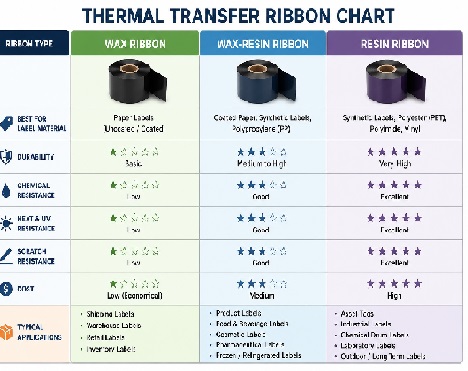
Wax vs Wax Resin vs Resin
|
Feature |
Wax |
Wax Resin |
Resin |
|
Cost |
Low |
Medium |
High |
|
Print Quality |
Good |
Excellent |
Excellent |
|
Scratch Resistance |
Basic |
Very Good |
Outstanding |
|
Smudge Resistance |
Basic |
Very Good |
Excellent |
|
Moisture Resistance |
Low |
Moderate |
High |
|
Chemical Resistance |
Poor |
Moderate |
Excellent |
|
Paper Labels |
Excellent |
Excellent |
Good |
|
Synthetic Labels |
Limited |
Excellent |
Excellent |
|
Outdoor Durability |
Poor |
Moderate |
Excellent |
|
Printhead Temperature |
Low |
Medium |
High |
When Should You Choose Wax Resin?
Wax resin is recommended when:
- Printing on synthetic labels.
- Labels will be handled frequently.
- Barcode quality is critical.
- Labels need moderate chemical resistance.
- Moisture resistance is required.
- Products remain in storage for long periods.
- Warehouse durability is important.
- Better print longevity is needed than standard wax can provide.
When Should You Choose Resin Instead?
Upgrade to a full resin ribbon if your labels must withstand:
- Outdoor weather for extended periods
- High temperatures
- Freezer storage
- Industrial chemicals
- Abrasive environments
- Medical sterilization
- Automotive manufacturing
- Electronics production requiring maximum permanence
Storage Tips
To maximize ribbon performance:
- Store between 5°C and 35°C.
- Avoid direct sunlight.
- Keep humidity below approximately 70% where possible.
- Store in original packaging until use.
- Protect from dust and contaminants.
Proper storage helps preserve print quality and extends ribbon shelf life.
Frequently Asked Questions
Can wax resin print on paper labels?
Yes. Wax resin prints exceptionally well on both coated and uncoated paper labels, although it is often chosen when additional durability is needed.
Can wax resin print on polypropylene labels?
Yes. Polypropylene (PP) is one of the most common synthetic materials used with wax resin ribbons, offering durable and high-quality results.
Is wax resin waterproof?
Not completely. Wax resin provides improved moisture resistance compared with wax, but for continuous water exposure or immersion, a resin ribbon paired with a suitable synthetic label is recommended.
Is wax resin suitable for freezer labels?
For short-term cold storage, it can perform well on compatible materials. For long-term freezer applications or exposure to condensation, a resin ribbon may be the better choice depending on the label material and environmental conditions.
Does wax resin damage the printhead?
No. When printer settings are correctly configured and compatible ribbons are used, wax resin ribbons are safe for thermal printheads. Regular printer maintenance will also help extend printhead life.
Final Thoughts
Wax resin thermal transfer ribbons provide one of the best balances of performance, durability, and value in the thermal printing industry. They bridge the gap between economical wax ribbons and highly durable resin ribbons, making them an excellent choice for businesses that require dependable barcode printing without the premium cost of full resin.
Whether you're labeling products, tracking warehouse inventory, printing pharmaceutical labels, identifying assets, or producing logistics labels, wax resin ribbons deliver sharp print quality, improved resistance to abrasion and moisture, and excellent compatibility with both paper and many synthetic label materials.
By selecting the right wax resin ribbon for your printer, label material, and operating environment, you can reduce barcode scanning errors, improve label longevity, and lower your overall operational costs.