A Comprehensive Guide to Low-Frequency (LF) RFID Technology
EM4100, TK4100, and Hitag Series Chips: A Comprehensive Guide to Low-Frequency (LF) RFID Technology
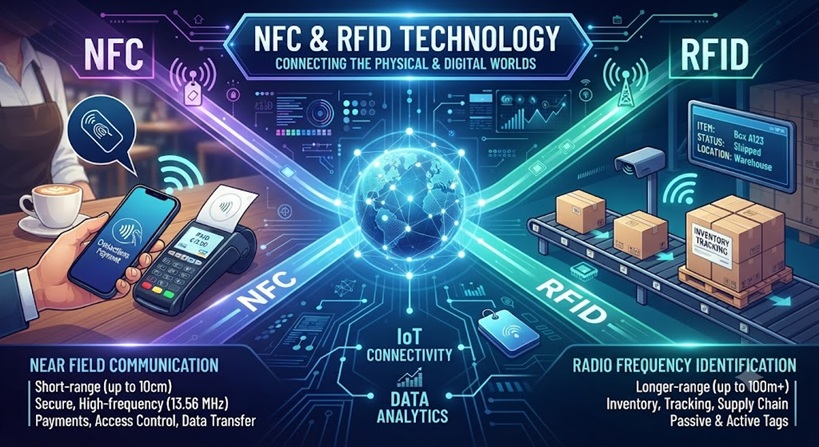
While high-frequency (HF) 13.56 MHz systems and NFC tags dominate smartphone-enabled interactions, Low-Frequency (LF) 125 kHz RFID technology remains an absolute bedrock of physical access control, parking barriers, animal identification, and industrial laundry tracking.
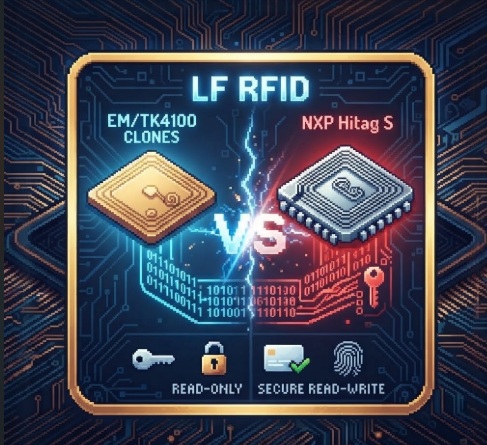
When working with 125 kHz systems, three major chip families frequently appear: EM4100, TK4100, and the NXP Hitag series. Although they all operate on the same low-frequency radio band, their underlying architecture, security profiles, and cost structures vary significantly.
This guide breaks down how these chips work, how they differ, and where each should be deployed.
1. The Core LF RFID Landscape: Understanding 125 kHz
Low-frequency RFID systems operate around 125 kHz (with some variants operating up to 134.2 kHz). Unlike 13.56 MHz high-frequency tags, LF signals have lower data transfer speeds but excel at penetrating moisture, body tissue, and metallic environments.
Within this spectrum, chips are broadly divided into two categories:
- Read-Only (RO) / Identifier Tags: Contain a permanent, unchangeable unique ID (UID) burned at the factory.
- Read-Write (RW) / Advanced Security Tags: Contain rewritable EEPROM memory and support challenge-response encryption or mutual authentication.
2. Chip Breakdown & Technical Comparison
A. EM4100 (The Industry Pioneer)
Developed originally by EM Microelectronic, the EM4100 (and its successor, the EM4200) is the quintessential read-only 125 kHz RFID chip.
- Type: Read-Only (RO)
- UID Length: 64-bit unique identifier (typically parsed as a 10-digit decimal or 8-digit hex code).
- Memory: No user-programmable memory; it simply transmits its hardcoded ID whenever energized by a reader's magnetic field.
- Primary Use Case: Basic office ID cards, apartment gate access fobs, and legacy time-attendance systems.
B. TK4100 (The Economical Clone / Compatible Alternative)
Just as Fudan manufactures alternative chips for NXP's ecosystem, TK4100 chips are widely produced as cost-effective, drop-in compatible alternatives to the EM4100.
- Type: Read-Only (RO) / Programmable clone variants exist (often called T5577-based TK cards).
- Compatibility: Fully mimics the 64-bit timing and data stream of the EM4100/EM4200, allowing it to work with any standard 125 kHz EM reader.
- Cost Profile: Significantly cheaper than genuine EM Microelectronic silicon, making it the default choice for mass-produced key fobs and generic access cards.
C. NXP Hitag Series (Hitag 1, Hitag S, Hitag 2)
The Hitag series, engineered by NXP Semiconductors, is a high-performance, secure LF family designed for industrial and automotive applications requiring read-write capabilities and data storage.
- Type: Read-Write (RW) with advanced memory and security features.
- Variants:
- Hitag 2: Features a 256-bit memory organized in pages, supporting both password protection and basic cryptographic authentication.
- Hitag S: Offers larger user memory (up to 2048 bits) and high-speed data transmission modes.
- Primary Use Case: Automotive immobilizer keys, high-security animal tracking, complex industrial logistics, and gas cylinder management.
3. Direct Comparison Matrix
|
Feature |
EM4100 / EM4200 |
TK4100 |
NXP Hitag Series (Hitag 2 / S) |
|
Manufacturer |
EM Microelectronic (Original) |
Various Asian Foundries (Clone/Alternative) |
NXP Semiconductors |
|
Operation Type |
Read-Only (UID Only) |
Read-Only (UID Only) |
Read-Write (RW) |
|
User Memory |
None (64-bit fixed ID) |
None (64-bit fixed ID) |
256 bits up to 2048 bits |
|
Security / Encryption |
None (Open transmission) |
None (Open transmission) |
Password protection / Crypto algorithms |
|
Reader Compatibility |
Standard 125 kHz EM readers |
Standard 125 kHz EM readers |
Dedicated Hitag-compatible transceivers |
|
Cost Profile |
Moderate / Standard |
Highly Economical |
Premium / Industrial Grade |
4. Benefits and Drawbacks (Pros & Cons)
EM4100 & TK4100 (Read-Only)
- Benefits:
- Universal Compatibility: Virtually every standard 125 kHz access control reader in the world can read an EM4100 or TK4100 token.
- Rock-Bottom Cost: Extremely inexpensive to manufacture, perfect for issuing thousands of temporary visitor passes or apartment keys.
- Zero Maintenance: No keys to manage or memory sectors to corrupt; it is a permanent ID number.
- Drawbacks:
- Zero Security: Because they only broadcast a static ID number, they are trivial to clone using inexpensive handheld RFID cloners. Anyone who taps your fob can duplicate it in seconds.
- No Data Storage: You cannot store user data, balances, or access logs on the chip itself.
NXP Hitag Series (Read-Write)
- Benefits:
- Data Flexibility: Allows storage of variable data, encryption keys, and transaction logs directly on the tag.
- Enhanced Security: Supports password validation and cryptographic protocols, preventing casual cloning (making them ideal for automotive immobilizers).
- Robust Range & Speed: Engineered for high-speed passing reads and reliable performance in harsh industrial environments.
- Drawbacks:
- Higher Cost: Significantly more expensive per unit than simple read-only fobs.
- Infrastructure Lock-in: Requires specific reader hardware and software capable of handling Hitag command sets and authentication protocols.
5. Summary: Which Chip Should You Choose?
- Choose EM4100 / TK4100 when building or managing standard, budget-conscious access control systems (such as residential building gates, basic office doors, or gym membership fobs) where physical door locks handle the security rather than the card itself.
- Choose the NXP Hitag Series when designing secure automotive anti-theft systems, high-value asset tracking pipelines, or specialized industrial workflows that require onboard memory and cryptographic validation.
Note: All trademarks, brand names, and logos referenced on this site, including NXP, Hitag, and EM, are the property of their respective owners and are used for identification purposes only.