A Comprehensive Guide to the 50mm × 50mm Impinj Monza 4QT UHF RFID Label (48mm × 48mm Inlay)
Introduction: The Evolution of Item-Level Tracking
In modern supply chain ecosystems, global logistics, asset management, and retail store environments, precision, speed, and reliability are paramount. Traditional barcode systems—while cost-effective and universally adopted—require direct line-of-sight scanning. This limitation creates significant operational bottlenecks when processing thousands of items simultaneously, managing rapid stock audits, or moving high-volume shipments through automated distribution hubs.
Enter Ultra-High Frequency (UHF) Radio Frequency Identification (RFID) technology. As a game-changing tool in enterprise data capture, UHF RFID allows businesses to track, locate, identify, and authenticate products from a distance without requiring a direct line-of-sight. Multiple tags can be read concurrently in fractions of a second, drastically streamlining operations from the factory floor to the end consumer.
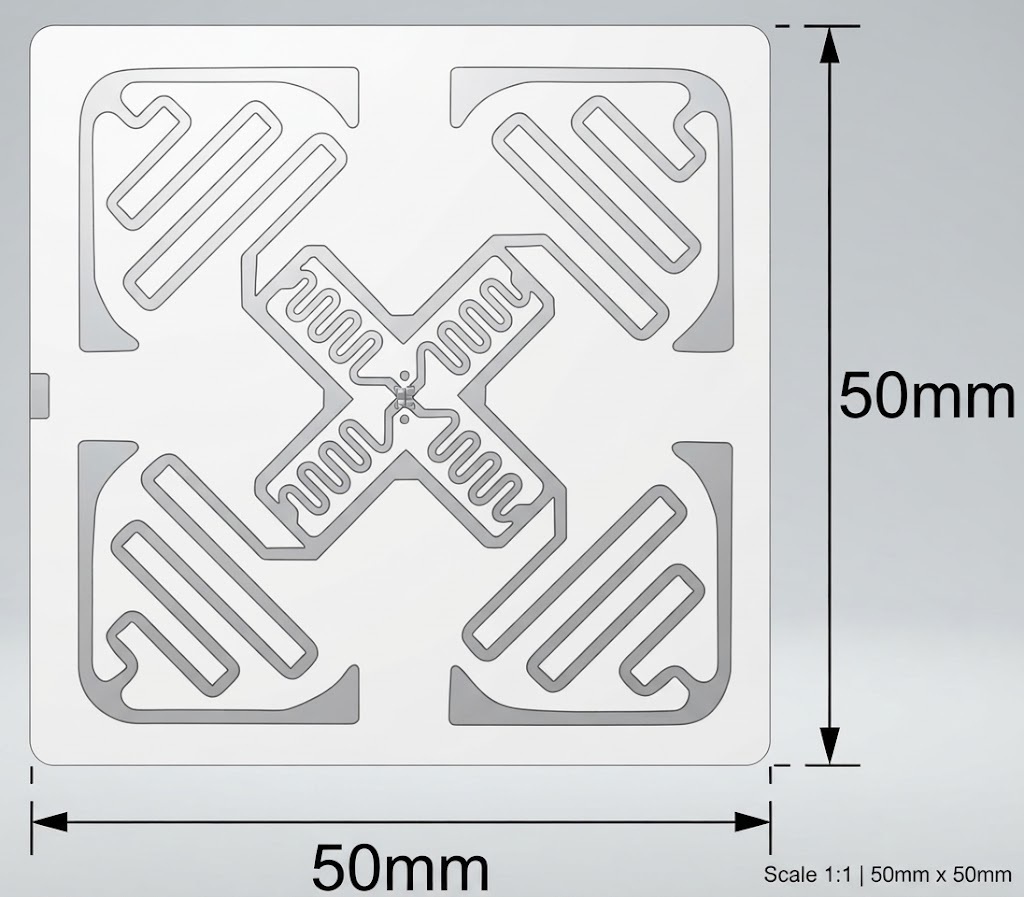
Among the standout products in this field is the 50mm × 50mm Impinj Monza 4QT UHF RFID Label, which houses a precision-engineered 48mm × 48mm RFID inlay. Combining a balanced square form factor, advanced chip architecture, and robust materials, this label has become a staple for enterprise-level item tracking, brand protection, and high-density inventory management.
This comprehensive tutorial and reference guide explores everything you need to know about this high-performance RFID label, including its core technical specifications, standout architectural features, deep-dive implementation workflows, advanced optimization strategies, and real-world industrial applications.
1. Understanding the Anatomy of a UHF RFID Label
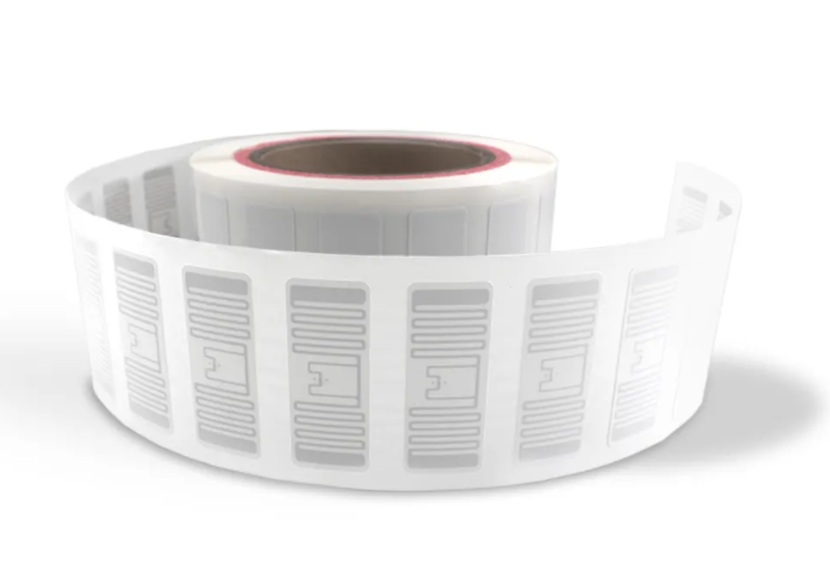
Before diving into the specifics of the Monza 4QT model, it helps to understand the multi-layered engineering that makes up a smart RFID label. Unlike traditional paper stickers or thermal labels, a UHF RFID label is an integrated electronic device consisting of three primary functional layers:
The Face Stock (Substrate)
Usually constructed from durable materials like top-coated paper, polypropylene (PP), or polyethylene terephthalate (PET), the face stock provides a printable surface for barcodes, company logos, sequential numbering, and human-readable text. For the 50mm × 50mm format, high-grade coated paper is typically chosen to ensure optimal thermal transfer ribbon adherence and crisp print resolution.
The RFID Inlay (Antenna + IC Chip)
Often referred to as the "brains" and "voice" of the label, the inlay is laminated directly beneath the face stock. It consists of an aluminum or copper etched antenna—measuring exactly 48mm × 48mm within the outer 50mm × 50mm label boundary—coupled directly to an Integrated Circuit (IC) microchip. The antenna captures radio frequency waves broadcast by an RFID reader, converts them into electrical energy to power the IC chip, and re-radiates (backscatters) modulated data back to the reader.
The Adhesive and Release Liner
A high-tack, pressure-sensitive adhesive backing is applied to the reverse side of the inlay and face stock, protected by a silicone-coated release liner. This allows the label to bond securely, permanently, or semi-permanently to a vast array of surfaces, including corrugated cardboard boxes, plastic shipping totes, glass containers, and fabric care labels.
2. Key Specifications and Technical Architecture
The 50mm × 50mm Impinj Monza 4QT label is engineered to meet rigorous industrial, retail, and logistics standards. Its physical and technical parameters include:
Physical Characteristics
- Outer Label Dimensions: 50mm × 50mm. This provides a balanced square layout with a precise 1mm unprinted border surrounding the internal inlay, ensuring clean thermal transfer printing without damaging the internal antenna tracks.
- RFID Inlay Size: 48mm × 48mm, meticulously positioned inside the label stock and tuned for optimal backscatter efficiency across global frequencies.
- Face Material: High-grade coated thermal transfer paper, offering crisp printability for variable data printing (VDP).
- Operating Frequency: Ultra-High Frequency (UHF) 860-960 MHz, fully complying with global regulations (covering both North American FCC 902-928 MHz and European ETSI 865-867.6 MHz bands).
Chip and Performance Parameters
- IC Chip: Impinj Monza 4QT
- Communication Protocol: ISO/IEC 18000-6C and EPC Global Gen2v2
- EPC Memory: 128-bit (expandable/configurable depending on usage profile)
- TID (Tag Identifier) Memory: 96-bit unalterable factory-programmed serialization
- User Memory: 512-bit, providing ample space for custom enterprise data storage such as manufacturing dates, serial numbers, maintenance histories, and authentication tokens
- Read/Write Sensitivity: Exceptional read sensitivity (
 ) and write sensitivity (
 ), ensuring quick encoding and reliable detection even in dense read zones or high-speed conveyor lines
- Durability: Built to withstand up to 100,000 write cycles with an expected data retention span of up to 50 years under standard environmental conditions
3. Why the Impinj Monza 4QT Chip Matters
The true differentiator of this label is its underlying silicon: the Impinj Monza 4QT chip. It introduces breakthrough features tailored specifically for modern, security-conscious supply chains:
1. QT Technology (Privacy and Integrity Modes)
The Monza 4QT features proprietary QT Technology, which allows businesses to manage two distinct memory profiles within the same tag:
- Public Profile: Accessible to standard supply chain readers anywhere in the world for tracking movement, logistics routing, and stock replenishment.
- Private Profile: Hidden or locked until authorized with a private access password. This is invaluable for brand protection, anti-counterfeiting, and consumer privacy post-purchase, preventing unauthorized third parties from scanning items after they leave the retail store.
2. True3D Antenna Technology
When combined with dual-dipole antenna designs on the 48mm × 48mm inlay, the Monza 4QT provides orientation-insensitive performance. In practical terms, this means orientation independence: it doesn't matter which angle the item is facing relative to the overhead or portal reader. The tag responds consistently, drastically reducing read "blind spots" on high-speed conveyor belts, rolling racks, or crowded retail shelves.
4. Step-by-Step Implementation and Deployment Tutorial
Deploying UHF RFID labels successfully requires careful planning, rigorous testing, and precise configuration. Follow this step-by-step workflow to integrate 50mm × 50mm Monza 4QT labels into your operational ecosystem:
Step 1: Surface Preparation and Placement Strategy
- Choose the Right Substrate: Coated paper labels work exceptionally well on non-metallic surfaces like corrugated cardboard boxes, plastic shipping totes, and product packaging. Avoid placing them directly on bare metal surfaces unless an isolating foam layer or specialized on-metal tag is utilized, as metal reflects UHF waves and detunes standard antennas.
- Avoid Physical Obstructions: Position the label where it won’t be punctured, heavily creased, or covered by liquid-filled containers, as water heavily absorbs and dampens UHF radio frequencies.
Step 2: Printer Configuration and Encoding
- Thermal Transfer Printing: Load the label rolls into an industrial RFID-capable thermal transfer printer (such as compatible Zebra, SATO, or Printronix models supporting UHF encoding).
- Calibrate Power and Pitch: Set the correct media pitch (50mm) and calibrate the RFID encoder power settings so the printer successfully writes the Electronic Product Code (EPC) data onto the 128-bit memory bank while simultaneously printing human-readable text and barcodes on the face stock. Ensure the print head energy matches the 48mm × 48mm antenna placement to prevent misreads or chip damage during thermal printing.
Step 3: Reader and Antenna Setup
- Install Infrastructure: Install fixed or handheld UHF RFID readers at critical choke points, such as warehouse receiving doors, automated packaging lines, and point-of-sale (POS) counters.
- Adjust Power Levels: Calibrate reader power levels carefully. High power is ideal for wide-area zone tracking and dock doors, while lower power is required for localized point-of-sale reads to prevent inadvertently reading tags on adjacent shelves, desks, or neighboring checkout lanes.
Step 4: Testing and Validation
- Conduct Pilot Audits: Perform a controlled pilot test by passing tagged items through your operational workflow. Monitor read rates, system latency, and data accuracy. Verify that the 512-bit user memory can be read and written seamlessly by your Warehouse Management Software (WMS) or Enterprise Resource Planning (ERP) platform.
5. Ideal Industry Applications
Because of its versatile square format, robust memory configuration, and advanced cryptographic privacy modes, the 50mm × 50mm Impinj Monza 4QT UHF RFID Label is deployed across multiple demanding sectors:
- Retail & Apparel Management: Item-level tracking for garments, luxury goods, footwear, and packaged electronics. It enables rapid stock counts, seamless cycle counting, and loss prevention, while privacy features safeguard consumer data post-purchase.
- Logistics & Supply Chain: Tracking corrugated shipping cartons, plastic pallets, master packs, and individual shipping containers as they pass through automated distribution hubs and loading docks.
- Asset Tracking & Healthcare: Managing hospital equipment, IT servers, enterprise tools, and laboratory hardware where extra user memory is required to store serial numbers, calibration logs, and local service histories.
- Brand Authentication & Anti-Counterfeiting: Protecting high-value merchandise by storing proprietary product metadata, supply chain origin points, and cryptographic authentication codes directly on the tag's secure memory banks.
6. Comprehensive Summary of Operational Benefits
To summarize the value proposition, the 50mm × 50mm UHF RFID Label housing a precision 48mm × 48mm Impinj Monza 4QT inlay delivers several distinct operational advantages:
|
Benefit Category |
Description & Impact |
|
Data Security & Privacy |
Dual-mode memory profiles via QT Technology allow public logistics tracking while keeping sensitive consumer data private post-sale. |
|
Read Reliability |
True3D antenna tuning minimizes orientation blind spots, ensuring high read rates regardless of box or item angle. |
|
Generous Memory |
128-bit EPC, 96-bit TID, and 512-bit User Memory allow localized storage of serial numbers, batch logs, and manufacturing data. |
|
Print Compatibility |
The 1mm unprinted border around the 48mm inlay ensures flawless thermal transfer printing without damaging internal microchips. |
|
High Sensitivity |
Exceptional read (-19.5 dBm) and write (-16.7 dBm) sensitivities excel in dense, high-speed multi-tag environments. |
Conclusion
The 50mm × 50mm Impinj Monza 4QT UHF RFID Label represents a powerful synergy of physical durability, smart memory partitioning, and superior read sensitivity. By understanding its underlying technical architecture, appreciating the power of Monza 4QT silicon, and following best practices for printer encoding and surface deployment, businesses can drastically cut down inventory audit times, improve supply chain transparency, eliminate stockouts, and achieve near 100% inventory accuracy.