NXP MIFARE, NTAG, and Fudan Alternatives
Navigating NFC & RFID Hardware: NXP MIFARE, NTAG, and Fudan Alternatives
When designing or sourcing components for contactless identification, access control, or smart packaging systems, understanding the underlying silicon is critical. A common point of confusion across the industry is distinguishing between proprietary registered trademarks (like NXP's MIFARE), open communication standards (like NFC), and compatible alternative hardware manufacturers (like Fudan Microelectronics).
This guide breaks down these distinctions, specifically highlighting NXP MIFARE compliance, NTAG specifications, and Fudan’s budget-friendly alternative equivalents.
1. Core Definitions: Trademarks vs. Standards vs. Manufacturers
Before comparing part numbers, it is essential to clarify what these terms actually represent:
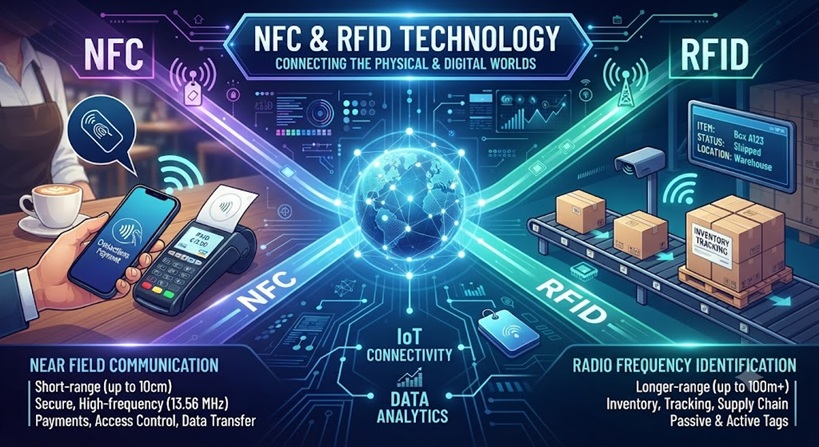
- NFC (Near Field Communication): An overarching wireless communication standard operating at 13.56 MHz that enables short-range data exchange between devices and passive tags (defined by ISO/IEC 14443 and NFC Forum standards).
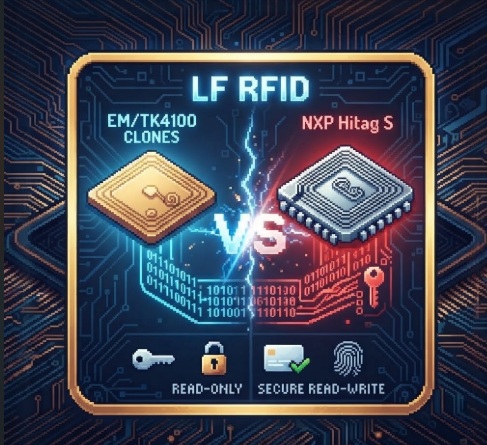
- MIFARE (A Registered Trademark of NXP Semiconductors): MIFARE is a strictly proprietary family of contactless smart card IC chips developed and owned exclusively by NXP Semiconductors. Note: The term "MIFARE" should only ever be used when referring to genuine NXP hardware. Fudan chips are never called MIFARE; they are independent alternative circuits engineered to be compatible with readers built for MIFARE-protocol applications.
- Fudan Microelectronics: A semiconductor manufacturer that produces cost-effective, compatible alternative integrated circuits designed to interface with infrastructure originally deployed for NXP chips.
2. NXP MIFARE vs. Fudan Equivalents (Access Control & Transit)
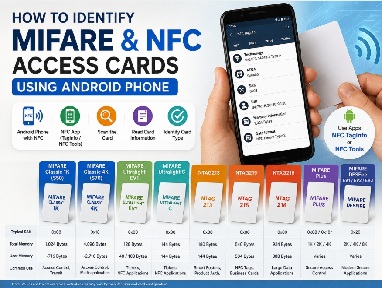
In traditional closed-loop access control, parking systems, and transit networks, system designers evaluate genuine NXP MIFARE cards alongside Fudan's compatible alternative chips:
NXP MIFARE vs. Fudan Compatible Equivalents Table
|
NXP Original Equivalent |
Fudan Compatible Chip |
User Memory Capacity |
Primary Target / Common Applications |
|
NXP MIFARE Classic 1K (S50) |
FM1108 / FM11RF08 |
1 KB |
Corporate access control, office turnstiles, gym memberships, parking cards, and transit ticketing. |
|
NXP MIFARE Classic 4K (S70) |
FM11RF32 |
4 KB |
Multi-application cards, complex campus identification, and expanded data storage deployments. |
Key Takeaways
- Reader Compatibility: Fudan's FM1108 and FM11RF32 are engineered to replicate the exact radio frequency responses, memory layout, and Crypto1 logic structure of NXP MIFARE Classic chips, allowing them to work seamlessly with standard 13.56 MHz ISO/IEC 14443 Type A readers.
- Cost Profile: Genuine NXP MIFARE chips carry premium pricing for strict quality assurance and global brand authenticity, whereas Fudan alternatives provide an economical choice for high-volume deployments.
3. NXP NTAG vs. Fudan NFC Tag Equivalents
For open-ecosystem smartphone interaction (such as web URLs, digital business cards, smart home automation triggers, and dynamic NFC stickers), NXP's NTAG series is the industry benchmark. Fudan has engineered a direct portfolio of compatible NFC Forum Type 2 tag alternatives to match these specifications at a lower cost profile.
1.NXP NTAG 213 vs. Fudan FM11NT022 Direct Comparison
|
Feature |
NXP NTAG 213 |
Fudan FM11NT022 |
|
NFC Forum Type |
Type 2 Tag |
Type 2 Tag |
|
RF Protocol |
ISO/IEC 14443 Type A |
ISO/IEC 14443 Type A |
|
Operating Frequency |
13.56 MHz |
13.56 MHz |
|
User Memory |
144 Bytes |
144 Bytes |
|
UID Length |
7 Bytes |
7 Bytes |
|
Smartphone Compatibility |
Universal (iPhone & Android) |
Universal (iPhone & Android) |
|
Password Protection |
Yes |
Yes |
|
Originality Signature |
Yes (ECC Signature - NXP Exclusive) |
No (Not an NXP chip) |
|
Cost Profile |
Standard / Premium |
Economical / Lower Cost |
2. NXP NTAG 215 vs. Fudan FM11NT041 Direct Comparison
|
Feature |
NXP NTAG 215 |
Fudan FM11NT041 |
|
NFC Forum Type |
Type 2 Tag |
Type 2 Tag |
|
RF Protocol |
ISO/IEC 14443 Type A |
ISO/IEC 14443 Type A |
|
Operating Frequency |
13.56 MHz |
13.56 MHz |
|
User Memory |
504 Bytes |
504 Bytes |
|
UID Length |
7 Bytes |
7 Bytes |
|
Smartphone Compatibility |
Universal (iPhone & Android) |
Universal (iPhone & Android) |
|
Password Protection |
Yes |
Yes |
|
Originality Signature |
Yes (ECC Signature - NXP Exclusive) |
No (Not an NXP chip) |
|
Cost Profile |
Standard / Premium |
Economical / Lower Cost |
3. NXP NTAG 216 vs. Fudan FM11NT082C Direct Comparison
|
Feature |
NXP NTAG 216 |
Fudan FM11NT082C |
|
NFC Forum Type |
Type 2 Tag |
Type 2 Tag |
|
RF Protocol |
ISO/IEC 14443 Type A |
ISO/IEC 14443 Type A |
|
Operating Frequency |
13.56 MHz |
13.56 MHz |
|
User Memory |
888 Bytes |
888 Bytes |
|
UID Length |
7 Bytes |
7 Bytes |
|
Smartphone Compatibility |
Universal (iPhone & Android) |
Universal (iPhone & Android) |
|
Password Protection |
Yes |
Yes |
|
Originality Signature |
Yes (ECC Signature - NXP Exclusive) |
No (Not an NXP chip) |
|
Cost Profile |
Standard / Premium |
Economical / Lower Cost |
Key Takeaways
- Everyday Performance: For standard applications like storing website URLs, digital business cards, Wi-Fi configuration, or basic NDEF data, the FM11NT022 performs identically to the NTAG 213. Both are read seamlessly by iPhones and Android devices.
- The Catch: The primary missing feature on the Fudan FM11NT022 is the ECC Originality Signature. If your software or mobile app relies on verifying cryptographic proof that a physical tag is a genuine NXP product (used heavily in luxury brand anti-counterfeiting), the FM11NT022 will not pass that check.
- Best Use Case: If you are printing thousands of NFC smart stickers, marketing labels, or dynamic tags where brand authentication verification isn't required, switching to FM11NT022 provides the exact same user-facing functionality at a lower cost.
4. Comprehensive NXP NTAG vs. Fudan Equivalents Table
Fudan has expanded its NFC Forum Type 2 tag portfolio to provide cost-effective alternatives across the entire NXP NTAG spectrum.
The complete mapping of original NXP parts to their Fudan equivalents outlines their capacities and intended use cases:
|
NXP Original Equivalent |
Fudan Chip Part Number |
User Memory Capacity |
Primary Target / Common Applications |
|
NXP NTAG 213 |
FM11NT020 / FM11NT021 / FM11NT022 |
144 Bytes |
Standard URL tagging, smart posters, digital business cards, Bluetooth/Wi-Fi connection pairing. |
|
NXP NTAG 215 |
FM11NT041 |
504 Bytes |
vCards with deep text data, gaming figurines/collectibles, medium data payloads. |
|
NXP NTAG 216 |
FM11NT081 / FM11NT082C |
888 Bytes |
Larger data storage, complex serial records, multi-parameter configuration tags. |
|
None (Custom NXP-adjacent) |
FM11NT032 |
256 Bytes |
Consumable management, ink/filter tracking features utilizing Fudan's proprietary "Turbo Print" arithmetic. |
Key Takeaways on the Extended Lineup
- The N02 / N04 / N08 Naming Convention:
- 02 denotes 144 bytes user memory (NTAG 213 class).
- 04 denotes 504 bytes user memory (NTAG 215 class).
- 08 denotes 888 bytes user memory (NTAG 216 class).
- Suffix Letters (e.g., 0, 1, 2, C): These represent minor hardware layout revisions, package variations (such as bumped wafer forms for inlay manufacturers versus DFN packaging), or minor improvements to internal logic controllers. For instance, FM11NT082C is widely used for dual-interface or specialized industrial labeling and NFC smart sticker formats.
- Turbo Print / Specialized Variants: Chips like the FM11NT032 incorporate Fudan's proprietary security or optimization routines (such as Turbo Print arithmetic) targeted specifically at closed-loop consumable tracking (like printer cartridges or medical reagents) rather than standard open-web smartphone NFC use.
For standard mobile-readable NFC tag deployment (URLs, contact cards, and app triggers), matching your project requirements to NTAG 213 (FM11NT021/022 equivalents), NTAG 215 (FM11NT041 equivalents), or NTAG 216 (FM11NT082C equivalents) will yield full smartphone compatibility at a lower unit cost-while keeping strict adherence to using the MIFARE name exclusively for genuine NXP hardware lines.
**All trademarks, brand names, and logos referenced on this site (including NXP, MIFARE, and NTAG) are the property of their respective owners and are used for identification purposes only.