What Is a Label Roll? A Complete Beginner's Guide to Barcode Labels
What Is a Label Roll?
Whether you're printing shipping labels, product labels, barcode labels, asset tags, or laboratory labels, nearly all thermal label printers use label rolls.
At first glance, a label roll looks simple-a roll of labels wound around a cardboard core. However, each label roll is actually made from multiple engineered layers, each serving a specific purpose to ensure smooth printing, reliable dispensing, and strong adhesion.
Understanding these components helps you choose the correct labels for your application while avoiding printer problems and poor print quality.
In this guide, we'll explain every important part of a label roll in simple language.
What Is a Label Roll?
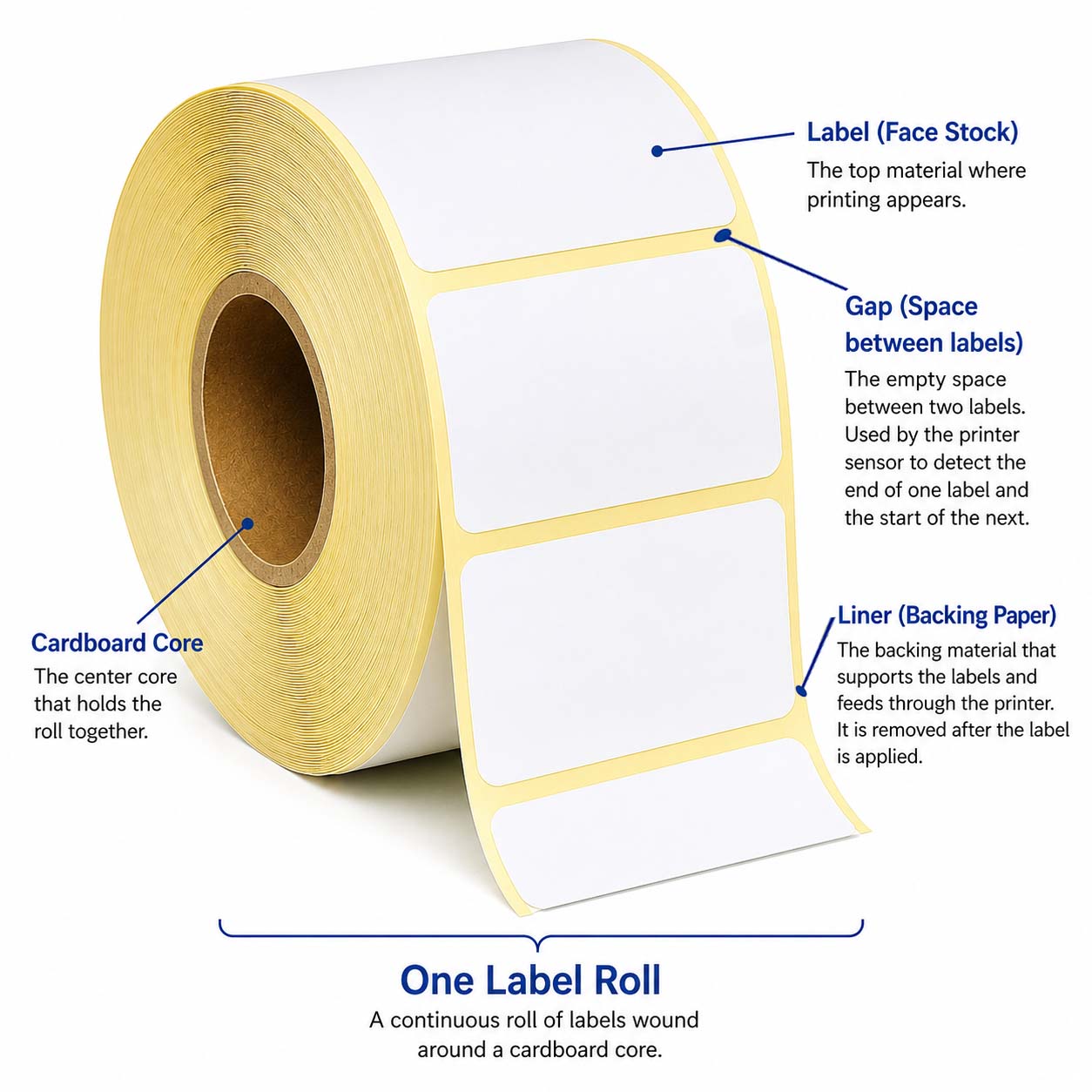
A label roll is a continuous roll containing hundreds or thousands of individual labels attached to a backing material (called the liner).
Example:
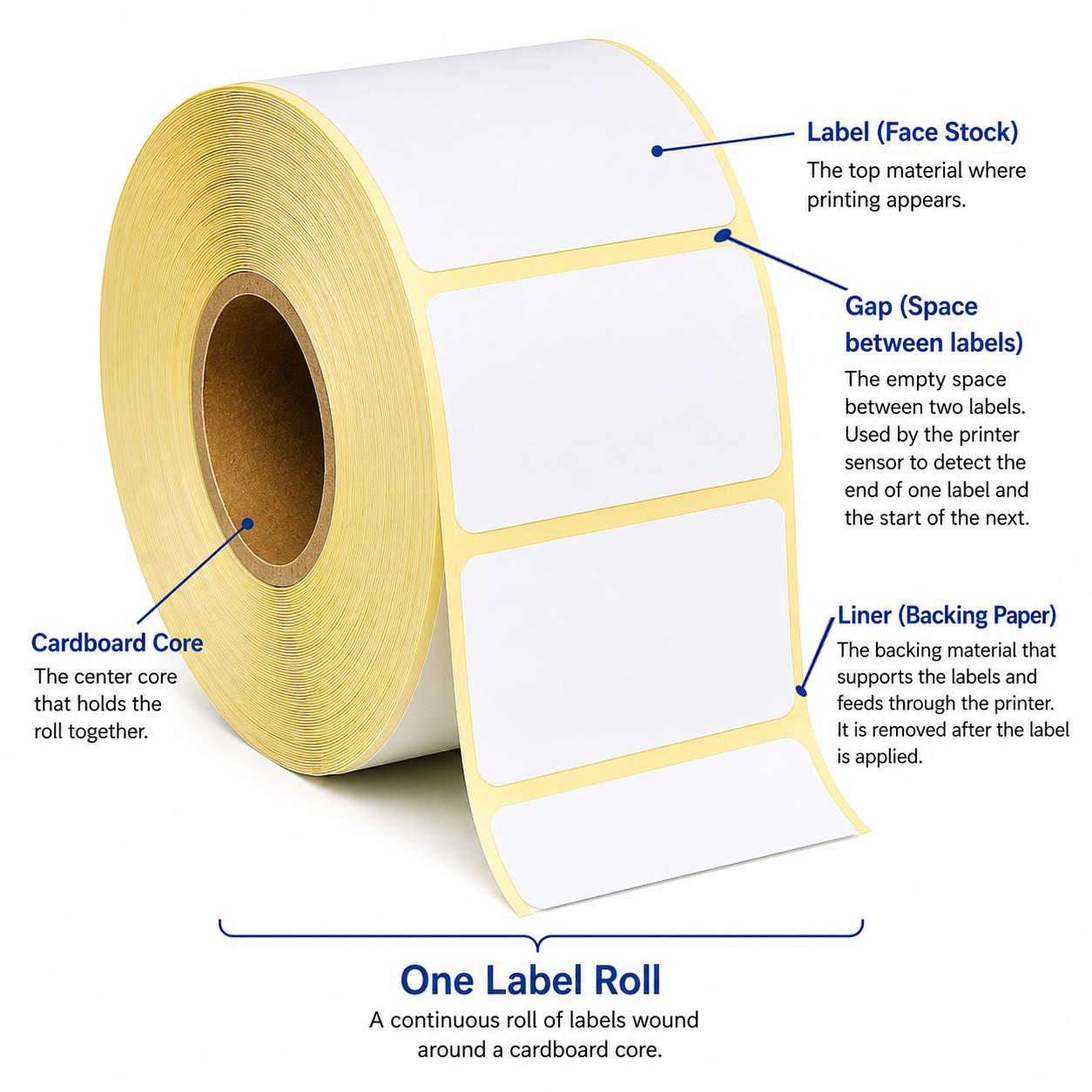
Rolled around a cardboard core
A typical label roll consists of:
- Face stock
- Adhesive
- Silicone release coating
- Liner
- Label gaps or black marks
Together, these layers allow labels to print, peel, and stick correctly.
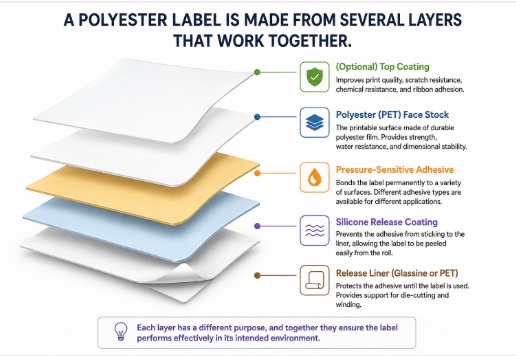
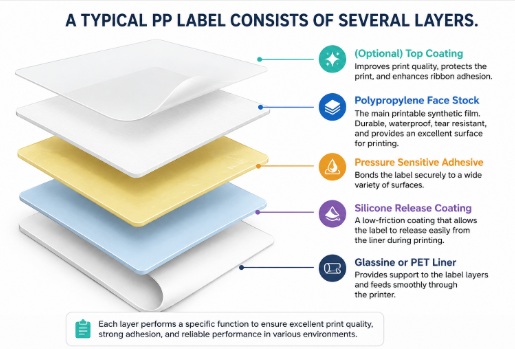
Label Roll Construction
A simplified cross-section looks like this:
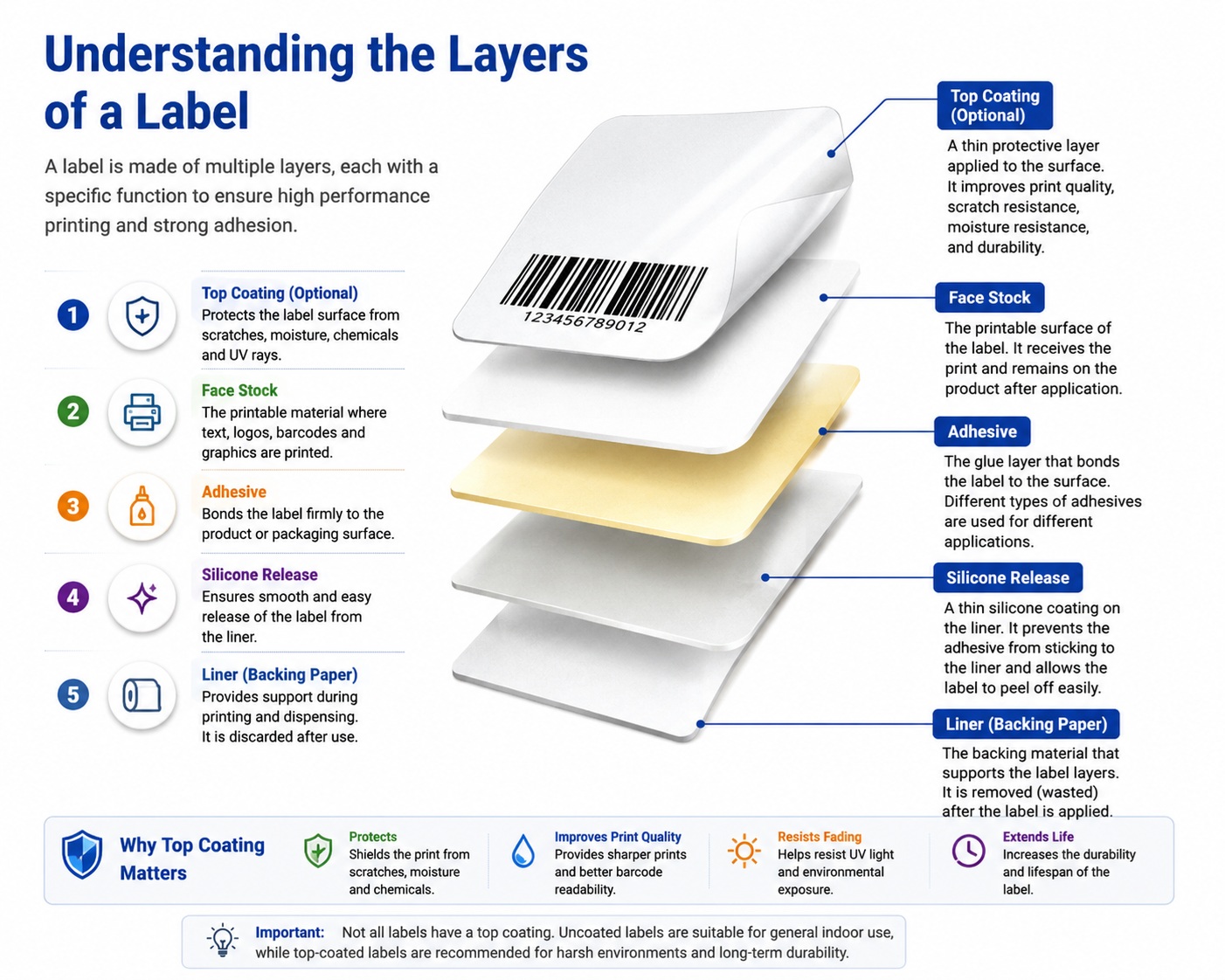
Each layer has a different job.
What Is Face Stock?
The face stock is the actual label material that remains on the product after application.
This is the part that receives:
- Barcode printing
- Product names
- Logos
- QR codes
- Prices
- Shipping information
Common face stock materials include:
Paper
Most economical.
Best for:
- Shipping labels
- Retail
- Warehouse
- General barcode labels
Synthetic plastic material.
Best for:
- Moist environments
- Refrigeration
- Cosmetics
- Food packaging
Extremely durable.
Used for:
- Asset labels
- Rating plates
- Electronics
- Industrial equipment
Vinyl
Flexible and weather resistant.
Common for:
- Outdoor labels
- Warning labels
- Vehicle graphics
What Is Top Coating?
A top coating is an additional protective layer applied to the surface of the face stock.
It improves:
- Print quality
- Ribbon adhesion
- Scratch resistance
- Chemical resistance
- Moisture resistance
Think of it as a protective finish over the label surface.
Uncoated vs Top-Coated Labels
|
Uncoated |
Top-Coated |
|
Lower cost |
Higher durability |
|
General-purpose use |
Industrial applications |
|
Less resistant to moisture |
Better water resistance |
|
Lower abrasion resistance |
Improved scratch resistance |
|
Suitable for indoor use |
Suitable for harsh environments |
Top-coated labels are recommended when barcodes must remain readable for a long time or are exposed to handling, moisture, or chemicals.
What Is Adhesive?
The adhesive is the glue that permanently or temporarily attaches the label to the product.
Different applications require different adhesive formulations.
Common Adhesive Types
Permanent Adhesive
The most common type.
After application:
- Difficult to remove
- Leaves adhesive behind if removed
- Strong bonding
Used for:
- Shipping labels
- Inventory labels
- Product identification
Removable Adhesive
Designed to peel away cleanly.
Common for:
- Price tags
- Temporary identification
- Promotional labels
Freezer Adhesive
Special adhesive formulated for low temperatures.
Used on:
- Frozen foods
- Cold storage
- Refrigerated products
High-Tack Adhesive
Extra strong adhesive.
Suitable for:
- Rough surfaces
- Plastic containers
- Corrugated boxes
- Wooden surfaces
What Is Silicone Release?
The adhesive cannot be placed directly onto the liner because it would permanently stick.
To solve this, manufacturers coat the liner with silicone release.
The silicone creates a smooth release surface that allows labels to peel away easily while still staying attached during storage and printing.
Without silicone release:
- Labels would tear
- Dispensing would fail
- Automatic peeling would be impossible
What Is a Liner?
The liner is the backing paper that carries the labels through the printer.
It supports the labels during:
- Printing
- Feeding
- Cutting
- Dispensing
After the label is applied, the liner is discarded.
What Is a Glassine Liner?
Glassine is the most common liner used in barcode labels.
It is a:
- Smooth paper
- Dense paper
- Semi-transparent paper
- Silicone-coated release liner
Benefits include:
- Excellent feeding
- Stable dimensions
- Easy peeling
- Low friction
- High-speed printing compatibility
Most Zebra, Honeywell, TSC, Citizen, SATO, Toshiba, GoDEX, and Brother industrial labels use glassine liners.
Label Gap
The label gap is the empty space between two labels.
Example:
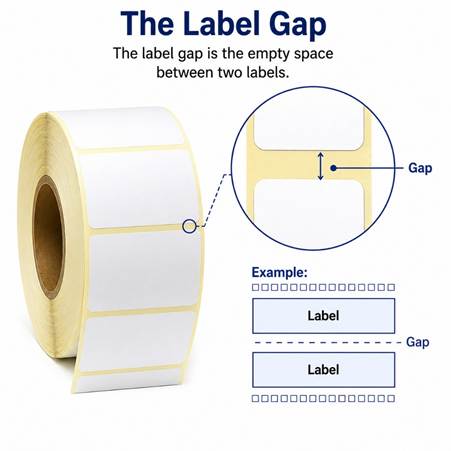
Barcode printers use transmissive sensors to detect this gap and know where one label ends and the next begins.
Black Mark
Some labels have no physical gap.
Instead, they use a printed black mark on the back of the liner.
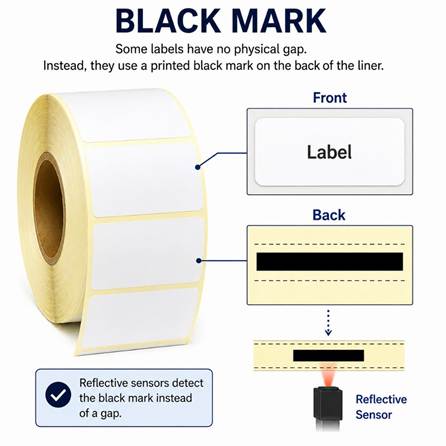
Reflective sensors detect the black mark instead of a gap.
Black marks are commonly used for:
- Wristbands
- Tickets
- Tags
- Transparent labels
- Continuous media
Label Thickness
Label thickness refers to the total thickness of:
- Face stock
- Adhesive
- Liner
Measured in:
- Microns (µm)
- Mils
- Millimeters
Thicker labels may require:
- Higher printhead pressure
- Different sensor calibration
- Different printer settings
Industrial asset labels are usually much thicker than standard shipping labels.
How Label Rolls Are Manufactured
The manufacturing process involves several stages:
Step 1 – Face Stock Production
Paper or synthetic material is produced.
↓
Step 2 – Top Coating (if required)
A protective coating is applied.
↓
Step 3 – Adhesive Application
The adhesive is evenly coated onto the back of the face stock.
↓
Step 4 – Silicone-Coated Liner
The face stock is laminated onto the release liner.
↓
Step 5 – Die Cutting
Steel dies cut the label shape without cutting through the liner.
↓
Step 6 – Matrix Removal
The waste material between labels is removed.
↓
Step 7 – Rewinding
Labels are wound onto rolls with the required core size and outside diameter.
↓
Step 8 – Packaging
The finished rolls are packed for shipping.
How to Store Label Rolls Properly
Proper storage extends label life and maintains adhesive performance.
Recommended conditions:
- Temperature: 18–25°C
- Relative humidity: 40–60%
- Keep away from direct sunlight
- Store in original packaging
- Avoid excessive heat and moisture
- Keep rolls standing on their ends when possible to prevent deformation
- Allow labels to acclimate to room temperature before use if moved from cold storage
Poor storage can lead to:
- Adhesive failure
- Curling
- Liner shrinkage
- Print quality issues
- Feeding problems
Choosing the Right Label Roll
Consider these factors before purchasing:
|
Requirement |
Recommended Choice |
|
Standard shipping |
Paper face stock + permanent adhesive |
|
Cold storage |
Freezer adhesive |
|
Chemical resistance |
Top-coated PET + resin ribbon |
|
Outdoor use |
Vinyl or PET |
|
Retail pricing |
Removable adhesive |
|
Long-term asset labels |
Polyester (PET) |
|
Food packaging |
PP with food-grade adhesive (where required) |
|
High-speed printing |
Glassine liner |
Frequently Asked Questions
Can I print directly on the liner?
No. The liner is only a carrier for the labels and is not intended for printing.
Is every liner made from glassine?
No. While glassine is the most common, liners can also be made from kraft paper, PET film, or other specialty release materials depending on the application.
Why do some labels use gaps while others use black marks?
Gap sensing is ideal for die-cut labels. Black marks are preferred when a physical gap is not practical, such as with transparent labels, wristbands, or continuous media.
Does every label have a top coating?
No. Many economy labels are uncoated, while top-coated labels are chosen when greater durability, moisture resistance, or better thermal transfer print performance is needed.
Conclusion
A label roll is much more than a roll of stickers. It is a carefully engineered product made up of face stock, adhesive, silicone release coating, liner, and sensor marks that work together to deliver reliable printing and application. Understanding concepts such as glassine liners, top coatings, adhesive types, label gaps, black marks, and proper storage helps you select the right labels for your printer and ensures consistent barcode quality, longer printhead life, and dependable performance in any environment.